Canada Joins Global Combat Air Program as Observer: A Strategic Shift in Next-Generation Defense
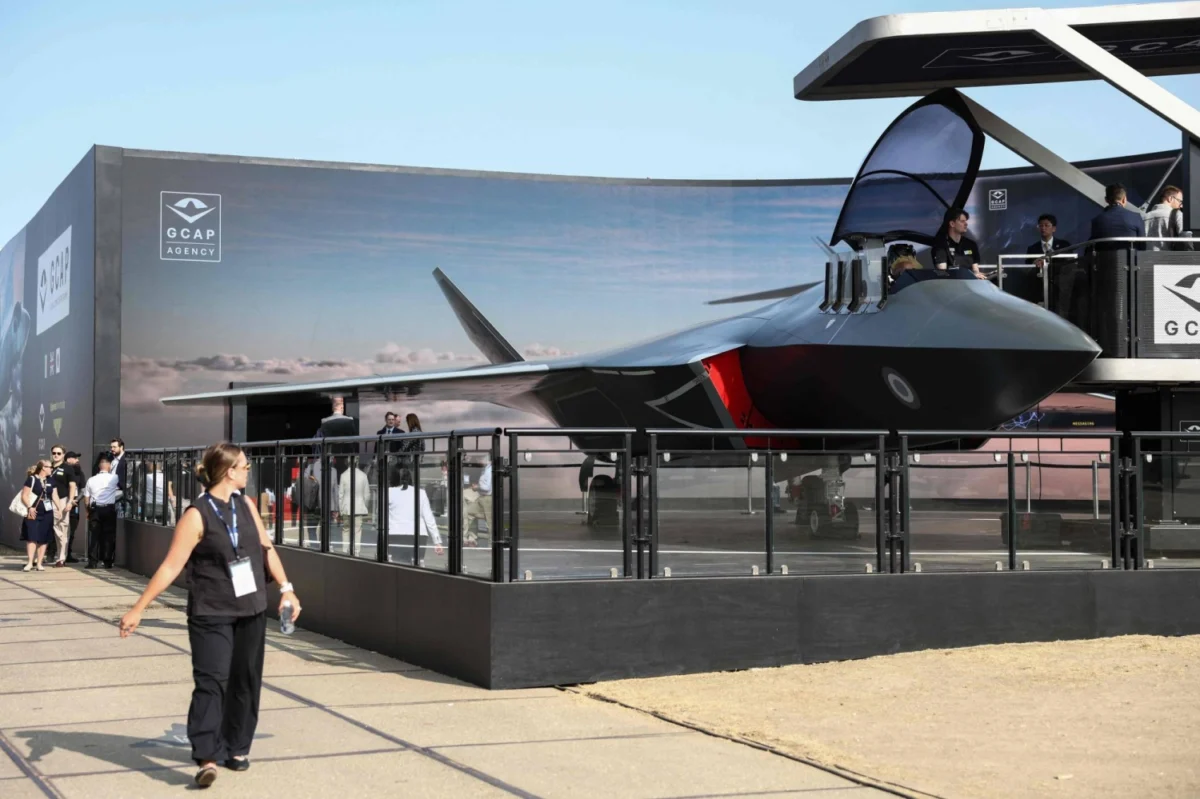
LONDON — In a landmark development for international defense cooperation, Canada has formally joined the Global Combat Air Program (GCAP) as an observer, marking the first time the ambitious trilateral stealth fighter project has expanded its fold beyond founding members Japan, the United Kingdom, and Italy.
The announcement, delivered on the second day of the Farnborough International Airshow, represents a significant pivot in Canada’s long-term aerospace strategy. As the international security landscape grows increasingly volatile, the inclusion of Ottawa signals a deepening of intelligence and industrial ties among G7 partners aimed at fielding a sixth-generation combat aircraft by 2035.
The Core Facts: A New Alliance for the Skies
The GCAP is an ambitious multinational initiative designed to develop a next-generation stealth fighter jet capable of operating alongside uncrewed systems, advanced sensors, and integrated data networks. By securing observer status, Canada enters the inner circle of a project that represents one of the most sophisticated engineering challenges of the 21st century.
During a high-level meeting in London, the defense ministers of the four nations—Japan’s Shinjiro Koizumi, Italy’s Guido Crosetto, Britain’s Wes Streeting, and Canada’s David McGuinty—issued a joint statement underscoring the necessity of the partnership.
"This announcement marks an important step in strengthening cooperation among trusted, like-minded partners through the Program," the ministers stated. They highlighted that the integration of Canadian expertise would foster greater interoperability, essential for maintaining air superiority in an era of contested airspace.
Chronology: The Evolution of GCAP
To understand the weight of Canada’s entry, one must look at the rapid maturation of the program over the past several years:
- December 2022: Japan, the UK, and Italy officially merge their respective national fighter jet projects—the F-X (Japan), Tempest (UK), and the Italian collaborative efforts—to form the Global Combat Air Program. The goal: replace aging fleets with a unified, high-tech platform.
- December 2023: The founding members sign the GCAP Convention in Tokyo, establishing the Global Combat Air Program International Government Organization (GIGO), a permanent body to oversee the development and procurement process.
- July 2026 (Farnborough Airshow): Amidst a backdrop of global geopolitical tension, Canada is officially invited to join as an observer, signaling a broadening of the program’s scope and potential industrial base.
This trajectory reflects a shift from purely national defense projects toward "coalition-based" industrial development, necessitated by the skyrocketing costs and technical complexities of stealth technology.
Supporting Data: Why Canada? Why Now?
The addition of Canada is not merely a diplomatic gesture; it is a strategic industrial calculation.
Industrial Synergy
Canada possesses a robust aerospace sector, particularly in the realm of avionics, software engineering, and artificial intelligence. By integrating Canadian firms into the GCAP supply chain, the program gains access to niche technologies that are critical for the "system-of-systems" approach inherent in sixth-generation warfare.
Financial Sustainability
The development of a sixth-generation fighter is estimated to cost tens of billions of dollars. Expanding the partnership base allows for cost-sharing and creates a larger export market, ensuring the program remains economically viable over the decades-long lifecycle of the aircraft.
Geopolitical Alignment
The Arctic region is becoming an increasingly contested theater. Canada’s unique requirements for northern sovereignty, combined with its role within NATO and NORAD, make it a natural fit for a program that emphasizes long-range, high-endurance, and highly networked air platforms.

Official Responses: A Unified Vision
The ministers involved in the London meeting emphasized that the expansion is not just about hardware, but about shared values.
Defense Secretary Wes Streeting (UK): "The UK has long viewed the GCAP as the cornerstone of our future air power. Bringing Canada into the fold allows us to pool our intellectual capital and ensure that our collective defensive capabilities remain second to none."
Defense Minister Shinjiro Koizumi (Japan): "For Japan, this represents a fundamental evolution in how we approach national security. We are moving beyond domestic production toward a model of global collaboration that ensures we stay ahead of emerging threats in the Indo-Pacific and beyond."
Minister of National Defense David McGuinty (Canada): "Canada’s participation as an observer allows us to evaluate how this cutting-edge platform can meet our future defense needs while providing our domestic aerospace industry with unprecedented opportunities for innovation."
Implications: The Future of Global Air Power
The inclusion of Canada as an observer carries profound implications for the global defense market and the balance of power.
The Sixth-Generation Leap
Sixth-generation fighters are defined by their ability to act as a "command center" in the sky. They utilize AI to process vast amounts of sensor data, control swarms of drones, and leverage directed-energy weapons. By bringing Canada into the loop, the GCAP coalition is ensuring a more standardized technological ecosystem across the Atlantic and Pacific alliances.
Impact on Competitors
The expansion of GCAP places immense pressure on other regional fighter programs, such as the Franco-German-Spanish Future Combat Air System (FCAS). As the GCAP coalition grows, it creates a formidable block of interoperable forces, potentially setting the standard for NATO’s future air operations.
The Sovereignty Debate
For Canada, the move raises questions about future procurement. While the nation has committed to the F-35 program for its immediate needs, the observer status for GCAP suggests a long-term hedging strategy. Canada is positioning itself to be a Tier-1 partner in the next technological generation, ensuring that it is not left dependent on a single vendor or nation for its defense.
Conclusion: A New Era of Collaboration
The Farnborough announcement is a testament to the changing nature of modern warfare. The days of solitary "national champions" developing fighter jets in isolation are ending, replaced by massive, collaborative consortia that span continents.
As an observer, Canada is now in a position to influence the design requirements and industrial participation levels of the GCAP. Whether this leads to full membership remains to be seen, but the signal sent to the international community is clear: the partners of the Global Combat Air Program are committed to staying at the forefront of aerospace innovation, and they are willing to expand their borders to ensure that dominance.
As the program moves into its next phase, the world will be watching to see how these four nations manage the immense technical and political hurdles ahead. For now, the London meeting has solidified a new, broader foundation for the most ambitious combat aircraft project of our time.