
Echoes of the Past and Visions of the Future: Film Comment Launches Comprehensive Coverage at the 60th Karlovy Vary International Film Festival
KARLOVY VARY, Czech Republic — Set against the backdrop of neo-Renaissance colonnades, grand hotels, and the sulfurous thermal springs of western Bohemia, the 60th edition of the Karlovy Vary International Film Festival (KVIFF) has officially commenced. As one of the world’s oldest and most prestigious competitive film gatherings, this year’s milestone jubilee carries a distinct weight. Blending a celebration of cinematic heritage with an adventurous eye on contemporary global filmmaking, the festival once again cements its status as a vital anchor on the international summer circuit.
Film Comment Editor Clinton Krute is on the ground in the picturesque Czech spa town, spearheading the publication’s on-site reporting. To inaugurate the extensive coverage featured in the Summer 2026 issue, Krute sat down for a special festival-launch podcast episode with prominent Czech film critic Pavel Sladký and programmer Irena Kovarova. Together, the trio unpacked the rich, complex history of KVIFF, examined the evolving identity of the festival in its landmark sixth decade, and offered cinephiles a curated guide to the most compelling titles screening this year.
Main Facts: The Milestone 60th Edition and Its Programming Scope
The Karlovy Vary International Film Festival occupies a unique position in the global cinematic ecosystem. Historically bridging Eastern and Western European filmmaking traditions, KVIFF has long served as a launchpad for major international circuit films, while simultaneously championing bold, under-the-radar discoveries in its robust competitive sections.
The 60th edition is no exception. This year’s lineup boasts a diverse array of narrative features, documentaries, and restored classics. The programming is broadly divided into two major currents:
- The Contemporary Slate: A diverse international selection highlighting boundary-pushing contemporary directors, fresh voices, and notable collaborations across borders.
- The Retrospective Sidebar: A meticulously curated historical program celebrating the festival’s storied past—a legacy that stretches back through decades of political upheaval, including the era when the event alternated locations with Moscow during the Cold War.
In the opening podcast episode of Film Comment’s festival coverage, Krute, Sladký, and Kovarova dove straight into this duality. The discussion offered listeners an analytical framework for understanding how yesterday’s cinematic milestones converse with today’s avant-garde and arthouse releases.
Chronology: A Journey Through Festival Highlights—From 1964 to the Present
The conversation between Krute, Sladký, and Kovarova mapped a distinct chronological and thematic trajectory, moving fluidly from foundational pillars of Czech cinema history to the cutting edge of contemporary international production.
The Retrospective Anchors: Revisiting Czech Masterpieces
The panel’s discussion of the festival’s historical sidebar offered a profound look at the sociopolitical subtexts embedded within classic Czechoslovak cinema. Two standout titles received deep analytical attention:
-
The Defendant (1964) – Directed by Ján Kadár and Elmar Klos (Discussion marker: 14:40)
Arguably one of the most intellectually rigorous dramas of the Czechoslovak New Wave’s nascent period, The Defendant explores institutional corruption, moral compromise, and bureaucratic opacity. Kadár and Klos—who would later win the Academy Award for Best Foreign Language Film for The Shop on Main Street—craft a tense narrative around an honest civil servant caught in the gears of a corrupt system. Sladký and Kovarova analyzed how the film’s critique of systemic accountability remains strikingly resonant today, showcasing the psychological depth characteristic of mid-century Central European cinema. -
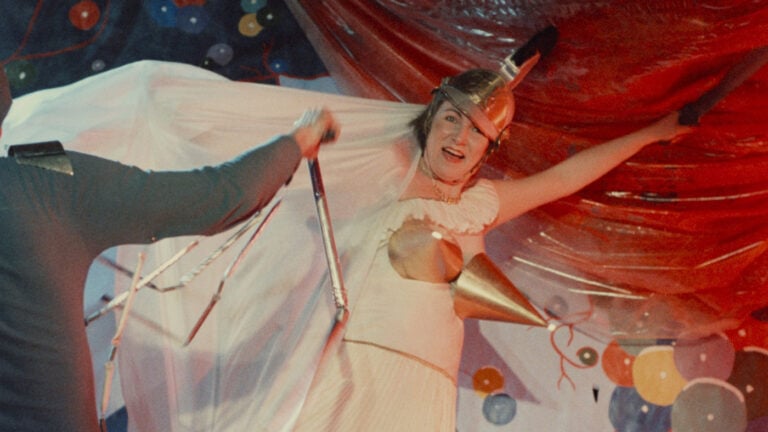
Tainted Horseplay (1988) – Directed by Věra Chytilová (Discussion marker: 8:16)
Shifting to the twilight years of the Communist regime, the panel examined Věra Chytilová’s fierce, satirical 1988 work, Tainted Horseplay (Kopytem sem, kopytem tam). Chytilová, a titanic figure of feminist and avant-garde cinema best known for Daisies (1966), brought her trademark anarchic visual style and biting social critique to this late-career film. Dealing with themes of urban alienation, moral decay, and the looming shadow of the AIDS epidemic in late-1980s Czechoslovakia, the film exemplifies Chytilová’s relentless refusal to compromise her artistic vision, even under heavy state scrutiny.
Contemporary Discoveries: Navigating the 2026 Competition and Sidebar Slates
Transitioning from historical retrospectives to the current festival circuit, the panel highlighted several new features making waves among critics and programmers in Karlovy Vary:
-
Black Money for White Nights – Directed by Kristina Grozeva and Petar Valchanov (Discussion marker: 17:50)
The acclaimed Bulgarian filmmaking duo Kristina Grozeva and Petar Valchanov (renowned for The Lesson and Glory) return with their signature brand of deadpan social realism infused with dark absurdist humor. Their latest work continues their incisive exploration of ordinary individuals pushed to ethical breaking points by socioeconomic precarity in contemporary Eastern Europe. -
The Friend’s House is Here – Directed by Maryam Ataei and Hossein Keshavarz (Discussion marker: 22:00)
Offering a contemplative counterpoint to the more satiric and fast-paced entries, this collaborative directorial effort delves into domestic nuances, relational geographies, and the quiet emotional architecture of everyday life. Ataei and Keshavarz’s film drew praise from the panel for its patient pacing and acute observational power. -
The Guest – Directed by Mads Mengel (Discussion marker: 27:02)
Representing the vitality of Nordic filmmaking, Mads Mengel’s The Guest introduces a chilling atmospheric tension to the festival roster. The panel discussed how Mengel masterfully engineers suspense, manipulating audience expectations and spatial anxiety to construct a psychological thriller that lingers long after the credits roll.
Supporting Data: The Evolution of KVIFF at 60
To understand the cultural and economic footprint of the Karlovy Vary International Film Festival, one must examine the metrics that define its longevity and current standing:
- Six Decades of Cinema: Founded in 1946 (initially alternating annually between Karlovy Vary and Moscow until 1994, after which it became an annual event exclusively in the Czech spa town), KVIFF is one of the oldest continuously operating film festivals in the world, trailing only Venice and Cannes in terms of historic lineage.
- Attendance and Industry Reach: Annually, the festival draws upwards of 130,000 attendees, including thousands of accredited film professionals, international distributors, journalists, and passionate cinephiles who transform the historic spa town into a vibrant, 24-hour celebration of the cinematic arts.
- The Retrospective Legacy: Over the past 30 years under the leadership of festival president Jiří Bartoška and artistic director Karel Och, KVIFF has built an international reputation for unearthing forgotten cinematic masterpieces through its thematic retrospectives, often providing the primary impetus for digital restorations and global re-evaluations of regional film movements (such as Eastern European Noir, post-war comedies, and lost works of the Czech New Wave).
Official Responses and Curatorial Insights
Speaking on the challenges and privileges of programming for a festival with such a storied history, the participants in the Film Comment podcast emphasized the necessity of dialogue between eras.
Irena Kovarova noted that curating films for an anniversary edition requires balancing audience appetite for fresh discoveries with a responsibility to contextualize cinematic history. "When you screen a film like Tainted Horseplay alongside contemporary works like The Guest, you aren’t just looking backward; you are tracing the DNA of artistic rebellion," Kovarova remarked during the discussion. "Chytilová’s refusal to look away from uncomfortable truths sets a standard that modern filmmakers continue to grapple with."
Pavel Sladký added that the local context of Karlovy Vary—its unique geographic and architectural identity—creates an immersive viewing environment unlike any other major festival circuit stop. "Karlovy Vary forces you to slow down," Sladký observed. "You are moving between grand nineteenth-century hotels and dark, packed screening rooms. It allows for a deeper, more contemplative form of film criticism."
Clinton Krute echoed these sentiments, emphasizing that Film Comment’s on-the-ground presence aims to capture this exact synergy between historical reflection and critical engagement with new global voices.
Implications: What the 60th Edition Signals for the Future of Film Culture
As the 60th Karlovy Vary International Film Festival unfolds, its programming choices offer profound implications for the broader film industry:
- The Re-Evaluation of Regional Cinema: By spotlighting both restored Czech classics and emerging voices from Eastern Europe, the Middle East, and Scandinavia, KVIFF reinforces the idea that cinematic innovation is increasingly decentralized. Festivals of this scale act as vital correctives to Hollywood-centric distribution models, ensuring that regional masterworks find international audiences.
- The Endurance of Physical Festival Culture: In an era increasingly dominated by streaming algorithms and digital-first release strategies, the sheer vibrancy of KVIFF—evidenced by packed houses, late-night critical debates, and communal screenings in grand historical venues—underscores the irreplaceable value of communal, theatrical filmgoing.
- Historical Continuity: By honoring figures like Věra Chytilová, Ján Kadár, and Elmar Klos, contemporary filmmakers are reminded of the resilience required to create art under political and institutional pressure. As modern geopolitical landscapes shift, the lessons embedded in these retrospective selections remain urgent guideposts for independent creators globally.
Film Comment’s complete coverage of the 60th Karlovy Vary International Film Festival will continue throughout the week, offering readers daily dispatches, interviews, and deep-dive reviews into the competition titles shaping the cinematic conversation this summer.