From the Colosseum to the Concert Stage: Russell Crowe Unveils His Musical Soul with ‘What Love Builds’ at the Venice Film Festival
VENICE, Italy — For decades, Russell Crowe has commanded the silver screen with the imposing gravity of a Roman general, the sharp intellect of a whistleblower, and the rugged charisma of a sea captain. Yet beneath the glittering accolades of an illustrious Hollywood career—including an Academy Award for Ridley Scott’s monumental 2000 epic Gladiator—beats the heart of a quintessential rock-and-roller.
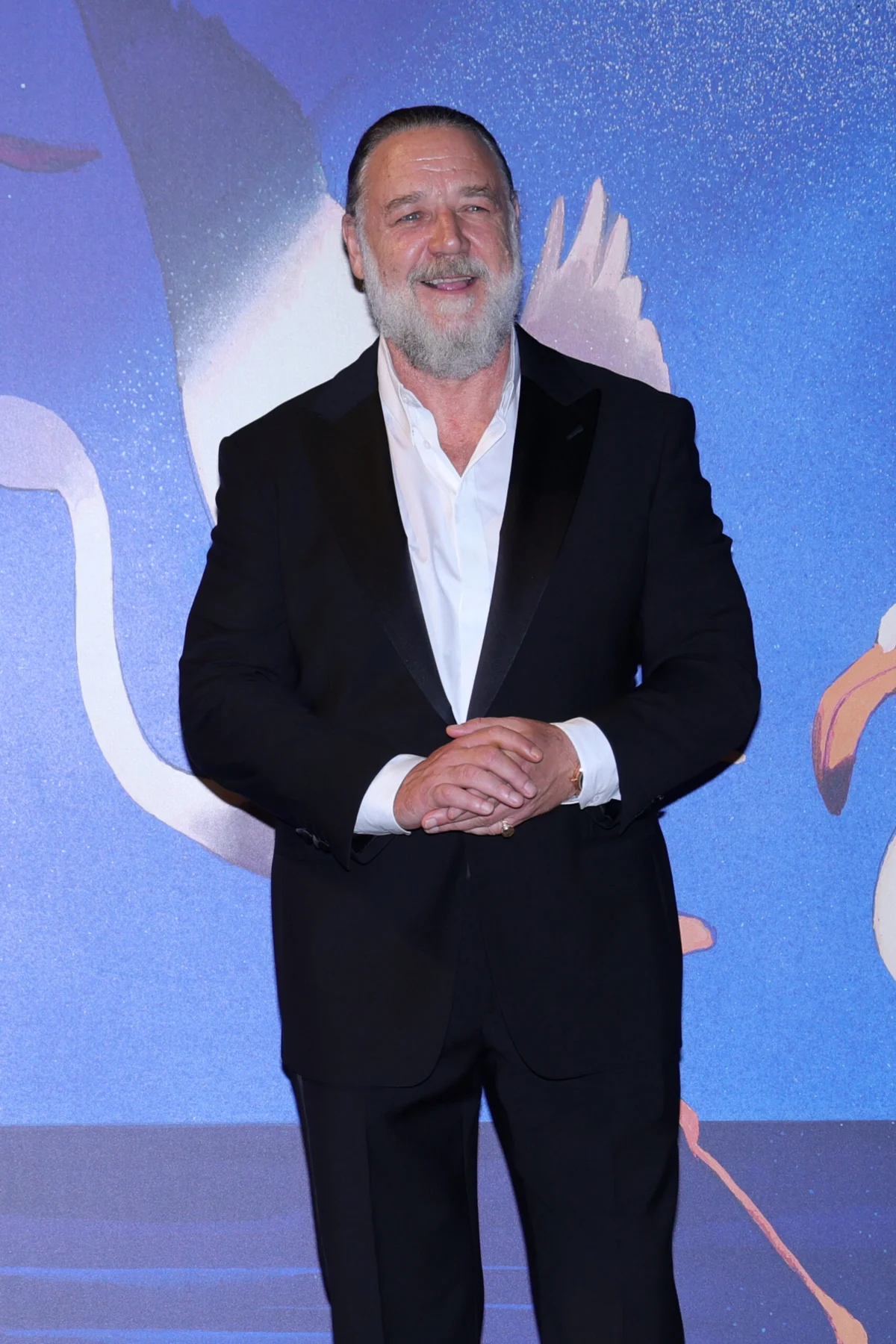
That lifelong ambition took center stage on a balmy Friday night at the prestigious Venice Film Festival, where Crowe premiered his deeply personal, self-directed documentary, What Love Builds. Blurring the lines between cinematic retrospective and live musical event, the film offers a rare, unfiltered look at Crowe’s lesser-known, fiercely dedicated music career—a passion that has run parallel to his acting triumphs for more than three decades.
Main Facts: A Rock Star’s Journey on the Lido
The premiere of What Love Builds at the Sala Darsena transformed a traditional festival screening into an electric, communal gig. As Crowe entered the auditorium, the atmosphere was thick with anticipation. Fans erupted into cheers, with one enthusiastic voice cutting through the rising murmur to shout, “We love you, Russell Crowe!” as the lights dimmed.
Rather than a standard talking-head documentary, the film acts as a dynamic hybrid of live musical performances, archival photography, and intimate interviews spanning the last 15 years. Crowe uses the medium to weave together the two great threads of his artistic life: acting and music.
As the documentary unspooled, the audience responded not with polite, restrained festival applause, but with the fervent clapping and cheering characteristic of a rock concert. When the screening concluded, the room erupted into a short, intensely rowdy ovation. Visibly overwhelmed and wiping tears from his eyes, Crowe brought the premature ovation to a gentle close by quietly exiting the stage, touched by the raw reception of his passion project.
Playing out of competition at the world-renowned festival, What Love Builds stands as a testament to the New Zealand-born artist’s enduring creative restlessness. It is a comprehensive exploration of a man who has conquered Hollywood, only to continually return to the microphone.
Chronology: From Sydney Pubs to Global Cinema and Back
To understand What Love Builds, one must trace the winding, unorthodox timeline of Crowe’s artistic evolution—a journey that predates his global cinematic breakthrough and continues to run concurrently with it.
The Early Musical Roots (Late 1980s – 1990s)
Long before Crowe was trading blows in the Colosseum as Maximus Decimus Meridius, he was cutting his teeth in the gritty pub rock scene of Australia and New Zealand. Working under various monikers and solo projects in the 1980s—including the names Rus Le Ro and Roman Antix—Crowe was driven by an irrepressible desire to write and perform original music.
However, the explosive trajectory of his acting career intervened. In the 1990s, Crowe transitioned from regional television and film to international recognition, earning critical acclaim for his intense performances in L.A. Confidential (1997) and The Insider (1999).
The Cinematic Zenith and the Formation of 30 Odd Foot of Grunts (2000s)
Even as his film career skyrocketed—culminating in his Best Actor Oscar win for Gladiator in 2001 and another nomination for A Beautiful Mind in 2002—Crowe refused to abandon his musical ambitions. In the late 1990s and early 2000s, he fronted the rock band 30 Odd Foot of Grunts (TOFOG). The rootsy, alternative rock outfit toured internationally, playing to dedicated fans across the globe, proving that Crowe’s musical aspirations were far from a vanity project.
Evolution of the Sound: TOFOG to Indoor Garden Party (2010s – Present)
Following the eventual winding down of TOFOG, Crowe’s musical journey evolved. He transitioned into new collaborative spaces, performing alongside The Ordinary Fear of God. In recent years, his primary musical vehicle has been Indoor Garden Party, a fluid, collective ensemble of talented musicians and vocalists that allows Crowe to explore folk, rock, and storytelling through song.
Concurrently, Crowe expanded his multi-hyphenate resume behind the camera. He made his feature film directorial debut in 2014 with The Water Diviner, a sweeping historical drama set in the aftermath of World War I. He followed this up in 2022 with the thriller Poker Face, starring Liam Hemsworth and RZA.
The Venice Premiere and Recent Acting Roles (2024 – Present)
Crowe’s recent creative slate showcases an artist operating at the peak of his powers across multiple mediums. Last year, he delivered a critically acclaimed performance as Nazi Reichsmarschall Hermann Göring in the historical drama Nuremberg. Earlier this year, he appeared alongside Ethan Hawke in the historical drama The Weight, which bowed at the Sundance Film Festival. The culmination of this diverse artistic phase arrived on the Lido in Venice with the unveiling of What Love Builds.
Supporting Data: The Dual Pillars of an Enigmatic Career
The official synopsis for What Love Builds encapsulates the thesis of the documentary, noting that it is "[r]evealing and deeply personal, [showing] how music and acting are intrinsic and interconnected through storytelling and performance." It further describes the project as "a rare, deep dive into the inspirations behind this legendary and enigmatic artist."
To contextualize Crowe’s standing in the entertainment industry, several metrics and milestones highlight his journey:
- Age: 62 years old.
- Birthplace: Wellington, New Zealand (raised primarily in Australia).
- Academy Awards: Won Best Actor for Gladiator (2000); nominated for The Insider (1999) and A Beautiful Mind (2001).
- Directorial Portfolio: The Water Diviner (2014), Poker Face (2022), and the documentary What Love Builds (Venice Film Festival premiere).
- Musical Projects: 30 Odd Foot of Grunts, The Ordinary Fear of God, and Indoor Garden Party.
- Recent Filmography: Nuremberg (as Hermann Göring) and The Weight (alongside Ethan Hawke).
The documentary draws from a rich archive of footage spanning the last 15 years, blending high-energy concert sequences with candid, reflective interviews that peel back the layers of public perception surrounding the famously intense actor.
Official Responses and Industry Reception
The response on the ground in Venice underscored a profound shift in how critics and fans view Crowe. For years, media coverage of his musical endeavors was frequently overshadowed by his massive box-office film credits. What Love Builds forces a recalibration of that narrative.
Festival-goers and industry insiders praised the film’s unvarnished honesty. Unlike traditional celebrity vanity projects that sanitize or gloss over struggles, Crowe’s documentary leans into the vulnerability of the creative process. The emotional resonance of the Sala Darsena screening—highlighted by Crowe’s visible tears and the rapturous applause—demonstrated that audiences are eager to embrace this side of the actor.
Critics on the Lido noted that the film successfully bridges the gap between the larger-than-life personas Crowe has inhabited on screen and the intimate, lyrical voice he shares through his music. By interweaving live performances with reflective commentary, Crowe provides a masterclass in how different artistic disciplines can serve the same core human need: storytelling.
Implications: Redefining the Legacy of a Cultural Icon
The premiere of What Love Builds carries significant implications for how Russell Crowe’s legacy will be written.
For decades, cultural memory has anchored Crowe primarily to his cinematic triumphs—the cinematic violence of ancient Rome, the mathematical genius of John Nash, or the sharp journalism of The Insider. However, this documentary serves as an assertive declaration that his artistic identity cannot be cleanly compartmentalized into "actor" versus "musician."
By stepping behind the camera to direct a project about his own musical journey, Crowe is actively curating his historical narrative. He is asserting that the thousands of hours spent in rehearsal studios, on tour buses, and on stage with bands like 30 Odd Foot of Grunts and Indoor Garden Party are just as vital to his identity as his time on Hollywood soundstages.
Furthermore, the warm reception at the Venice Film Festival suggests a broader cultural appetite for authentic, multi-disciplinary artistry. In an era where celebrity brands are often meticulously manufactured by public relations teams, Crowe’s messy, heartfelt, and persistent pursuit of rock-and-roll stardom—despite the skepticism of traditional Hollywood—feels refreshingly genuine.
As What Love Builds prepares for wider distribution, it leaves audiences with a redefined portrait of a legendary artist. Russell Crowe may have found international fame playing emperors and heroes, but on the stage and behind the lens, he has finally claimed his true a passionate, uncompromising troubadour baring his soul to the world.