Navigating the Dark Legends of Central Java: Unlimited Production Unveils Horror Feature ‘Alas Roban’ Set for January 2026 Release
JAKARTA — The Indonesian cinematic landscape is preparing to welcome another major addition to its highly successful horror genre. Production house Unlimited Production has officially announced the upcoming release of its latest feature film, Alas Roban. Rooted in one of the most notorious and historically ominous locations in Central Java, the film is poised to bring one of the archipelago’s most enduring urban legends to the silver screen.
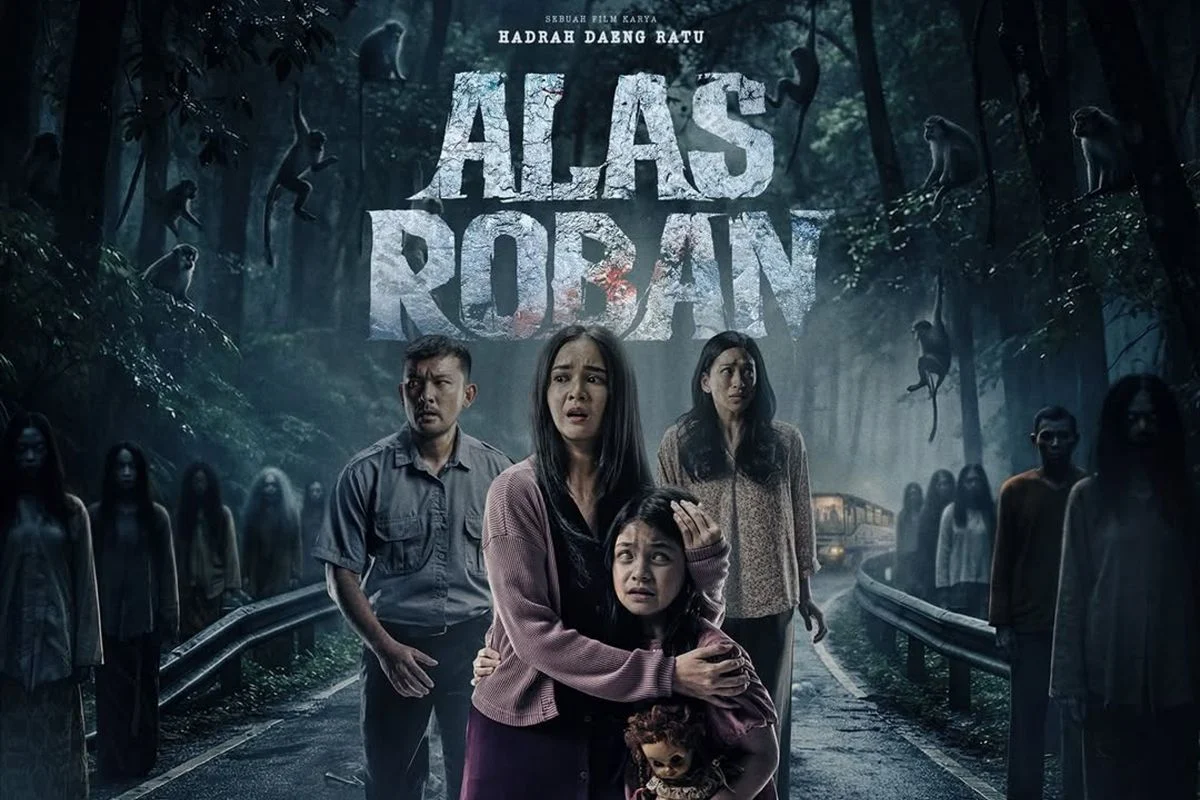
Scheduled for a nationwide theatrical release on January 15, 2026, Alas Roban is inspired by real-life accounts, driver testimonies, and local folklore surrounding the infamous, densely forested highway stretch in Batang Regency, Central Java. Directed by acclaimed horror specialist Hadrah Daeng Ratu and penned by screenwriter Evelyn Afnilia, the film boasts a high-profile ensemble cast, signaling Unlimited Production’s commitment to delivering a premium cinematic experience that blends psychological dread with deeply rooted cultural myths.
Main Facts: The Cinematic Adaptation of Indonesia’s Most Haunted Highway
Alas Roban runs for 1 hour and 51 minutes, a standard runtime for contemporary Indonesian horror features aiming to build a slow-burning, atmospheric narrative. The film centers on the harrowing journey of a single mother and her visually impaired daughter who find themselves stranded in the heart of the Alas Roban forest—a location long feared by travelers, commercial drivers, and locals alike.
+---------------------------------------------------------+
|                      FILM PROFILE                       |
+-------------------+-------------------------------------+
| Title             | Alas Roban                          |
| Genre             | Supernatural Horror / Drama         |
| Runtime           | 1 Hour 51 Minutes                   |
| Release Date      | January 15, 2026                    |
| Production House  | Unlimited Production                |
| Director          | Hadrah Daeng Ratu                   |
| Screenplay        | Evelyn Afnilia                      |
| Primary Location  | Alas Roban, Central Java, Indonesia |
+-------------------+-------------------------------------+
The Legend of Alas Roban
For decades, the Northern Coast Highway (Pantura) route cutting through the Alas Roban forest has been the subject of eerie tales among long-haul truck and bus drivers. Characterized by steep inclines, sharp curves, a persistent lack of street lighting, and heavy nocturnal fog, the area has been the site of numerous fatal traffic accidents.
Over time, these physical dangers have merged with supernatural lore. Drivers frequently report phantom hitchhikers, sudden disorientation, and inexplicable mechanical failures. By tapping into this collective anxiety, Unlimited Production aims to ground the film’s supernatural elements in a reality familiar to millions of Indonesians who have traversed the trans-Java routes.
Chronology: The Descent into the Forest’s Depths
The narrative structure of Alas Roban follows a tight chronological progression, tracing a journey that begins with hope and rapidly devolves into an inescapable supernatural nightmare.
[ Pekalongan Departure ]
          │
          ▼
[ Night Bus through Alas Roban ]
          │
          ▼
[ Sudden Engine Failure in the Forest ] ──► (Initial Supernatural Contact)
          │
          ▼
[ Gendis Exhibits Demonic Possession ]
          │
          ▼
[ Investigation: Curse of Dewi Raras Uncovered ]
          │
          ▼
[ Return to the Forest Heart for the Ritual ]
Act I: The Journey and the Breakdown
The story begins in Pekalongan, Central Java. Sita, a resilient single mother, is determined to secure a better future and financial stability for her family. She accepts a job offer at a hospital in the provincial capital of Semarang. To make the move, Sita brings along her visually impaired daughter, Gendis.
With limited resources, the mother and daughter board the last scheduled night bus traveling to Semarang. This route requires navigating the legendary and treacherous Alas Roban forest highway. Deep within the unlit, fog-covered stretch of the forest, the bus suffers a sudden, catastrophic engine failure, forcing the passengers and crew to wait in the oppressive darkness of the wilderness.
Act II: The Onset of the Possession
Following the breakdown, the passengers experience a series of unsettling anomalies. While the vehicle is eventually repaired, the true horror begins after Sita and Gendis reach their destination.
Gendis’s behavior undergoes a sudden and terrifying transformation:
- Auditory Hallucinations: The young girl begins hearing disembodied whispers in ancient dialects.
- Compulsive Behavior: She starts drawing intricate, occult symbols she has never seen before.
- Physical Manifestation: Her condition escalates into violent nocturnal seizures and full-body possessions, indicating that a powerful, malevolent entity is systematically attempting to claim her physical vessel.
Act III: Uncovering the Curse
Desperate to save her daughter, Sita seeks assistance outside of conventional medicine. She enlists the help of her cousin, Tika, and Anto, an experienced ambulance driver intimately familiar with the region’s occult geography and transport myths.
Together, they uncover a dark secret: Gendis has been targeted by Dewi Raras, a powerful and vengeful spiritual entity residing in the spiritual plane of Alas Roban. The entity’s wrath was triggered by a broken or forgotten ancient ancestral covenant.
Act IV: The Final Ritual
To sever the curse and rescue Gendis’s soul, the group learns they must return to the very source of the malice: the deepest, untouched heart of the Alas Roban forest. Guided by Bu Emah, a local spiritual elder and custodian of the forest’s secrets, Sita, Tika, and Anto embark on a perilous race against time.
They must perform a complex and highly dangerous counter-ritual before the arrival of a sacred, spiritually volatile night (malam keramat), lest Gendis be permanently lost to the supernatural realm.
Supporting Data: The Creative Team and Cast
To bring this complex blend of maternal drama and folk horror to life, Unlimited Production assembled a prominent cast of established dramatic actors and horror veterans.
The Ensemble Cast
- Michelle Ziudith as Sita: Primarily known for her acclaimed roles in romantic dramas and mainstream television, Ziudith’s casting as Sita marks a significant, gritty departure into psychological horror, showcasing her range as an actress portraying a desperate mother.
- Fara Shakila as Gendis: The child actress takes on the highly demanding role of the visually impaired and subsequently possessed Gendis, requiring intense physical acting and emotional depth.
- Rio Dewanto as Anto: One of Indonesia’s most prominent leading men, Dewanto portrays the street-smart ambulance driver whose knowledge of the highway’s dark secrets proves vital to Sita’s survival.
- Taskya Namya as Tika: Known for her frequent and highly praised performances in contemporary Indonesian horror, Namya plays Sita’s supportive cousin.
- Imelda Therinne as Dewi Raras: A veteran actress known for her commanding screen presence, Therinne portrays the central antagonist—the wrathful supernatural entity.
The supporting cast features highly respected character actors from the Indonesian theatrical and indie film circuits, adding a layer of cultural authenticity and dramatic weight to the production:
+---------------------+-------------------+
| ACTOR               | ROLE              |
+---------------------+-------------------+
| Dewi Pakis          | Bu Emah           |
| Whani Darmawan      | Mbah Sakti        |
| Pritt Timothy       | Mbah Rejo         |
| Saputra Kori        | Forensic Officer  |
| Rukman Rosadi       | Yusman            |
| Agus Kuncoro        | Dadang            |
| Ruth Marini         | Dukun (Shaman)    |
+---------------------+-------------------+
The Director-Writer Dynamic
The collaboration between director Hadrah Daeng Ratu and screenwriter Evelyn Afnilia represents a formidable pairing in the domestic film industry. Ratu has established herself as a commercial and critical force in Indonesian horror, with a filmography that includes box-office hits such as Sijjin (2023), Pemandi Jenazah (2024), and Makmum (2019). Her directorial style is characterized by atmospheric tension, cultural realism, and a focus on female-centric narratives facing existential or supernatural dread.
Afnilia’s screenplay reportedly focuses on the psychological toll of maternal grief and isolation, ensuring that the jump scares are supported by a strong emotional foundation.
Official Responses and Industry Insights
While official promotional campaigns are expected to intensify as the January 2026 release date approaches, industry analysts and cultural commentators have already begun discussing the strategic importance of Alas Roban.
Production House Strategy
According to industry insiders close to Unlimited Production, the decision to greenlight Alas Roban aligns with a broader market trend: the commercial viability of localized, region-specific urban legends. Rather than relying on generic supernatural tropes, Indonesian audiences have shown a strong preference for horror films that explore real-world locations with pre-existing cultural anxieties.
"Alas Roban is not just a forest; it is a collective psychological landmark for anyone who has ever traveled across Java," noted a Jakarta-based film critic. "By centering a film on this specific highway, the production house is tapping into a pre-existing fear that millions of commuters have experienced firsthand. It makes the horror highly relatable and deeply immediate."
Creative Approach to Local Lore
Director Hadrah Daeng Ratu has previously emphasized her commitment to respecting the local traditions of the areas depicted in her films. Production sources indicate that the creative team conducted extensive research in the Batang and Pekalongan regencies, consulting with local cultural experts to ensure that the rituals, dialects, and spiritual representations depicted in the film accurately reflect Central Javanese mysticism.
Implications: The Evolving Landscape of Indonesian Horror
The production and upcoming release of Alas Roban carry several significant implications for the domestic film industry and the broader cultural representation of regional folklore.
┌─────────────────────────────────────────────────────────┐
│              IMPLICATIONS OF "ALAS ROBAN"               │
├─────────────────────────────────────────────────────────┤
│                                                         │
│  [1] Cultural Preservation & Mythological Tourism       │
│      - Elevates regional folklore to national media.     │
│      - Increases interest in Central Javanese history.  │
│                                                         │
│  [2] Genre Diversification                             │
│      - Shifts focus from generic spirits to complex     │
│        ancestral covenants and historical trauma.       │
│                                                         │
│  [3] Box Office and Export Potential                    │
│      - Strengthens Indonesia's position as a leader     │
│        in Southeast Asian folk-horror exports.          │
│                                                         │
└─────────────────────────────────────────────────────────┘
1. Cultural Preservation Through Genre Cinema
By focusing on the legend of Dewi Raras and ancient, unfulfilled covenants, Alas Roban highlights how modern Indonesian cinema serves as an archive for oral traditions. These stories, which were once passed down strictly through generations of travelers and local villagers, are now being preserved and modernized through high-budget filmmaking, reaching a tech-savvy, younger demographic that might otherwise be disconnected from traditional folklore.
2. The Economic Vitality of Regional Settings
The film’s focus on the Pekalongan-Semarang corridor underscores a growing decentralization in Indonesian cinema. Historically, domestic films have been heavily centered on Jakarta’s urban lifestyle.
The shift toward regional landscapes—such as the forests of Central Java—not only diversifies the visual palette of Indonesian cinema but also stimulates local creative economies during production. This shift can even foster niche "screen tourism" as viewers seek out the real-world locations featured on screen.
3. Strengthening Indonesia’s Position in Southeast Asian Horror
On a global scale, Southeast Asian horror—particularly from Indonesia, Thailand, and the Philippines—is experiencing a surge in international distribution and streaming popularity. Alas Roban, with its distinct cultural identity, strong maternal themes, and experienced production team, is well-positioned to find an audience beyond domestic theaters, further establishing Indonesia as a premier hub for high-quality, culturally specific folk horror.
As the January 15, 2026 release date approaches, Alas Roban stands as a highly anticipated release. It promises to deliver not only spine-chilling supernatural terror but also a thoughtful exploration of maternal love, ancestral guilt, and the dark secrets that lie just off the beaten path of Indonesia’s most famous highway.