Navigating the Grey Zone: The Future of Film Censorship in Malaysia and Southeast Asia
When we hear the word "censorship," most of us conjure images of blurred television screens, abrupt cuts in theatrical releases, or the pre-film public service announcements that urge viewers toward "independent censorship" (Budaya Sensor Mandiri). In the Indonesian context, this is a familiar, albeit contested, ritual. However, across the border in Malaysia, the landscape of film classification and content control is undergoing a profound, often turbulent, evolution.
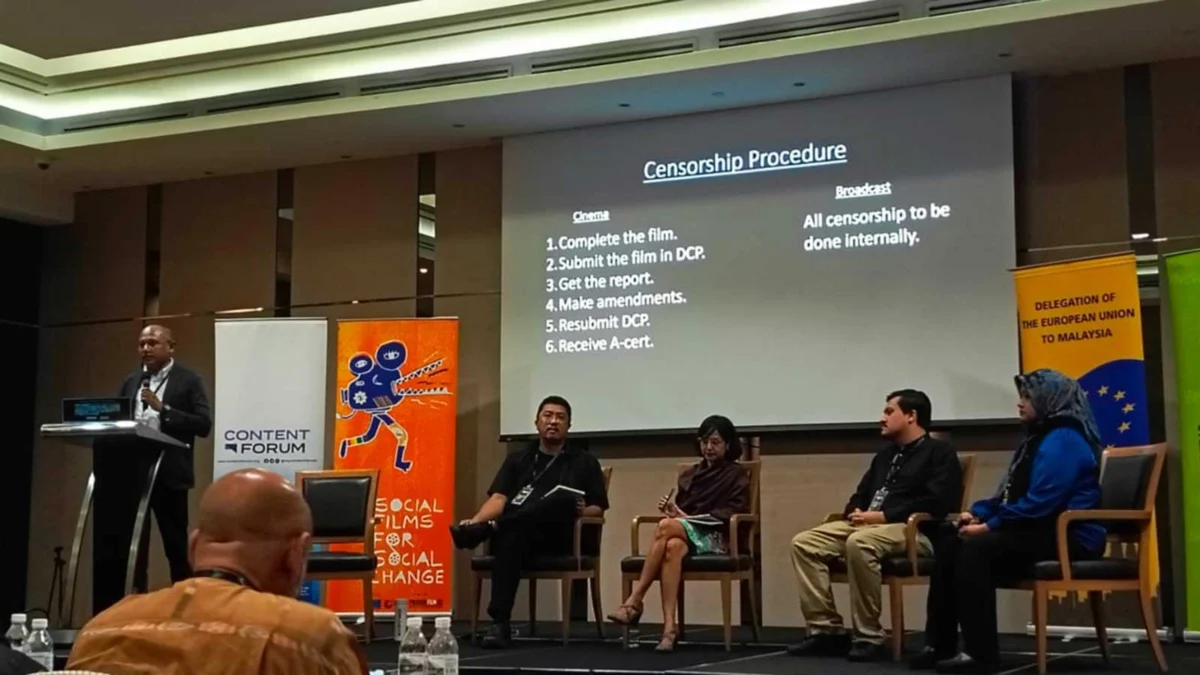
In September 2023, the Freedom Film Network (FFN)—a prominent organization known for championing creative expression and documenting instances of artistic suppression—convened its inaugural film conference in Kuala Lumpur. Titled Content Creation, Choice, and Control in the Digital Age, the two-day event marked a significant pivot for an organization that has spent two decades running the acclaimed Freedom Film Festival. By bringing together regulators, filmmakers, and international observers, the conference sought to dissect the complex, often opaque mechanisms that dictate what the Malaysian public is—and is not—allowed to see.
The Anatomy of a Controlled Industry: How Malaysia Regulates Content
To understand the tension in Malaysian cinema, one must first understand its regulatory architecture. Unlike Indonesia, where oversight is centralized under a specific body, Malaysia employs a bifurcated approach. For television, the responsibility of censorship is largely offloaded onto the broadcasters themselves, under the watchful eye of the Malaysian Communications and Multimedia Commission (MCMC).
For theatrical releases, the process is more rigorous. Films must be submitted to the Lembaga Penapisan Filem (LPF)—the Film Censorship Board—in Digital Cinema Package (DCP) format. The LPF then reviews the content, demanding adjustments, cuts, or in some cases, outright bans, before a certificate of screening is granted.
The criteria for what constitutes a threat to public order remain notoriously fluid. This ambiguity is precisely what creates the "grey zone" in which filmmakers operate. As Mediha Mahmood of the Content Forum noted during her opening remarks, the industry is caught in a tug-of-war between the ideal of total creative freedom and the pragmatic, often slow-moving reality of institutional reform.
"In an ideal world, filmmakers would create exactly what they intend, and audiences would consume that vision without interference," Mahmood stated. "Unfortunately, that is not our reality. Achieving a balanced system requires time, dedication, and the active, sustained involvement of all stakeholders."
A Chronology of Contention: The Case of ‘Mentega Terbang’
The urgency of these discussions is not merely academic; it is driven by recent, high-profile cases of censorship. Perhaps the most illustrative example is the 2023 controversy surrounding the film Mentega Terbang.
In March 2023, the film was pulled from the streaming platform Viu following intense public backlash and threats directed at director Khairi Anwar. This case highlighted the emergence of "societal censorship"—a phenomenon where, rather than a state-mandated ban, the pressure from conservative segments of society forces distributors to self-censor or remove content entirely.
The incident sparked a firestorm regarding the cultural sensitivities of a multi-ethnic, multi-religious nation. In Malaysia, film evaluation is often bifurcated between Malay-language films and those in Chinese or Tamil. Malay-language films are subjected to stricter scrutiny, often expected to align with Islamic sensibilities and avoid themes that could be perceived as provocative or contradictory to religious norms. This specific layering of censorship—part state-enforced, part socially pressured—creates an environment where filmmakers feel they are constantly walking on eggshells.
The Director’s Dilemma: Subjectivity over Guidelines
Syafiq Yusof, a prolific director with over a decade of experience in the Malaysian film industry, provided a sobering account of these challenges during the conference. Reflecting on his 2014 action-comedy Abang Long Fadil, Syafiq described the frustration of dealing with a system that often prioritizes personal interpretation over objective guidelines.

"The film was hit with nine cuts, and despite being an anti-gangsterism narrative—where the entire village unites to fight against crime—it was still slapped with an 18+ classification," Syafiq explained.
The crux of his critique lies in the "vagueness" of the LPF’s guidelines. Because the rules are not sufficiently granular, the final decision rests on the subjective whims of the individual examiner. "If a character wears a certain outfit associated with a gangster, it gets cut, regardless of the fact that the scene is intended to condemn that lifestyle," he added. For directors like Syafiq, the LPF’s current approach acts as a barrier to sophisticated storytelling, punishing the aesthetic of a film even when its underlying message is socially responsible.
Protecting the Vulnerable: The Digital Age Conundrum
While the conference was largely critical of state-sanctioned censorship, it also tackled the complex issue of child protection in the digital age. As streaming platforms dissolve traditional borders, the sheer volume of content available to minors has rendered parental supervision increasingly difficult.
The consensus among delegates was that the solution does not lie in draconian bans, but in a more nuanced "village" approach to media literacy. Experts argued that the responsibility must shift from top-down state censorship to a collaborative framework involving schools, parents, and digital platforms. Empowering educators to provide media literacy training, they argued, is far more effective than trying to sanitize the entire internet—a task that is both technically impossible and socially regressive.
Regional Solidarity: Lessons from the ASEAN Neighborhood
A significant strength of the Freedom Film Network conference was its regional scope. By inviting delegates from across Southeast Asia and Australia, the FFN created a forum for cross-border benchmarking.
Indonesian filmmakers, including Alex Sihar and Tito Imanda of the Indonesian Film Board (BPI), shared their experiences from the 2008 campaign to dismantle the restrictive censorship laws of the Suharto era. Their insights into how a united front of filmmakers can successfully lobby for institutional change provided a blueprint for their Malaysian counterparts.
Meanwhile, Patrick F. Campos of the UP Manila Film Institute offered a perspective from the Philippines, noting that while censorship mechanisms vary wildly across the region, the underlying struggle for artistic autonomy is a shared ASEAN experience. "The goal is not to have identical systems, but to build a network of support," Campos remarked. "When filmmakers in Malaysia know that their peers in the Philippines, Indonesia, and Thailand are watching and standing in solidarity, it changes the narrative from one of isolation to one of collective progress."
The Path Forward: Towards Transparency and Dialogue
The conference concluded with a call for greater transparency in the LPF’s decision-making process. The participants emphasized that if censorship is deemed necessary, it must be predictable, clear, and based on objective standards rather than the subjective biases of individual reviewers.
For Malaysia, the road ahead involves moving away from the "culture of silence" and toward a robust, open dialogue. The presence of representatives from agencies like FINAS and MCMC at the conference was a positive signal—a tentative step toward a future where the regulator and the creator view one another not as adversaries, but as partners in the evolution of national culture.
As the digital age continues to reshape the way we produce and consume media, the lessons from the Freedom Film Network conference are clear: censorship cannot be a static, century-old relic. It must adapt to the fluidity of modern expression. By fostering regional cooperation, emphasizing media literacy, and demanding clear, non-discriminatory guidelines, Malaysia—and by extension, the wider Southeast Asian film community—can hope to cultivate an environment where cinema does not just survive, but thrives in its full, complex, and unbridled glory.