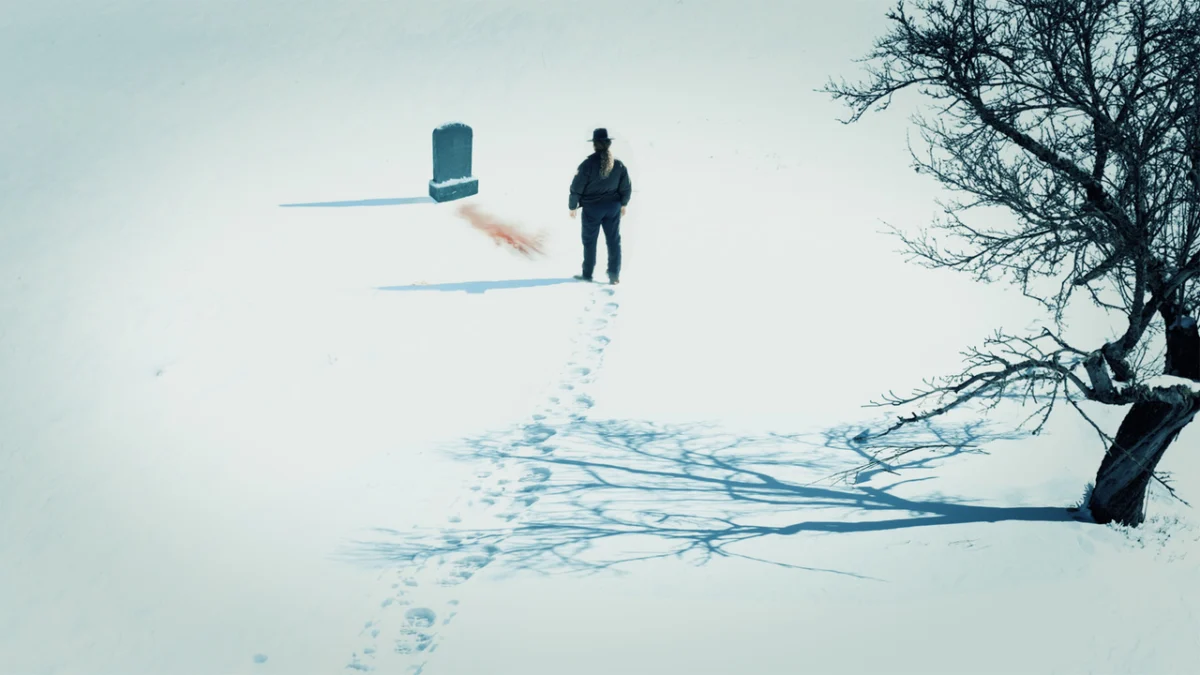

Psychological Thriller ‘Third Wheel’ Explores Post-Colonial Power Dynamics at Fantasia’s Frontières Market
The international film community has turned its gaze toward Montreal this week as the Frontières Co-Production Market—a premier hub for genre cinema—kicks off its annual slate of high-stakes pitching sessions. Among the most discussed projects dominating industry discourse is Third Wheel, a propulsive psychological thriller born from a strategic partnership between South African powerhouse Totem Zea and the acclaimed Dutch production company PRPL.
As the industry navigates a shifting landscape of global storytelling, Third Wheel stands out not merely for its taut, suspenseful narrative, but for its ambition to dismantle the complexities of post-colonial power dynamics through the lens of a domestic nightmare.
A Convergence of Vision: The Production Pedigree
The project marks a significant collaboration between two regions increasingly linked by formal cultural exchange programs. At the helm of the South African side is Totem Zea, the creative engine led by director Zoe Ramushu and producer Reabetswe Moeti-Vogt. The duo has already established a reputation for sharp, culturally resonant storytelling, most notably with the successful Black female-fronted comedy Real Estate Sisters, which garnered significant attention on Netflix.
Ramushu, an alumna of the 48th Student Academy Awards where her short film It Takes a Circus earned a prestigious nomination, brings a sophisticated visual language to Third Wheel. Her partner, Moeti-Vogt, provides the producing rigor necessary to shepherd such a complex narrative to the screen.
On the European front, PRPL, spearheaded by CEO Ellen Havenith, brings a formidable track record of festival success. Havenith has been instrumental in producing some of the most lauded international films of the past two years, including the Sundance winner When It Melts and the Cannes Critics’ Week Grand Prix-winning Tiger Stripes. The partnership between Totem Zea and PRPL is bolstered by the Thuthuka Co-Development Fund, a joint initiative between South Africa’s National Film and Video Foundation (NFVF) and the Netherlands Film Fund (NFF), signaling strong institutional backing for the project.
The Narrative Core: A Wedding Under Siege
At the heart of Third Wheel is the story of Thina, a 26-year-old Black surgeon whose life is defined by a peculiar, layered domestic history. Thina was adopted by a wealthy white family—the very same family for whom her biological mother continues to work as a domestic employee.
The film’s inciting incident takes place at the family’s stunning, isolated estate nestled in the Drakensberg mountains. The setting is ostensibly a celebratory one: Thina is preparing for her wedding to her "woke" Black fiancé, accompanied by her white adoptive sister and best friend, Emma. However, the veneer of the privileged, picturesque weekend rapidly disintegrates. What begins as a boozy, high-society gathering devolves into a claustrophobic descent into psychological warfare. The synopsis promises a harrowing realization: for Thina, the true monster is not a stranger, but the very people who claim to love her the most.
Allegory and the Post-Colonial Condition
In a series of exclusive comments to Variety, Ramushu articulated the thematic gravity of the script. "‘Third Wheel’ is an allegory for post-colonial Africa," she explained. "Independent countries are dating, getting to know, maybe committing to their governments. The colonizers? They are playing the third wheel."
Ramushu posits that the film’s premise—the South African trend of white families informally adopting Black children—serves as a perfect vessel for exploring the contradictions of contemporary race relations. "It’s about offering ‘what they can’ from the goodness of their white hearts or, more accurately, from their white guilt," she noted.
By centering the narrative on a wedding, the film taps into a universal source of anxiety. "Weddings force every version of yourself into the same room—your family self, your work self, your childhood self, your partner self," Ramushu says. "It’s the day you’re supposed to publicly declare who you are and who you belong to… and that can become a nightmare. Literally."
Visual Language and Symbolism: The Kudu
Beyond the human drama, Third Wheel is set to utilize a striking visual motif that has already generated buzz among industry insiders: the "soaking wet kudu."
"We can’t wait to put the soaking wet kudu on the big screen," Ramushu told Variety. "It quietly stalks the film in a way that’s beautiful, unsettling, and uniquely African." This imagery suggests that the film will eschew traditional thriller tropes in favor of something more surreal and rooted in the specific, haunting geography of the South African landscape.
Chronology and Industry Trajectory
- 2023: Totem Zea and PRPL begin initial development discussions, bolstered by the success of their respective previous projects.
- 2024: The project receives critical development funding from the Thuthuka Co-Development Fund (NFVF and NFF).
- 2026 (Current): Third Wheel is officially presented at the Frontières Co-Production Market at the Fantasia International Film Festival in Montreal, marking its transition from development to active pre-production.
- 2027 (Projected): Principal photography is scheduled to commence, bringing the Drakensberg mountain setting to life.
Implications for Global Cinema
The buzz surrounding Third Wheel at Frontières highlights a broader shift in the international film market. As streamers and independent distributors alike look for "elevated genre" content, projects that pair high-concept thrillers with genuine socio-political commentary are finding more receptive audiences.
For South African cinema, Third Wheel represents a maturing industry that is no longer content to simply replicate Hollywood genre structures. Instead, it is interrogating local realities—such as the complexities of the "post-colonial family unit"—and filtering them through the language of suspense. The involvement of a Dutch partner like PRPL ensures that while the setting is hyper-local, the production standards and distribution strategy will be global.
Conclusion
As the team prepares to pitch Third Wheel to international financiers in Montreal, the project stands as a testament to the power of cross-border collaboration. By blending the intimate, often uncomfortable reality of domestic power dynamics with the visceral pacing of a psychological thriller, Ramushu and her team are poised to deliver a film that challenges the viewer to look closer at the "monsters" living in their own homes.
With significant institutional support already in place and a clear, provocative vision, Third Wheel is undoubtedly a project to watch as it moves toward its 2027 production date. It is a bold, biting exploration of what it means to belong, who gets to define that belonging, and the terrifying cost of breaking free from the roles we are forced to play.