The Cycle of Blood: Sudan’s Descent into a Fragmented Proxy War
KHARTOUM — The streets of Sudan’s capital have become a haunting theater of déjà vu. Pickup trucks, known locally as "technicals," patrol the battered districts of Khartoum, their heavy machine guns and improvised missile launchers manned by fighters whose youthful faces often betray their age—some are no older than 15. For the civilians who remain trapped in the crossfire, these images are not merely echoes of the past; they are the harbinger of a deepening catastrophe.
Three years ago, the paramilitary Rapid Support Forces (RSF), a state-sanctioned entity that had evolved from the notorious Janjaweed militias, turned its weapons against the Sudanese Armed Forces (SAF). That rupture triggered a brutal conflict that has since decimated the nation, displaced millions, and claimed the lives of an estimated 200,000 people. Today, as the SAF struggles to regain territory, it has begun arming a disparate coalition of local militias and "popular resistance" brigades. Observers fear that by decentralizing violence, the army is not just fueling a new chapter of the war, but guaranteeing that the state’s collapse will be total and irreversible.
The Genesis of the Current Conflict: A Chronology of Collapse
To understand the current reliance on militias, one must look at the fragile architecture of the post-Bashir transition.
- 2019: The Fall of a Dictator. After months of mass protests, the Sudanese military ousted long-time autocrat Omar al-Bashir. A fragile power-sharing agreement was struck between the military and civilian pro-democracy groups.
- 2021: The Coup. Tensions between the SAF, led by General Abdel Fattah al-Burhan, and the RSF, led by Mohamed Hamdan Dagalo (known as "Hemedti"), culminated in a military coup that derailed the transition.
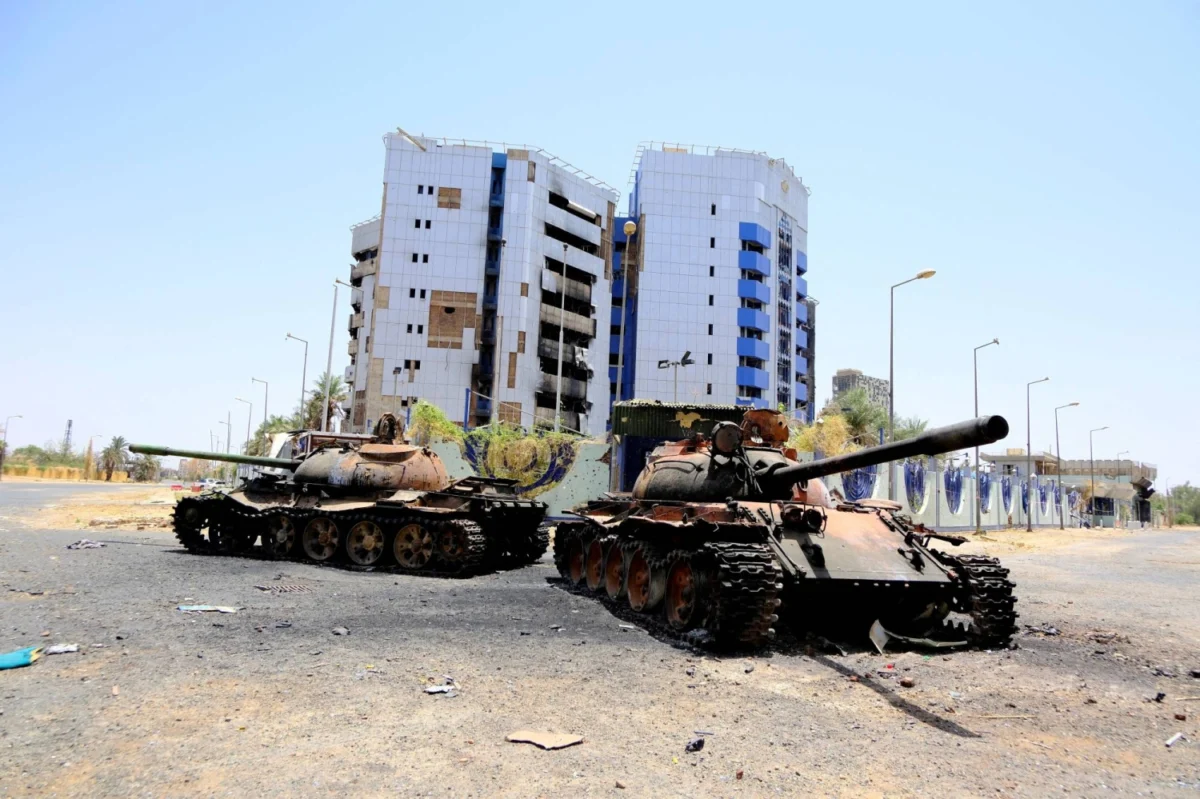
- April 2023: The Outbreak of War. Long-simmering friction over the integration of the RSF into the national army exploded into open warfare in Khartoum. The capital, once a bustling hub, was transformed into a wasteland of artillery fire and urban combat.
- 2024: The Era of Fragmentation. Exhausted by attrition and struggling with logistical deficits, the SAF shifted its strategy. Realizing that the regular army could not secure the vast, urban terrain of Khartoum, Omdurman, and beyond, the military leadership called for a "popular mobilization." This led to the creation of various militias, many of which operate with little oversight or formal training.
The New Militia Economy: Supporting Data and Realities
The reliance on these new forces is driven by a stark reality: the Sudanese military is hemorrhaging personnel. According to defense analysts, the SAF has lost significant amounts of heavy equipment and experienced infantry since the conflict’s inception.
The Human Cost
The human toll of this war is difficult to quantify due to the blackout on communications in many regions, but the figures provided by humanitarian organizations are staggering:
- Fatalities: Estimates suggesting over 200,000 deaths are derived from regional mortality modeling, accounting for both direct combat violence and the indirect effects of the war, such as the total collapse of the healthcare system.
- Displacement: Sudan is currently home to the world’s largest internal displacement crisis. More than 10 million people have been forced to flee their homes, with many living in camps that lack basic sanitation, clean water, or food security.
- The Youth Factor: Field reports indicate that a significant percentage of the new militia recruits are under the age of 18. This recruitment of child soldiers violates international law and poses a severe threat to post-conflict social cohesion, as these youth are being socialized into a culture of permanent militarization.
Official Responses and Strategic Rationales
The Sudanese military leadership defends its move to arm local groups as a matter of "national survival." General al-Burhan has repeatedly characterized the RSF as an existential threat to the Sudanese state, framing the mobilization of local brigades as a democratic act of self-defense for the Sudanese people.
"The army is the people, and the people are the army," a senior military spokesperson stated during a recent press briefing in Port Sudan, the current administrative seat of the government. "We are empowering communities to defend their homes against the invading mercenaries who seek to destroy our sovereignty."
However, international observers and human rights groups offer a more critical assessment. The United Nations and various international NGOs have warned that the proliferation of weapons among non-state actors creates a "warlord phenomenon." By outsourcing violence to local commanders, the state is effectively losing its monopoly on the legitimate use of force—a hallmark of a failed state.
"The government is not just arming citizens; it is creating a patchwork of private armies that will eventually demand political influence, local power, or economic concessions," says Dr. Amina Hassan, a regional security expert. "When the war eventually cools, the government will find that it cannot ‘un-arm’ these groups. We are witnessing the privatization of Sudanese security."
Implications: A Future Built on Sand
The decision to lean on militias has profound implications for the future of Sudan.
1. The Erosion of State Authority
When a national army relies on local militias, it creates a "transactional" relationship. These militias often operate based on tribal or local interests rather than national ones. This fosters a environment where the central government in Port Sudan or Khartoum loses the ability to implement policy or maintain law and order beyond the immediate reach of their own military base.
2. The Cycle of Atrocity
The history of the Janjaweed—the progenitors of the RSF—serves as a grim reminder of what happens when militias are used as state proxies. They were initially utilized to suppress rebellions in Darfur, only to later grow into an independent political and military force that challenged the very state that created them. By repeating this strategy, the current leadership is arguably sowing the seeds of the next, even more destructive conflict.
3. The Humanitarian Impact
As militias proliferate, so too does the complexity of humanitarian access. Negotiating aid corridors with a unified army is difficult; negotiating with dozens of local militia commanders who operate under different rules of engagement is nearly impossible. This fragmentation will likely extend the duration of the famine and disease outbreaks currently ravaging the country.
4. Regional Destabilization
Sudan’s geography is precarious. It shares borders with seven countries, many of which are already grappling with their own internal instabilities. A fragmented Sudan, ruled by competing militias, risks becoming a safe haven for cross-border criminal networks, arms traffickers, and extremist groups looking to capitalize on the chaos.
Conclusion: The Danger of Short-Termism
The current strategy of the Sudanese Armed Forces is defined by the desperation of a military on the defensive. While arming local militias may provide a temporary tactical advantage on the front lines of Khartoum, the long-term strategic cost is catastrophic.
The international community, currently preoccupied with other global conflicts, has largely relegated the Sudanese crisis to the periphery. However, the transformation of the Sudanese landscape into a fragmented, militia-dominated zone is a regional emergency in the making.
As the sun sets on the ruins of Khartoum, the sight of teenagers in pickup trucks should not be viewed as a sign of resistance, but as a warning. Sudan is once again walking down a path that prioritizes immediate military necessity over the long-term integrity of the nation. Without a transition to a unified, civilian-led governance structure that can effectively reintegrate these armed groups, the country risks sliding into a cycle of violence that could last for generations. The lessons of three years ago have been forgotten, and the price of that collective amnesia will be paid in the blood of another generation of Sudanese citizens.