The Brat Prince’s Reckoning: Inside the Cataclysmic Finale of ‘The Vampire Lestat’
Warning: This article contains major spoilers for the season finale of The Vampire Lestat.
The first season of AMC’s The Vampire Lestat has been a journey through the fractured, opulent, and often terrifying psyche of its titular protagonist. As the series—an expansion of the Anne Rice "Immortal Universe" that began with Interview with the Vampire—reaches its season-ending crescendo, it leaves audiences with an image that is as haunting as it is definitive: Sam Reid’s Lestat de Lioncourt standing on a balcony in Montreal, surveying a world in smoldering ruins.
For the production team, this final shot was the North Star of the entire season. While the show’s visual effects team worked to create the illusion of a global apocalypse, the actor behind the Brat Prince had to conjure the weight of that destruction entirely through performance.

The Architecture of an Apocalypse: A Season of Failure
"They told me that the whole world has essentially been bombed," Sam Reid explains in a recent interview. "We’re in a post-apocalyptic environment that Lestat is responsible for. I always knew that was going to be the last beat from the day we started filming. It’s a powerful resolution because Lestat has spent the entire season working his way up to accepting his own failures. Now, those failures have culminated in this cataclysmic event, and he finally, fully understands that he is the architect of his own ruin."
This "cataclysm" serves as the thematic bookend for a season characterized by internal turmoil. While the destruction is visceral, showrunner Rolin Jones emphasizes that the journey was primarily an "interior landscape." Throughout the season, Lestat has been forced to sift through 250 years of accumulated trauma, ego, and longing, finally reaching a point of self-acceptance that, while tragic, is undeniably earned.
Chronology of a Masterpiece: Adapting the Chronicles
The trajectory of this season has been anything but traditional. By shifting the focus from Louis de Pointe du Lac—the soulful, grounded anchor of the first two seasons—to the chaotic, flamboyant, and often unreliable perspective of Lestat, the creative team took a massive narrative risk.

The Shift in Perspective
In the source material, Anne Rice’s The Vampire Lestat is a sprawling autobiography that demands a shift in tone. Moving from the intimate, claustrophobic setting of a Dubai penthouse to the surreal, fever-dream atmosphere of Lestat’s Montreal apartment allowed the show to lean into the "tragic clown" archetype that defines the character.
The Akasha Factor
Fans of the novels immediately recognized the implications of the finale’s ending. The awakening of Akasha, the Queen of the Damned, is the seismic event that drives the third novel of the series. While showrunner Rolin Jones and his team initially planned to include the grand, world-altering concert sequence that awakens the Queen, they ultimately pivoted.
"We get a lot of money to make this show, but we’re not Game of Thrones," Jones jokes. "We decided to drive towards a more interior landscape with the finale. That final image of the ruined city is a taste of the reckoning. It’s designed to make the audience lean in and demand to know what happens next."

Supporting Data: The Craft Behind the Chaos
The production of this season required an unprecedented level of physical and psychological commitment from the cast. The penultimate episode, which featured the separation of Lestat and Louis’s heads from their bodies, stands as a testament to the show’s commitment to "practical horror."
The "Brain That Wouldn’t Die" Aesthetic
The imagery of Louis’s head kept alive on a table—a nod to the 1962 cult classic The Brain That Wouldn’t Die—was actually rooted in a deeper literary tradition. Jones credits Anne Rice’s 1998 novel The Vampire Armand, which explores the gruesome, impossible lengths to which vampires will go to "fix" their loved ones.
Jacob Anderson, who plays Louis, describes the experience as one of the most demanding of his career. "It’s not the most fun I’ve had on a set," Anderson admits. "I had to think a lot about the physicality of it—how does he make a sound without his lungs? I was reading some pretty gross medical journals to figure out the mechanics of it. At one point, our director, Alan Taylor, had to tell me to think about it slightly less."

The Return of the Departed
The finale also featured an ethereal performance where Lestat is confronted by the ghosts of his past—those he created, those he killed, and those he traumatized. Among them is Paul, Louis’s brother. For Reid, this sequence was vital. "Paul was the last person Louis said ‘I love you’ to before he was turned. In that moment, Lestat realizes that Louis loves him, but that Louis is burdened by traumas that prevent him from giving Lestat the affirmation he needs. By confronting Paul, Lestat finally finds a sense of completion in his relationship with Louis."
Official Responses and Creative Vision
The creative team has been transparent about the "remixing" of the source material. By pulling threads from multiple books—including The Vampire Lestat, The Queen of the Damned, and The Vampire Armand—the show has created a unique, non-linear mythology.
Influences and Artistic Choices
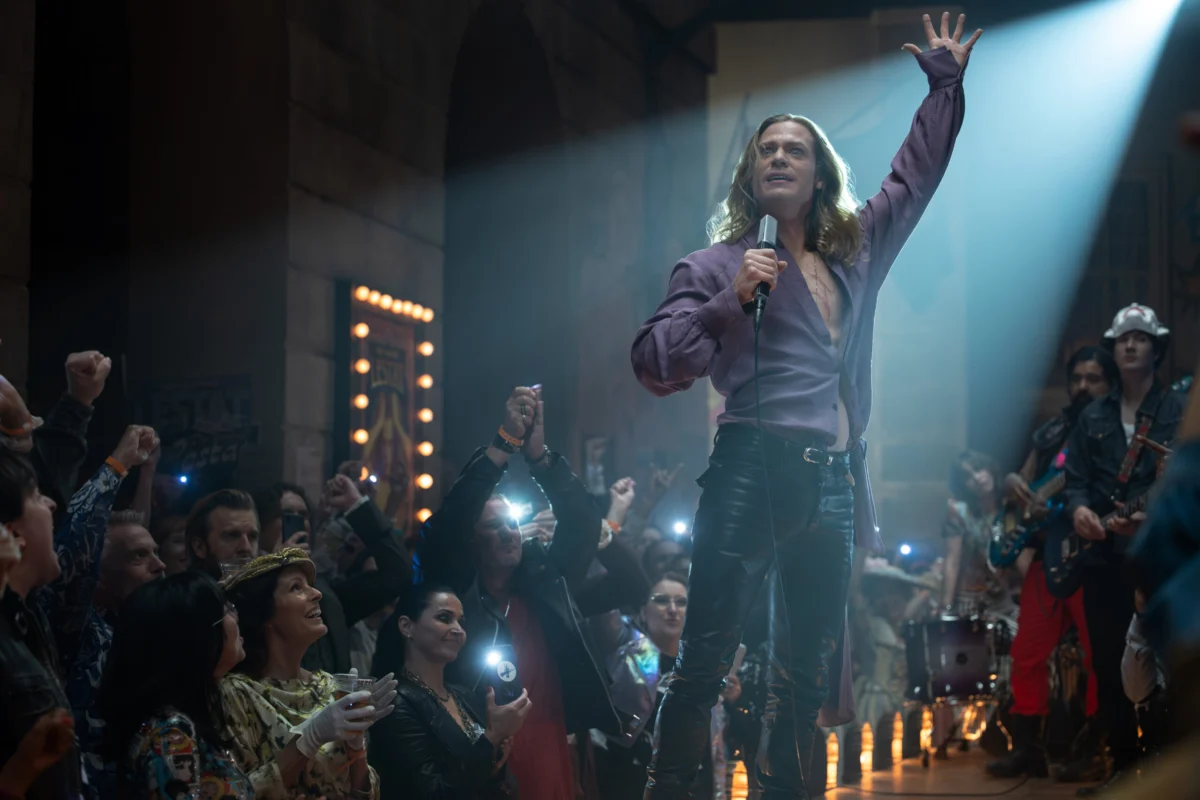
When asked about the hallucinatory musical number that punctuates the finale—which many have compared to the legendary ending of Bob Fosse’s All That Jazz—Jones acknowledged the inspiration while citing other, perhaps more surprising, sources.

"I love Fosse, but if I had to name the two biggest influences on this season, it would be Paolo Sorrentino’s The Great Beauty and the Coen Brothers’ Barton Fink. There is a dreamlike, inescapable quality to Barton Fink—that feeling of being trapped in a dream you can’t wake up from. That was the essence we were chasing."
The Future of the "Immortal Universe"
As of the time of writing, AMC has not officially greenlit a fourth season, though the cast and crew remain optimistic and deeply invested. Jones, however, is already looking toward the horizon. "We’ve had two seasons told by three people in a room, and now a season told by this crazy person in his house in Montreal. Season 4 seems to want to be told by multiple people. It’s going to be a bigger, more global story."
When questioned about the potential for another title change to reflect this shifting narrative scope, Jones was non-committal but dropped a heavy hint. "Fans have embraced the title changes. Think of The Empire Strikes Back or Return of the Jedi. No colons. That’s the title—get on board."

Implications: Where Does the Story Go?
The implications of the Season 1 finale are profound. We are no longer dealing with a simple period drama or a character study; we are moving into the realm of global existential threat.
- The Akasha Threat: With the Queen of the Damned now in play, the stakes for the entire Immortal Universe have been raised. The world-spanning scope of the upcoming narrative will likely challenge the show’s production scale, a challenge Jones seems ready to embrace.
- Lestat’s Evolution: Having finally accepted his own culpability, the "Brat Prince" is in a unique position. He is no longer just a vampire; he is an agent of potential extinction. Whether he chooses to fight for humanity or lean into the chaos will define his arc in any future seasons.
- The Ensemble Dynamics: With characters like Regina (Delainey Hayles) potentially returning and the complicated, fractured state of the Louis-Armand-Lestat dynamic, the series is setting the stage for a "reckoning" that will force these characters to choose sides in a war that is both literal and spiritual.
As fans look toward the upcoming San Diego Comic-Con panel for official word on a renewal, one thing is certain: The Vampire Lestat has succeeded in doing exactly what the character himself always does—it has demanded our absolute attention, broken our hearts, and left us terrified of what comes next. Whether the world is truly ending or just beginning a dark new chapter remains to be seen, but as Rolin Jones says, "We’re not done yet."