Reinventing the Rebellion: Andy Serkis Takes on George Orwell with a Radically Accessible ‘Animal Farm’
Main Facts: A Modern Twist on a Classic Allegory
George Orwell’s Animal Farm has long been cemented in the global literary canon as a biting, uncompromising satire of totalitarianism and the corrosive nature of power. First published in 1945, the novella is universally understood as an allegory for the Soviet Union’s tragic slide into authoritarianism under Joseph Stalin during the first half of the 20th century. Generations of students have dissected its bleak maxims—most notably, "All animals are equal, but some animals are more equal than others."
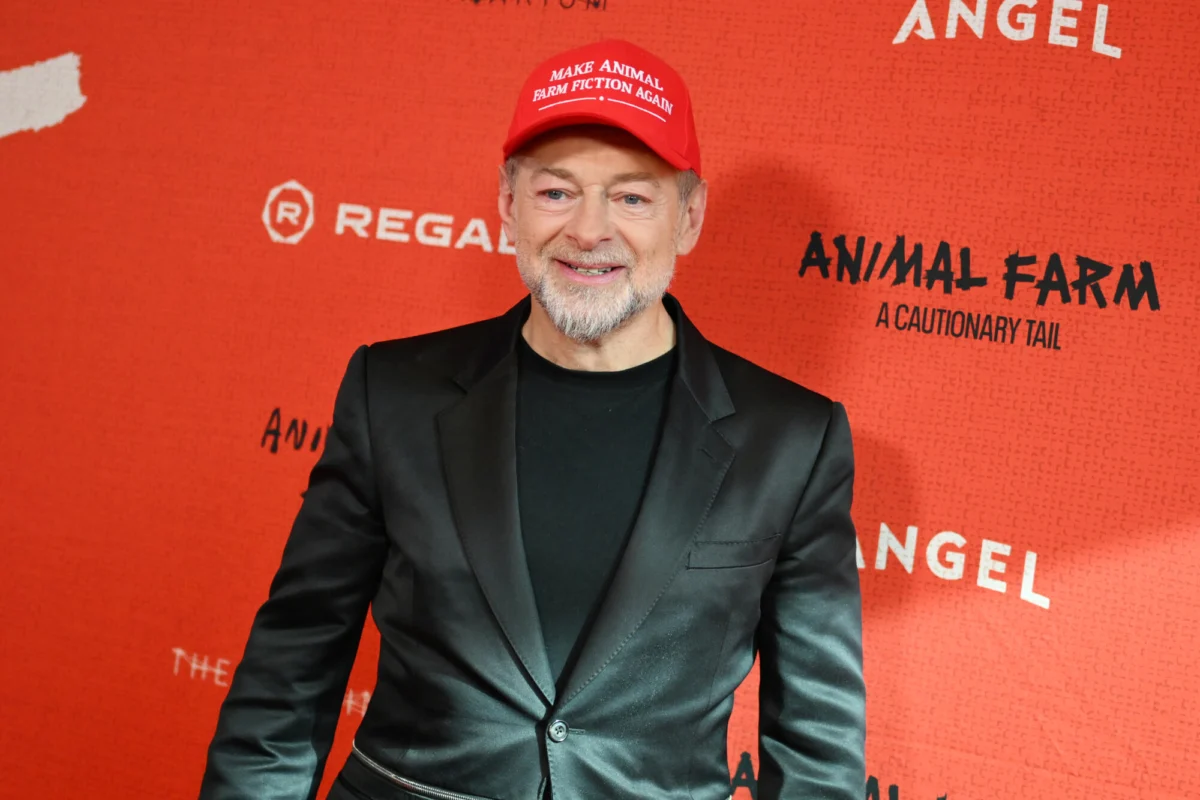
Enter visionary director and motion-capture pioneer Andy Serkis. Rather than delivering another gritty, hyper-realistic, and deeply somber historical parallel, Serkis has reimagined the classic text through a wildly unexpected lens. His newly released adaptation—distributed by Angel Studios—incorporates everything from original rap songs and physical humor to a steadfast insistence on injecting a sense of childish innocence into the narrative.
While purists may argue that the political bite of Serkis’s Animal Farm has been softened—leaving the allegory somewhat "hollow-boned as a bird’s"—the film stands out as a fascinating cinematic experiment. It represents a massive pivot in production: a project that initially set out to utilize cutting-edge photorealistic motion-capture technology, only to ultimately embrace full animation. In doing so, Serkis and his creative team deliberately threw off the shackles of photorealism to cultivate a look and feel that speaks directly to a broader, multi-generational audience.
The voice cast features heavy hitters who bring unexpected verve to Orwell’s barnyard. Seth Rogen lends his signature comedic timing to the power-hungry pig Napoleon, who systematically co-opts the radical equality preached by Snowball (voiced by Laverne Cox). Meanwhile, Serkis himself steps in to voice the tyrannical original owner, Farmer Jones, alongside Glenn Close as Freida Pilkington.
Chronology: From Motion-Capture Ambitions to Animated Reality
The journey of bringing Serkis’s Animal Farm to the silver screen was far from linear. For years, the project gestated as a heavy-duty motion-capture endeavor. Given Serkis’s monumental contributions to performance-capture cinema—having brought breathtaking nuance, cunning, cruelty, longing, and kindness to iconic characters like Gollum in The Lord of the Rings, Caesar in the Planet of the Apes trilogy, and the titular giant ape in Peter Jackson’s King Kong—he initially envisioned the farm animals through a hyper-realistic, digital lens.

However, as early visual effects tests rolled in, Serkis encountered an unexpected creative roadblock.
"The very early designs for the animal characters were much more unforgiving and brutal," Serkis explained in an interview with IndieWire. "When animals looked like they were starving, you could see their rib cages; the pigs were a lot more gluttonous and just looked meaner. There is a version of that film that could exist, but we wanted to reach out to a younger audience."
Realizing that photorealistic rendering would make the physical and psychological violence inflicted upon the farm animals overwhelmingly grim, Serkis and his producers made the bold pivot to traditional and stylized animation. This transition allowed the production to construct a critical "safety margin" for viewers of all ages. It ensured that audiences could process the dark thematic implications of tyranny, manipulation, and betrayal without being alienated by graphic, terrifying realism.
Once the pivot to animation was finalized, the production plunged into an exhaustive, multi-year process of worldbuilding, storyboarding, and recording. Working closely with brilliant production designer Amos Sussigan (from Anaventure), the animation team meticulously designed every single asset from the ground up—from individual blades of grass and rustic farm machinery to the sweeping, enclosed geography of the farm itself. The film finally completed its arduous journey, culminating in its theatrical release via Angel Studios.
Supporting Data & Production Insights: The Mechanics of Animated Worldbuilding
Transitioning from live-action and performance-capture directing to full animation presented a steep learning curve, even for a seasoned veteran like Serkis, whose directorial credits include Mowgli: Legend of the Jungle and Venom: The Last Dance. While there is plenty of overlap between the pre-visualisation (previz) stages of live-action VFX-heavy films and the spatial planning of modern game engines like Unreal Engine, animation introduced a completely different operational pace.

"You build every blade of grass, every piece of farm machinery, the entire world," Serkis noted, praising his collaboration with Sussigan, the layout teams, and the story department.
In live-action filmmaking, a director can typically shoot a designated set of pages in a single day, leaving them with an immediate, tangible version of a scene on the editing timeline. Even if visual effects or extensive sound design need to be layered on later, the foundational block of the scene exists. Animation, by contrast, requires a director to hold an entire scene in their head across various stages of completion for months—and sometimes years.
"Getting to the end of a scene on an animated movie can take years because it goes through so many different hands and skills," Serkis reflected. "So it was wonderful getting to know all the different departments in the animation team and to work with actors who were animators and be able to direct them in an interesting way."
Furthermore, budgetary constraints and story adjustments in the animatic and previz stages mean that directors must frequently "kill their darlings" long before the full animation pipeline even begins. Yet, despite the punishingly slow pace of production, animation offers distinct creative advantages—particularly for the voice actors.
Without the physical constraints of lighting setups, lens changes, camera blocks, and heavy physical gear, performers are granted an unprecedented level of freedom. Serkis encouraged his voice cast to lean heavily into this dynamic.

"If someone gives me the freedom to find a performance, I’ll try lots of different things," Serkis said. "Standing in front of the mic, not having to reset camera, change lenses, do setups, you know, just being able to go into another round? It’s a great way of working, and it’s a very creative way of working for an actor."
Official Responses and Creative Vision
Serkis’s artistic choices have sparked considerable discussion among critics and fans alike. While Orwell’s original text offers a chilling, uncompromising look at how absolute power corrupts absolutely, Serkis’s adaptation injects moments of levity, accessible humor, and an underlying message of safeguarding innocence.
Describing the target aesthetic to IndieWire, Serkis characterized the project as "a cautionary tale that has a whole heap of innocence around it." Rather than leaning into a cynical, bleak worldview where corruption entirely obliterates the possibility of redemption, Serkis’s vision refuses to simply sit passively with the harm done to the innocent without offering a pathway forward.
A key element of achieving this emotional resonance was the deliberate use of framing and close-ups. Despite translating the characters into animation, Serkis insisted on maintaining a cinematic language that mirrored the intimacy of motion-capture performances.
"I wanted the audience to reach out to the characters and to really feel—when the camera’s pushing in on a character’s face—what they’re going through," Serkis explained. "And not to feel that the animators had to overperform it, as such. That was a really interesting part of the process."

By guiding his animators to capture subtle, naturalistic human acting choices and mapping them onto creature-like facial structures, Serkis bridged the gap between theatrical nuance and animated expression. This is highlighted in dynamic voice performances like Seth Rogen’s smooth, manipulative portrayal of Napoleon and Laverne Cox’s idealistic, impassioned delivery as Snowball.
Implications: Redefining Adaptation for a New Generation
The release of Andy Serkis’s Animal Farm raises profound questions about how classic literature should be adapted for modern, diverse audiences. By softening the brutal, unforgiving edge of early visual designs in favor of an animated style accessible to younger viewers, Serkis has fundamentally shifted the entry point for Orwell’s timeless warning.
On one hand, traditionalists may argue that diluting the bleak, cynical reality of the Soviet-era allegory strips the story of its raw political power. By introducing elements like rap songs, physical comedy, and a refusal to let pure malice definitively win out, the film risks sanitizing a narrative designed to terrify readers into political vigilance.
On the other hand, Serkis’s approach democratizes the text. In an era where younger generations are increasingly bombarded by complex sociopolitical landscapes, Animal Farm acts as an essential gateway text. By making the characters visually approachable and emotionally resonant through intimate close-ups and stellar voice work, the film ensures that Orwell’s fundamental lessons on corruption, propaganda, and the abuse of power remain digestible for children and families.
Ultimately, Serkis’s Animal Farm proves that adaptation is not about carbon-copying text onto the screen, but about finding a resonant visual and thematic language for a specific moment in time. Whether viewed as a bold masterclass in animation worldbuilding or a controversial stylistic departure from a literary masterpiece, Serkis has ensured that the animals of Manor Farm will continue to spark heated debates across dining room tables and cinema seats for years to come.