
Sonic Intimacy and Emotional Resonance: Lê Bảo’s ‘Hearing’ Set for Locarno Premiere
The international film community has turned its gaze toward the upcoming Locarno Film Festival, where one of the most anticipated entries in the International Competition is Hearing (Thính Giác), the second feature from the visionary Vietnamese director Lê Bảo. Global sales agency Heretic has officially acquired the rights to the film, signaling high industry confidence in a project that merges technical precision with profound human sentiment.
A Narrative of Decibels and Distance
Hearing follows the life of Ninh, a mechanic whose profession—installing decibel meters in various public and private spaces—serves as the primary metaphor for his crumbling personal life. As the ambient noise levels in his environment begin to rise, Ninh finds himself increasingly attuned to the invisible signals of his own domestic isolation.
Living with his mother while remaining estranged from his ex-wife and young children, Ninh experiences a unique form of alienation. The film explores the paradox of a man whose livelihood is defined by the objective measurement of sound, yet who finds himself unable to quantify the emotional distance between himself and those he loves most. The narrative suggests that while decibels can be tracked, cataloged, and regulated, the weight of human longing and the silence of a broken family remain tragically immeasurable.
The Evolution of a Singular Voice
To understand the significance of Hearing, one must look at the meteoric rise of its director. Lê Bảo is a self-taught filmmaker who first stunned the global arthouse circuit with his debut feature, Taste. That film, which explored the raw, visceral realities of the human body in a decaying urban landscape, earned him the prestigious Encounters Special Jury Prize at the Berlin Film Festival.
With Taste, Lê Bảo proved himself a master of atmospheric storytelling, relying on visual language rather than traditional expository dialogue. Hearing represents a natural evolution of this aesthetic. While Taste focused on the physical endurance of the body, Hearing shifts the focus to the sensory experience of the soul. Reuniting with key members of his creative team—including cinematographer Nguyễn Vinh Phúc and production designer Lê Văn Thanh—Lê Bảo is pushing the boundaries of what Vietnamese cinema can achieve on a formal level. The addition of editors Carlo Francisco Manatad and Dounia Sichov promises a rhythmic structure that will likely complement the film’s preoccupation with sound and timing.
A Global Collaboration: The Production Tapestry
Hearing is a testament to the power of international cooperation in contemporary cinema. The film is a complex co-production involving nine distinct territories: Vietnam, Singapore, Norway, France, Indonesia, Saudi Arabia, Cambodia, Thailand, and Taiwan.
This expansive footprint is overseen by a dedicated team of producers—Elizabeth Wijaya, Lai Weijie, and Huỳnh Yến—who have managed to harmonize diverse cultural inputs into a singular, cohesive vision. Such a broad coalition of support is increasingly rare and highlights the universal resonance of Lê Bảo’s themes. By drawing from artistic traditions across Southeast Asia and beyond, the production team has ensured that Hearing possesses a cross-cultural fluidity, making it a truly global endeavor.
The Architecture of Sound
In a film titled Hearing, the sonic landscape is not merely an accompaniment; it is a primary character. The production has secured the expertise of renowned French sound designer Vincent Villa, whose resume includes critically acclaimed works such as Davy Chou’s Return to Seoul, Diamond Island, and White Building. Villa’s involvement ensures that the "decibel meters" central to the plot will sound as real as the silence that follows them.
Complementing the sound design is an original score by Norwegian electronic artist Per Martinsen, known under the moniker Mental Overdrive. Martinsen’s background in multimedia art and theater suggests a score that will move beyond traditional cinematic tropes, favoring a more immersive, textural approach that mirrors Ninh’s internal state. This marriage of high-fidelity sound design and experimental electronic music creates an auditory experience that is expected to be one of the film’s most enduring legacies.
Official Perspectives and Industry Excitement
The acquisition by Heretic was met with significant enthusiasm from both the sales agency and the director. In a statement, the Heretic team noted: "We are thrilled to be working with Lê Bảo and this outstanding team on Hearing. Lê Bảo has established himself as one of the most distinctive voices in contemporary cinema, and Hearing is a profoundly moving and formally accomplished work. We are excited to introduce this remarkable film to festival audiences and international partners around the world."
For his part, Lê Bảo expressed a deeply personal connection to the work. "I am happy to share with everyone my film Hearing, a place where I have preserved warm memories and profound longing," he said. "The film is as tender as the songs my mother used to sing while cycling with me as a child." This contrast—between the cold, metallic reality of decibel meters and the warm, nostalgic memory of a mother’s voice—underscores the thematic tension that the film promises to deliver.
Implications for the Future of Vietnamese Cinema
The premiere at Locarno is more than just a festival screening; it is a milestone for the burgeoning wave of "New Vietnamese Cinema." Over the last decade, filmmakers like Lê Bảo have moved away from the traditional, often melodramatic structures of local commercial cinema to embrace a more meditative, contemplative, and technically rigorous style of filmmaking.
The success of Hearing will likely encourage further international investment in Vietnamese projects that prioritize artistic integrity over box-office formulas. By successfully integrating Vietnamese narratives into a nine-territory co-production model, the producers have provided a blueprint for how smaller, independent regional stories can find a home on the global stage.
Looking Ahead: The Locarno Debut
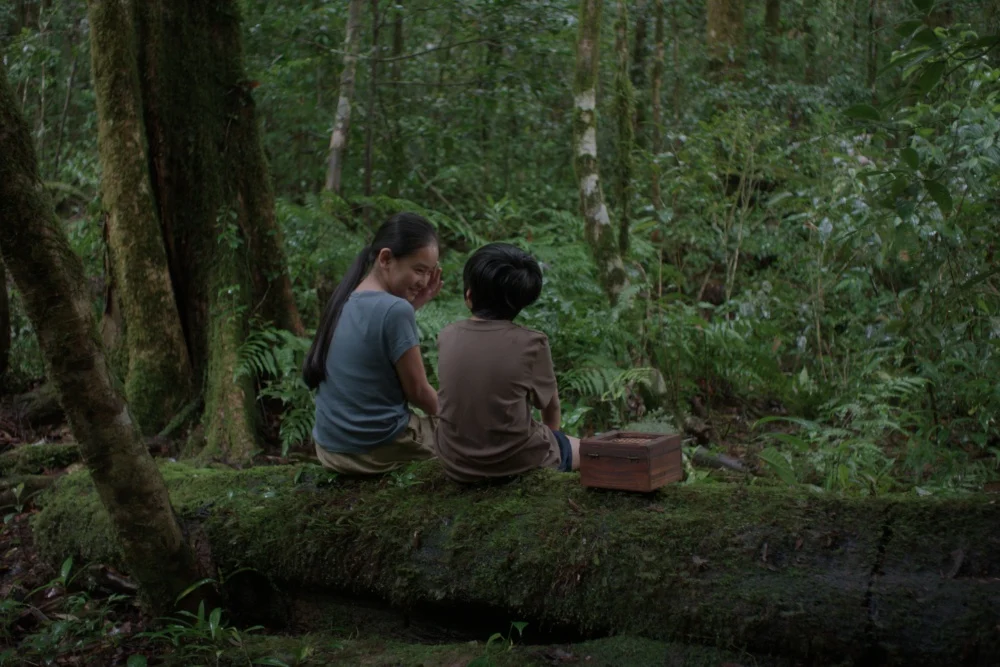
As the festival date approaches, the industry is closely monitoring the release of promotional materials. A recently unveiled clip offers a glimpse into the film’s stark, observational aesthetic, where the hum of machines and the silence of urban decay are given as much weight as the human figures on screen.
For international distributors, Hearing represents a high-prestige asset. It is a film that demands to be seen in a theater, where the careful calibration of sound can be fully appreciated. With sales inquiries being expertly managed by Ioanna Stais at Heretic, the film is poised to secure distribution deals across major markets in Europe, North America, and Asia following its Locarno run.
Ultimately, Hearing is a film about the thresholds of human endurance. Through the eyes of a man who measures the world in noise, Lê Bảo asks us to consider what we are not hearing: the quiet pleas for connection, the fading echoes of past joys, and the persistent, low-frequency hum of a life lived in the margins. As it prepares for its world premiere, Hearing stands as a reminder that the most profound conversations are often the ones held in silence.