Strategic Escalation: China Deploys New Coast Guard Task Force Near Taiwan’s Eastern Flank
BEIJING/TAIPEI – Tensions in the Taiwan Strait have shifted into a new phase of maritime brinkmanship. China announced on Saturday the deployment of a new, reinforced coast guard patrol mission in the waters east of Taiwan. The operation, described by Beijing as a routine exercise of jurisdictional authority, effectively replaces a previous task force that had already drawn sharp condemnation from Taipei and raised significant security concerns among Western powers.
This latest move is widely viewed by regional analysts as a calculated application of "lawfare"—the strategic use of legal arguments and administrative assertions to gain territorial advantages—designed to normalize a Chinese presence in waters that Taiwan claims as its own.
The Chronology of Escalation
The deployment represents the second major incursion of its kind in less than a month, signaling a shift in Beijing’s operational tempo.
- Mid-June: China initiated its first major coast guard operation in the waters off Taiwan’s eastern coast. Beijing explicitly framed this move as a retaliatory measure against Japan and the Philippines, who had announced intentions to begin formal dialogues regarding their maritime boundaries. Beijing claimed these discussions infringed upon Chinese territorial interests.
- Late June – Early July: Beijing continued to signal its intent to tighten its grip on the region, culminating in the publication of a formal "legal opinion" by China’s Ministry of Natural Resources on Thursday. The document warned international actors against engaging in maritime negotiations involving Taiwan, asserting that any such talks must include Beijing.
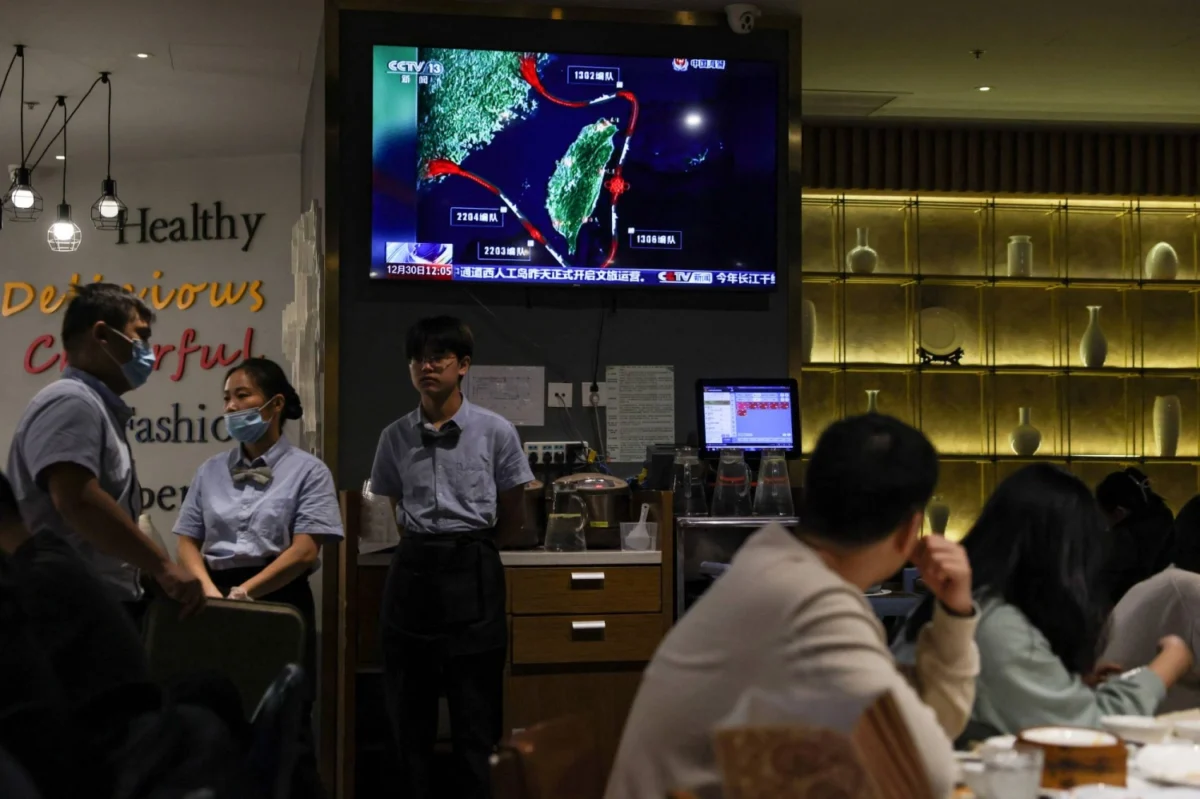
- Saturday Morning: The China Coast Guard (CCG) officially confirmed that a new task force had commenced "law enforcement patrols" east of Taiwan. By mid-morning, two Chinese vessels were tracked approximately 54 nautical miles (100 kilometers) off the coast of Hualien, the site of a strategically vital air base.
- The Immediate Response: The Taiwan Coast Guard (TCG) immediately mobilized, shadowing the Chinese vessels with two of its own ships to ensure they remained outside of restricted territorial waters while maintaining a constant monitoring presence.
The Doctrine of "Lawfare" and Maritime Jurisdictions
While China’s People’s Liberation Army (PLA) operates near Taiwan on a near-daily basis, the increasing reliance on the China Coast Guard serves a distinct purpose. By utilizing a law enforcement agency rather than the navy, Beijing is attempting to portray its actions as domestic police work rather than military aggression.
Asserting Legal Sovereignty
In its official statement, the CCG asserted that its presence is essential to "firmly safeguard China’s territorial sovereignty and maritime rights and interests." This language is carefully curated to challenge the status quo. By characterizing these waters as "jurisdictional," Beijing is systematically attempting to erode the recognition of Taiwan’s sovereignty under international law.
The "Legal Opinion" Offensive
The publication of the Ministry of Natural Resources’ legal opinion marks a significant escalation in the diplomatic theater. The document, issued in English to reach a global audience, cautioned that "all other states shall refrain from providing assistance to Japan and the Philippines" regarding their maritime boundary talks. This is an overt attempt to isolate Taiwan diplomatically, forcing other nations to choose between honoring Beijing’s territorial claims or risking geopolitical friction with the world’s second-largest economy.
Taipei’s Stance: A Policy of Resistance
Taiwan’s government has adopted an increasingly firm stance against what it characterizes as illegal harassment. Following the latest deployment, the Taiwan Coast Guard issued a stern, unequivocal directive:
"The Taiwan Coast Guard will continue to employ all necessary measures to forcefully expel Chinese vessels harassing our waters, steadfastly defend national sovereignty, and ensure the security of our maritime domains."
The Boarding Directive
Earlier this week, Taiwan’s maritime authorities took a proactive step in countering Beijing’s "lawfare" strategy. Taipei instructed its merchant and fishing vessels operating in the region to ignore any demands for boarding or inspection by the China Coast Guard. The TCG has made it clear that if such a demand were to occur, its vessels are authorized to intervene immediately to prevent the boarding. This policy creates a high-stakes scenario where a minor administrative interaction could potentially trigger a localized naval standoff.
International Implications and Western Alarm
The waters off Taiwan’s east coast have historically been considered a buffer zone. The presence of Chinese coast guard vessels in this area has sent shockwaves through Western capitals, including Washington, Berlin, Paris, and London.
The Risk of Miscalculation
The primary concern among defense analysts is the risk of tactical miscalculation. With multiple vessels from competing coast guards operating in close proximity, the potential for a collision or a misinterpreted signal is high. Unlike naval vessels, which operate under strict military protocols, coast guard vessels are often perceived as less predictable in their rules of engagement.
Global Strategic Interests
For the United States and its allies, the stability of the Taiwan Strait is not merely a regional issue but a cornerstone of global maritime security. Approximately half of the world’s container fleet passes through these waters. Any attempt by Beijing to enforce a "law enforcement" regime over these shipping lanes poses a threat to the concept of Freedom of Navigation, a principle long defended by the U.S. Navy.
Supporting Data and Strategic Context
To understand why this area is so contentious, one must look at the geography. Hualien, located on the rugged eastern coast of Taiwan, is home to a significant air base that serves as a primary defensive node for the island. By conducting patrols off this coast, Beijing is likely testing Taiwan’s radar and reaction times while also signaling its ability to project power into the deep waters of the Pacific, effectively encircling the island.
The Japan-Philippines Factor
Beijing’s sensitivity to the Japan-Philippines maritime boundary talks suggests that China fears the formation of a regional coalition that could effectively contest its expansive "nine-dash line" claims in the South China Sea and beyond. By attacking the legitimacy of these talks, China is attempting to prevent the normalization of a rules-based maritime order that excludes its own unilateral territorial assertions.
Conclusion: A New Normal?
As the situation evolves, the international community is left to grapple with a new, gray-zone reality. The deployment of the new coast guard task force is not a singular event but part of a persistent, long-term strategy to normalize Chinese presence in the waters surrounding Taiwan.
The core of the dispute remains irreconcilable: Beijing views Taiwan as an integral, breakaway province that must be reunified, while Taipei asserts that it is a sovereign, democratically governed state with the right to conduct its own foreign policy and manage its own waters.
As Beijing continues to use "lawfare" to blur the lines between diplomacy and coercion, the burden of maintaining peace falls on the tactical decision-making of the crews on the water. With both sides signaling a commitment to "defend sovereignty," the margins for diplomatic maneuvering are narrowing, and the potential for a sustained, high-tension confrontation in the Western Pacific continues to rise. The world watches with bated breath, as any shift in this maritime status quo could have profound, irreversible consequences for global trade and international security.