The "Backrooms" Phenomenon: How a $10 Million Indie Horror Smashed Box Office Records and Redefined Hollywood
Main Facts
In an era dominated by mega-budget superhero franchises and predictable intellectual property, the independent film landscape has achieved the unthinkable. A24’s low-budget horror sensation Backrooms has officially crossed the monumental $400 million threshold at the global box office, marking one of the most profitable and culturally significant theatrical runs in modern cinema history.
After nearly four months of captivating audiences on the big screen, the film has generated $197.5 million domestically and $202.57 million internationally, bringing its worldwide cumulative tally to an astonishing $400.07 million. Produced on a modest, independent budget of just $10 million, Backrooms has not only shattered all expectations but has also rewritten the history books for its distributor, A24. The film stands as A24’s highest-grossing release of all time, completely eclipsing the studio’s previous high-water mark set by Marty Supreme, which grossed $192 million.
The success of Backrooms is part of a larger, seismic shift in the entertainment industry. Directed by YouTube creator Kane Parsons—who was just 20 years old at the time of its release—the film capitalized on electric word-of-mouth and a fierce wave of enthusiasm among Gen Z moviegoers. Alongside fellow micro-budget horror smash Obsession (directed by 26-year-old Curry Barker, which pulled in a staggering $516 million globally on a $750,000 budget), Backrooms successfully upended the long-held Hollywood dogma that younger demographics had entirely abandoned theatrical moviegoing.
Fueled by this unprecedented wave of ticket sales, A24 enjoyed the most lucrative summer in its history. The indie powerhouse managed to outpace traditional major Hollywood studios like Warner Bros. and Paramount in overall seasonal market share. A24 closed out the summer box office with $237 million in total domestic receipts, claiming fourth place among all distributors. It landed ahead of Paramount ($192 million) and Warner Bros. ($165 million), trailing only industry titans Universal ($1.12 billion), Sony ($978.8 million), and Disney ($664 million).
Chronology: From Viral Internet Lore to Box Office History
The journey of Backrooms from an internet aesthetic to a global cinematic event spans years of digital evolution and a lightning-fast theatrical campaign.
The Origins (Pre-2022)
The concept of the "Backrooms" originated as a piece of creepypasta on 4chan before evolving into a massive internet phenomenon across Reddit, TikTok, and YouTube. The lore centers on "liminal spaces"—eerie, seemingly endless, monochromatic rooms and subterranean structures that evoke a deep, uncanny sense of nostalgia and dread.
The YouTube Breakthrough (2022)
Kane Parsons, then a teenager operating out of his bedroom, began uploading short, found-footage-style horror films centered on the Backrooms to his YouTube channel. Utilizing Blender and sophisticated digital effects, Parsons captured the imagination of millions, proving that atmospheric, low-fi terror could rival studio-grade horror.
The Greenlight and Production (2023–2024)
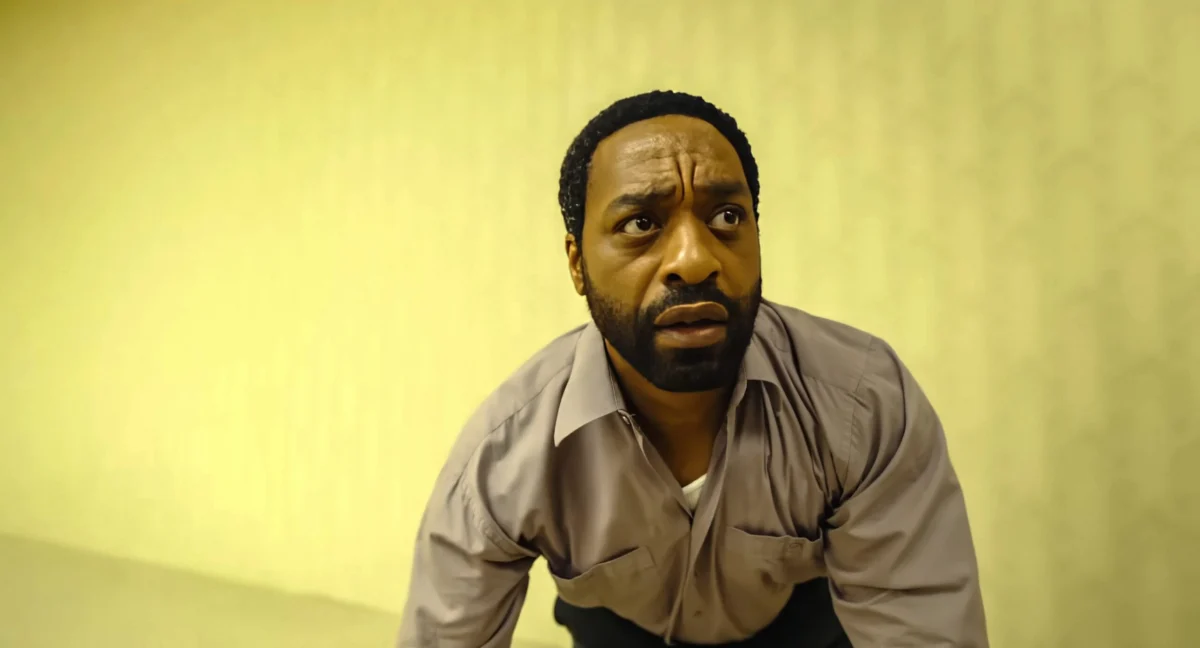
Recognizing the viral potential and rich atmospheric world-building of Parsons’ digital shorts, A24 stepped in to finance a feature-length adaptation. With a budget capped at $10 million, Parsons was given creative control to translate his internet aesthetic to the silver screen, casting established actors such as Chiwetel Ejiofor, Renate Reinsve, and Mark Duplass alongside the haunting liminal set designs.
The Record-Breaking Opening (Summer)
When Backrooms finally hit theaters, it did not just open—it exploded. The film delivered an astonishing domestic debut of $81 million and $118 million worldwide. This opening weekend more than tripled the domestic record previously held by Alex Garland’s 2024 thriller Civil War ($25.5 million) for A24. Furthermore, it etched Kane Parsons’ name into the record books: at just 20 years old, he became the youngest filmmaker in history to direct a No. 1 film at the box office, overtaking Josh Trank, who was 27 when Chronicle opened at the top spot in 2012 with $22 million.
Sustained Theatrical Legs and Global Dominance (Fall)
Unlike many modern blockbusters that suffer steep second- and third-week drops, Backrooms benefited from relentless social media engagement and viral discourse. Over a four-month theatrical window, the film steadily accumulated millions week after week. While North America proved to be a powerhouse with nearly $198 million, international markets responded with equal fervor. China led international territories with $27.8 million, followed closely by Mexico ($17.8 million), the United Kingdom ($17.6 million), Australia and New Zealand ($12.3 million), and France ($12.2 million).
Supporting Data and Financial Breakdown
To truly understand the magnitude of the Backrooms phenomenon, one must look at the hard data. The financial metrics associated with the film’s theatrical run highlight a masterclass in modern risk management and audience targeting.
Box Office Performance Metrics
- Total Global Gross: $400.07 million
- Domestic Gross (US & Canada): $197.5 million
- International Gross: $202.57 million
- Production Budget: $10 million
- Estimated Profitability Margin: Over 3,900% return on production investment.
International Territory Breakdown
- China: $27.8 million
- Mexico: $17.8 million
- United Kingdom: $17.6 million
- Australia & New Zealand: $12.3 million
- France: $12.2 million
Comparative Milestone Matrix
| Milestone Category | Backrooms Record | Previous Record Holder |
|---|---|---|
| A24 All-Time Highest Grossing | $400.07 million | Marty Supreme ($192 million) |
| A24 Opening Weekend (Domestic) | $81 million | Civil War ($25.5 million) |
| Youngest No. 1 Director | Kane Parsons (Age 20) | Josh Trank, Chronicle (Age 27) |
Summer Studio Market Share Rankings
- Universal Pictures: $1.12 billion (Includes Focus Features, distributor of "Obsession")
- Sony Pictures: $978.8 million
- Walt Disney Studios: $664 million
- A24: $237 million
- Paramount Pictures: $192 million
- Warner Bros. Pictures: $123 million
Official Responses and Industry Reactions
The unprecedented success of Backrooms has sent shockwaves through the entertainment industry, prompting executives, creators, and analysts to reevaluate how movies are greenlit, marketed, and consumed.
The Creator’s Perspective
Kane Parsons, whose transition from bedroom digital creator to blockbuster director has become legendary, has remained remarkably grounded while acknowledging the seismic nature of his achievement. In interviews following the film’s release, Parsons emphasized the importance of preserving the uncanny, unsettling tone that made his initial YouTube shorts viral sensations.
While a direct sequel has not yet been officially greenlit by A24, Parsons has openly expressed his desire to expand the universe. He has hinted at plans to transform Backrooms into an expansive cinematic franchise, exploring different layers and entities within the endless liminal architecture.
Traditional Hollywood’s Wake-Up Call
Major studios, long accustomed to relying on legacy IP, familiar comic book heroes, and multi-hundred-million-dollar budgets, have been forced to change course. The dual successes of Backrooms and Focus Features’ Obsession (directed by 26-year-old Curry Barker on a $750,000 budget) have exposed a massive appetite for content born from digital-native creators.
Industry insiders note that talent agencies and studio executives are currently combing through YouTube, TikTok, and independent web platforms to find "the next Kane Parsons." Studios including Blumhouse, Neon, and traditional major players are actively restructuring their scouting divisions to identify young digital auteurs who already possess built-in audiences and a distinct visual language.
Implications for the Future of Cinema
The triumph of Backrooms is far more than a financial anomaly; it signals a fundamental restructuring of the Hollywood ecosystem. As the industry looks toward the future, several key implications emerge from this historic box office run.
1. The Democratization of Filmmaking
For decades, breaking into feature film directing required navigating a rigid, decades-long ladder of short films, commercial work, and television directing. Kane Parsons bypassed this traditional pipeline entirely. Armed with consumer-accessible 3D software like Blender, a deep understanding of internet culture, and a passion for storytelling, Parsons proved that technical mastery and creative vision matter far more to modern audiences than a nine-figure budget. This democratization empowers a new generation of filmmakers to bypass gatekeepers and pitch their visions directly to audiences online.
2. Gen Z as a Theatrical Driving Force
Hollywood studio executives spent much of the early 2020s lamenting that younger audiences had permanently retreated to streaming services, TikTok, and video games. Backrooms and Obsession definitively proved this thesis wrong. Gen Z does not hate going to the movies; rather, they reject cynical, algorithm-tested corporate IP. When given authentic, community-driven event cinema that they can meme, discuss, and experience collectively, young audiences will show up in droves, turning moviegoing into a vibrant social ritual.
3. The New Economic Model for Studios
The profit margins achieved by Backrooms ($400 million on a $10 million budget) completely upend traditional Hollywood risk assessment. While tentpole blockbusters costing $250 million often struggle to break even due to exorbitant marketing and distribution costs, ultra-low-budget indie horror operating on viral word-of-mouth offers an astonishing risk-to-reward ratio. Moving forward, major studios and independent distributors alike are expected to pivot toward lower-budget, high-concept genre films, taking creative gambles on internet-native creators rather than doubling down on tired, inflated franchises.
4. The Rise of Liminal and Atmospheric Horror
The cinematic landscape is cyclical, and the massive financial success of Backrooms ensures that psychological, atmospheric, and liminal horror will dominate development slates for the foreseeable future. The film demonstrated that audiences are hungry for dread, mystery, and existential unease over traditional jump-scare-heavy slasher flicks. As studios rush to replicate this success, the horror genre is poised to enter a golden age of conceptual and visual experimentation.
In the end, Backrooms will be remembered not just as A24’s biggest commercial triumph, but as the moment the traditional gates of Hollywood were blown wide open by a 20-year-old YouTuber, forever changing how stories are told, financed, and experienced on the silver screen.