The Frame of Consent: Unpacking Gina S. Noer’s Like & Share and the Digital Reality of Gender-Based Violence
In her seminal 2003 essay Regarding the Pain of Others, Susan Sontag posited that we reside in an era where reality is fundamentally constructed by the spectacle. The camera, she argued, provides a bridge for spectators to witness realities that would otherwise remain inaccessible. Yet, this raises a haunting ethical dilemma: what defines the boundary between art that fosters genuine empathy and content that merely commodifies suffering?
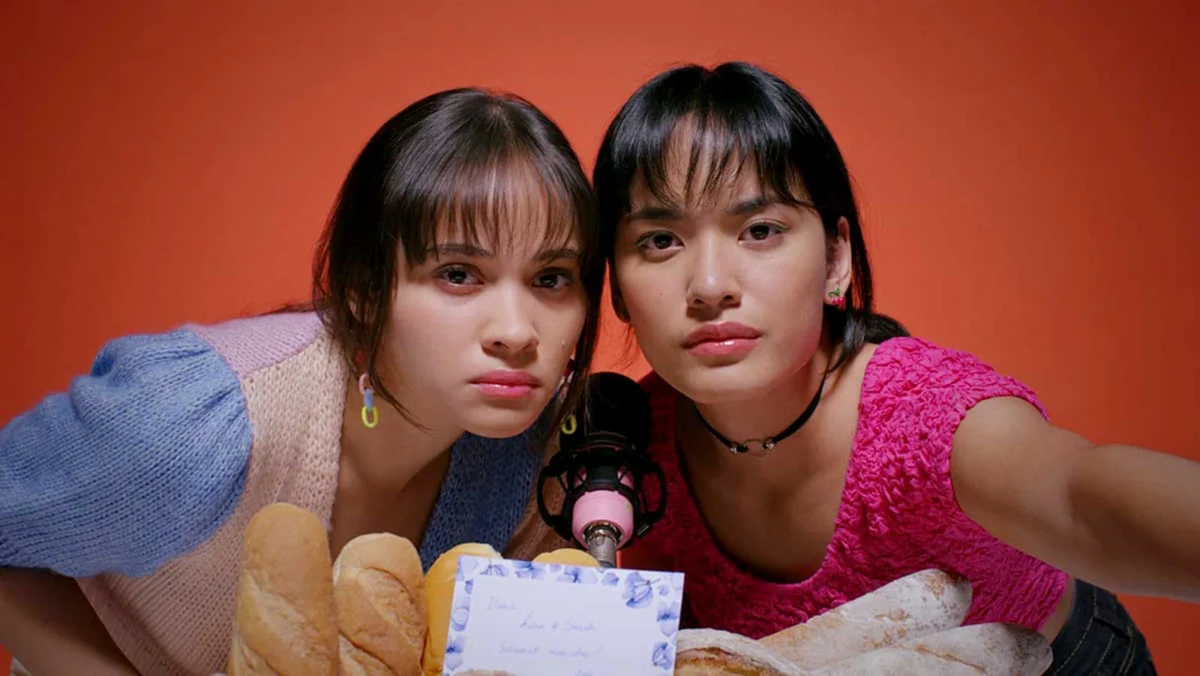
Gina S. Noer’s 2022 film Like & Share navigates these treacherous waters with unflinching precision. By examining the lives of two teenage girls, Lisa (Aurora Ribero) and Sarah (Arawinda Kirana), the film explores the toxic intersection of digital voyeurism, non-consensual image distribution, and the entrenched patriarchal structures that facilitate gender-based violence (KBGO).
The Main Facts: A Digital Mirror
Like & Share follows Lisa and Sarah, two high schoolers whose lives are inextricably linked to the glowing screens of their smartphones. They are digital natives, active creators of ASMR content who live their lives through a lens, constantly curating their existence for social media.
However, the film shifts from a story about adolescent digital trends into a harrowing examination of what happens when the "frame" is hijacked by others. When Sarah and their friend Fita (Aulia Sarah) become victims of online gender-based violence, the film forces the audience to confront the question Sontag once posed: what is being excluded from the frame of a leaked, non-consensual video?
Unlike films such as Searching (2018) or Profile (2018), which rely on "screen-life" aesthetics to tell their stories, Like & Share maintains a traditional cinematic distance. It uses the camera to place the audience in the same physical room as the characters, creating a sense of intimacy that makes the eventual violation feel personal and invasive.
Chronology of a Crisis: From Agency to Exploitation
The narrative arc of Like & Share is a deliberate descent from autonomy to violation.
- The Illusion of Control: Initially, Lisa and Sarah are shown as active agents. They choose when to record, what to edit, and how to present themselves. The film illustrates this through wide shots of them lounging by their windows, choosing to let the world watch them on their own terms.
- The Breach: The turning point arrives when their digital presence is weaponized against them. Through the lens of the film, we see how the "rape culture" inherent in their physical surroundings—at school, at home, and in public spaces—is mirrored and amplified in the digital sphere.
- The Confrontation: The film depicts the agonizing aftermath of NCDII (Non-Consensual Distribution of Intimate Images). It challenges the audience to reconcile their own role as spectators. Lisa, initially a consumer of adult content, is forced to recognize that the images she once viewed may have been the result of abuse, thereby transforming her from a passive viewer into a critical participant in the conversation regarding consent.
Supporting Data: The Systemic Roots of Violence
Like & Share moves beyond the tired narrative that "the internet is dangerous for teenagers." Instead, it argues that digital violence is merely a digital extension of existing, systemic misogyny.
The Domestic and Educational Pipeline
The film highlights the "rape culture" through various settings:
- Domestic Hierarchy: Lisa’s home life reflects a rigid patriarchal structure where her mother is pressured into submissiveness to ensure financial stability—a dynamic that permeates Lisa’s own understanding of power.
- Educational Abuse: In a chilling scene, a PE teacher shares a private video of Lisa swimming without her consent. This moment serves to show how institutions normalize the violation of a young woman’s body long before the internet even enters the equation.
The Myth of the "Perfect Victim"
One of the most radical aspects of the film is its refusal to paint Lisa and Sarah as "perfect victims." They are teenagers with sexual desires; they masturbate, they comment on the physical appearances of boys, and they willingly curate sensual content. By acknowledging their agency and sexual exploration, the film dismantles the harmful trope that a victim must be "pure" to deserve empathy. It asserts that consent is a binary—you either have it or you don’t—regardless of the victim’s sexual history or digital footprint.

Official Responses and Legal Context
The film’s release in Indonesia was timely, arriving shortly after the ratification of the Law on Sexual Violence Crimes (UU TPKS). This legislation marked a significant shift in the national landscape, moving away from archaic moralistic approaches toward a system that prioritizes the victim’s testimony and provides robust pathways for recovery.
Like & Share aligns with the spirit of this law by removing the "meta-language" often used in Indonesian cinema to soften the blow of sexual violence. Where previous films used ghost stories (Sundelbolong) or artistic distractions (the photocopier in Penyalin Cahaya) to discuss trauma, Gina S. Noer chooses a direct, uncompromising aesthetic. By doing so, she avoids "pink-washing" or "representational-baiting," choosing instead to treat the subject with the gravity it demands.
Implications: The Ethics of Watching
The film serves as a mirror held up to the audience. When we consume stories about violence, are we witnessing, or are we exploiting?
Challenging the Spectator
The film forces the viewer to grapple with uncomfortable questions:
- The Consent Spectrum: Does checking into a hotel room together imply consent for sex?
- The Complexity of Grooming: Can someone who has reached adulthood still be a victim of psychological grooming?
- The Burden of Proof: Does the digital age require us to redefine our understanding of "private" space?
Moving Beyond Metaphor
By stripping away the symbolic crutches often found in social-issue cinema, Like & Share invites a necessary, albeit painful, dialogue. It argues that we are currently living in a world where the "frame" is controlled by the powerful, and that victims are frequently edited out of their own stories.
The film does not offer a neat resolution. It doesn’t provide a "happily ever after" for the trauma depicted. Instead, it provides a foundation for the viewer to reconsider their own relationship with the digital spectacle. It asks us to be mindful of what we "like," what we "share," and most importantly, what we choose to look away from.
Conclusion: A Bold Cinematic Stance
In conclusion, Like & Share stands as a testament to the power of film to challenge societal norms. By choosing to be blunt rather than poetic, it forces the audience to engage with the reality of gender-based violence in Indonesia today. It is not a film designed for comfort; it is a film designed to trigger a re-evaluation of our shared digital ethics.
As Sontag might have observed, to frame a story is to exclude, but in the case of Like & Share, Gina S. Noer has used the frame to highlight exactly what society has spent too long trying to keep in the dark. By doing so, she hasn’t just made a movie; she has initiated an essential, difficult, and long-overdue conversation about the nature of consent in the 21st century.
Film Details:
- Like & Share
- Year: 2022
- Runtime: 112 minutes
- Director/Writer: Gina S. Noer
- Production: StarVision Plus, Wahana Kreator
- Cast: Aurora Ribero, Arawinda Kirana, Jerome Kurnia, Aulia Sarah, Omara N. Esteghlal, Sahira Anjani, Kevin Julio