The Great Green Hoodwink: Unraveling the Mystery Behind Paul Greengrass’s The Uprising
By the Entertainment Desk
Published: September 2026
If you have not been closely following the production and rollout of 2026’s The Uprising, you can be forgiven. On paper, the historical epic features all the hallmarks of a prestigious, if understated, cinematic release: a stellar ensemble cast anchored by Andrew Garfield, Thomasin McKenzie, and Jamie Bell, and direction by legendary auteur Paul Greengrass, renowned for his visceral, documentary-style approach to historical tension (United 93, Captain Phillips). Yet, The Uprising arrived as a modestly budgeted period drama backed by a relatively restrained marketing campaign.
Or so it seemed.
A few weeks prior to its theatrical release, The Uprising unexpectedly hijacked specific, highly vocal corners of the internet. A bizarre, fascinating mystery gripped film Twitter and various online fan communities: a persistent rumor suggested that this gritty retelling of the 1381 Peasants’ Revolt was, in fact, a secret Robin Hood movie. As circumstantial evidence mounted, internet sleuths began to wonder if audiences were being green-hoodwinked into seeing their second iteration of the legendary Sherwood Forest outlaw in nearly as many months, following the release of The Death of Robin Hood.
Now that The Uprising has finally landed in theaters, the answers to this cinematic conspiracy are finally available. But true to form for the year’s strangest movie mystery, the reality is somehow both clearer and muddier than ever before.
Main Facts: What is The Uprising About?
Depending on where you look for your cinematic metadata, you might encounter varying plot descriptions for The Uprising. This semantic fragmentation lies at the very heart of the marketing confusion.
For instance, the official trailer distributed by Focus Features frames the narrative thusly:
"Andrew Garfield stars as the leader of a ferocious rebellion against the tyranny of King Richard II. Set against the true events of the Uprising that helped inspire the legend of Robin Hood, he forms an army of the people to face the King’s might in a fight for justice."
IMDb offers a slightly more distilled, yet spiritually identical, synopsis:
"Based on the true story of the uprising that inspired the legend of Robin Hood, Andrew Garfield stars as the leader of a rebellion against the tyranny of King Richard II in a fight for justice."
From these baseline summaries, a consensus emerges: The Uprising dramatizes the historical events of the 1381 Peasants’ Revolt, with Andrew Garfield starring as the leader of the exploited peasantry. Supplementary production details confirm that Garfield’s character is known simply as “Ploughman.” If you are trying to anchor yourself in sanity amid the internet chaos, these historical facts provide a solid foundation.
The narrative waters grow murky, however, when processing the "Robin Hood" element. Official summaries state the film is set against events that "helped inspire the legend," implying a thematic inspiration rather than a literal adaptation of the character.
Yet, as audiences would soon discover, that interpretation is only partially correct—depending entirely on how one defines the legendary archer.
Chronology of a Controversy: How the Rumor Mill Exploded
The speculation surrounding The Uprising’s true identity did not materialize out of thin air. It was methodically engineered—or accidentally leaked—through a turbulent promotional timeline.
1. Pre-Production Origins
Before Andrew Garfield and Paul Greengrass boarded the project, industry trackers note that the film underwent several iterations. It was originally conceived under the working title The Hood, with Benedict Cumberbatch attached to star. Later, the project shifted gears, adopting the title The Rage with Matthew McConaughey reportedly circling the lead role. Long before The Uprising took its final shape, the project’s DNA was explicitly tied to the legendary outlaw.
2. The Trailer Drop
On August 20, Focus Features released the official trailer for The Uprising. While the footage largely showcased the brutal realities of 14th-century peasant life, eagle-eyed viewers caught glimpses of Andrew Garfield’s Ploughman clad in familiar green garb and wielding a bow and arrow.
3. Social Media Copy Blunders
While the trailer raised eyebrows, social media posts from Focus Features officially sealed the conspiracy. Accounts shared promotional material bearing the unmistakable sub "Witness the Rise of Robin Hood." For internet sleuths, this was the smoking gun.
Official Responses and Corporate Damage Control
As the "Rise of Robin Hood" discourse gained viral momentum, the studio apparatus panicked. In an attempt to tamp down expectations, Focus Features UK issued a direct and unambiguous statement:
"The Uprising is a historical epic about the Peasants’ Revolt of 1381, not Robin Hood. The UK marketing campaign does not make any reference to Robin Hood. Marketing materials posted by other countries that may appear in the UK online and on social media referencing Robin Hood are not issued or approved by us."
Far from clearing up the confusion, this geographic disavowal poured gasoline on the fire. If the film was strictly a historical account of 1381, why were social media teams pushing "Rise of Robin Hood" copy? Was the international marketing branch lying, or were they trying to warn audiences about a hidden twist? Did anyone within the promotional hierarchy understand what the movie was actually about?
The Big Reveal: Is It a Secret Robin Hood Movie?
Now that the film is playing in cinemas, we can finally look at what actually happens on screen.
Without mincing words: The Uprising is not a traditional Robin Hood movie, but it does heavily allude to the legend, effectively offering a gritty, alternate origin for the cultural archetype.
The Final Ten Minutes
The Robin Hood connection materializes in the film’s closing sequence. Following King Richard II’s brutal deception, several of Ploughman’s key rebel allies are assassinated. Ploughman and a small cadre of survivors manage to evade capture.
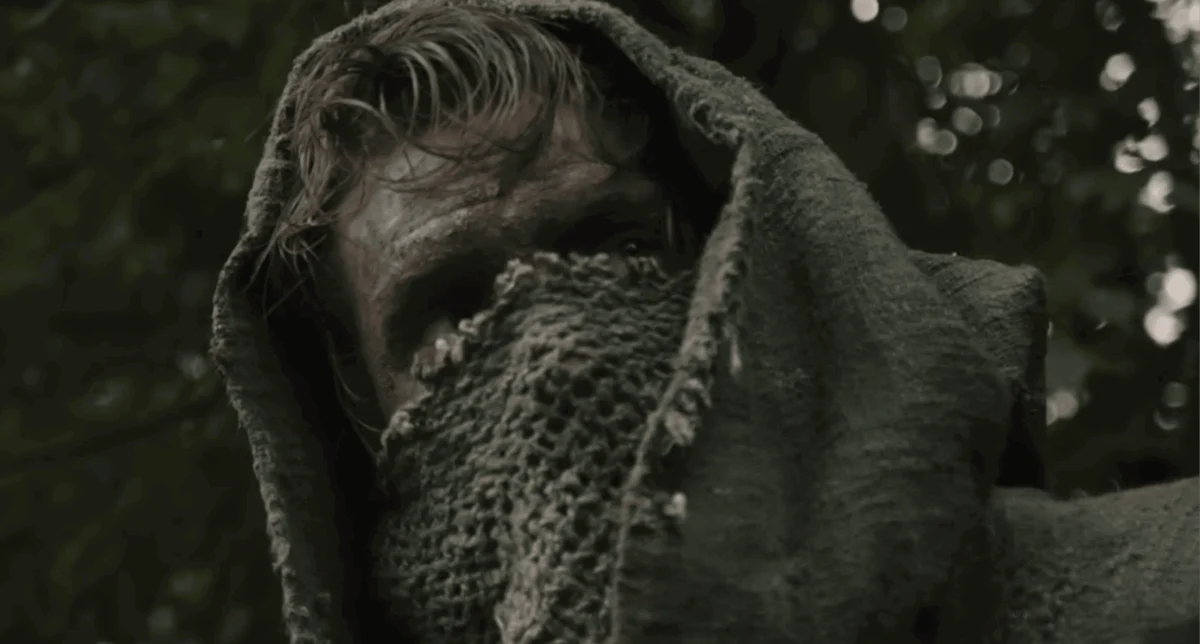
Cut to one year later. King Richard’s royal entourage is ambushed while traveling through a dense forest. The green-garbed leader of the ambush party is revealed to be Ploughman. Rather than executing the monarch, he spares the king’s life, delivering a chilling warning that he and his outlaws intend to terrorize the regime in the name of justice. The promotional footage of Garfield in a Robin Hood-esque outfit derives entirely from this climactic sequence.
Historical and Literary Inconsistencies
From a purely historical standpoint, this narrative link introduces fascinating discrepancies. The character name "Ploughman" is a clear nod to the Middle English poem Piers Plowman (believed to have been written around 1377). This text contains one of the earliest literary references to the Robin Hood legend:
"I do not know my Paternoster perfectly as the priest sings it, but I know rhymes of Robin Hood and Randolf, Earl of Chester."
Because Piers Plowman predates the 1381 Peasants’ Revolt, linking the genesis of Robin Hood directly to the revolt creates a chronological paradox. Furthermore, traditional folklore typically places Robin Hood during the reign of Richard the Lionheart in the 12th century.
Additionally, the film’s version of Ploughman lacks key components of the mythos: his Merry Men are absent, he is never explicitly called "Robin Hood," and there is no emphasis on "robbing from the rich to give to the poor."
Implications: Cast and Director Explanations
In post-release interviews, the creative team has attempted to rationalize the marketing storm and thematic choices.
Andrew Garfield offered a philosophical perspective to The Hollywood Reporter:
"The Robin Hood aspect is more of an emergent energy and archetype within our story… It’s a figure that starts to emerge from the unconscious and the ground during periods of time when common folk are feeling disempowered… There is this archetypal energy that starts to rise up."
Director Paul Greengrass offered a more pragmatic defense of the marketing campaign in his interview with The Hollywood Reporter:
"You can’t lay out everything at the start. You want a campaign that builds. So it was [Focus Features’] idea to entice people with the idea that there’s something more than they think, and there is… I think we’ve been a bit unfairly criticized for the marketing."
Speaking with IGN, Greengrass elaborated on his historical inspiration:
"The legend of Robin Hood, the real explosion of the popularity of outlaw stories, is all after the Peasants’ Revolt… There was nobody ever called Robin Hood. He was a superhero, really… The Robin of Loxley, the disaffected, dispossessed aristocrat, that’s a Victorian 20th-century invention."
Crucially, Greengrass revealed how the "Rise of Robin Hood" tagline came to be: American test audiences responded enthusiastically when they connected the historical dots during preview screenings. Recognizing this, the U.S. marketing team decided to lean into the connection on social media, creating a transatlantic disconnect with their UK counterparts.
Conclusion
Ultimately, The Uprising stands as a unique casualty—and beneficiary—of modern internet culture and studio marketing fragmentation. Greengrass views the film’s ending not as a strict historical origin story for a literal man named Robin Hood, but as a thematic tribute to how oppressed populations weaponize folklore to keep hope alive.
Whether the marketing campaign was a stroke of genius or a catastrophic miscommunication, it has successfully dominated entertainment news cycles. As audiences file into theaters to experience The Uprising for themselves, one thing is certain: the legend of the green-clad outlaw remains as powerful in the 21st century as it was in the forests of 14th-century England.