Deep Space Cameos and Timeline Riddles: Dissecting the Star Trek: Strange New Worlds Easter Eggs That Have Fandom Buzzing
Introduction
When the creators of Star Trek: Strange New Worlds decide to play with time anomalies, history demonstrates that viewers are in for a narrative rollercoaster. True to form, the latest episode delivers a densely packed, multi-layered experience. True to the franchise’s rich traditions, the series leans heavily into speculative "What if?" scenarios, recursive callbacks, and the structural chicanery that temporal storytelling permits.
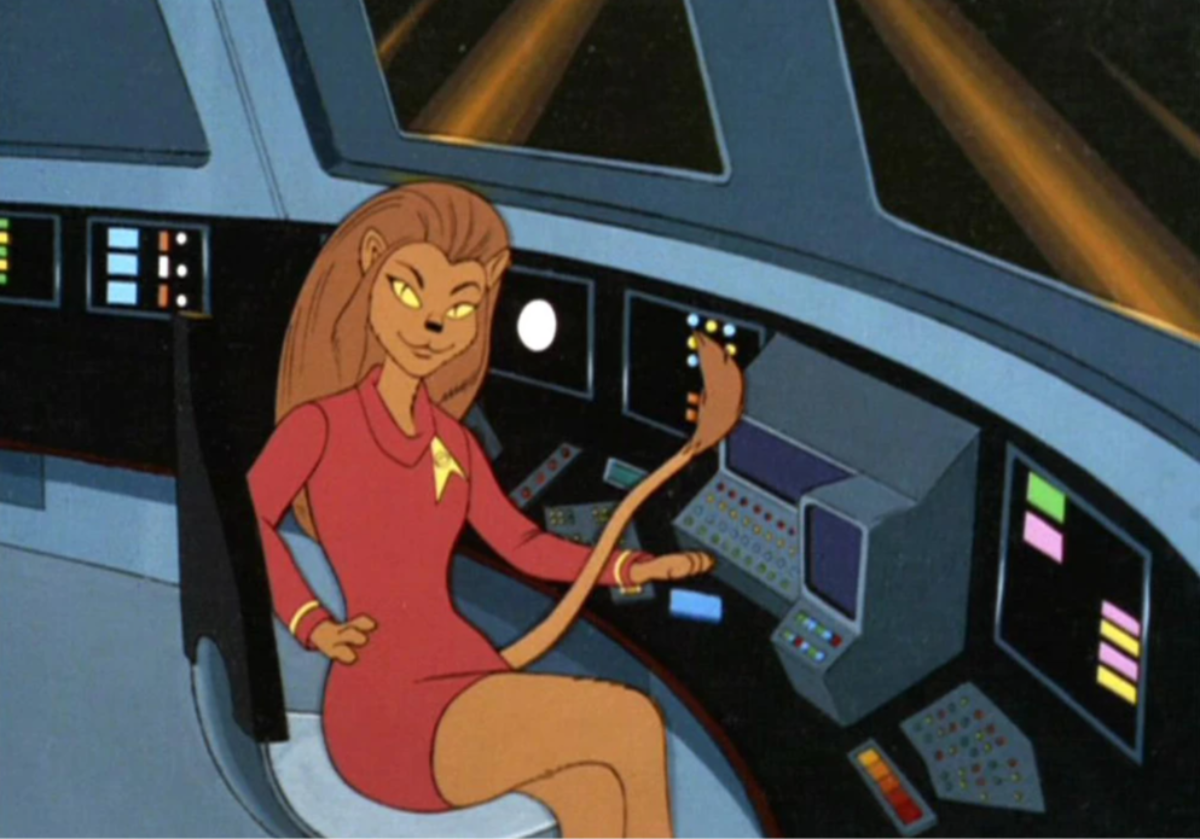
Yet, amidst a sprawling episode that has given the internet plenty of heavy lifting to do in terms of fan theories and critical breakdowns, one remarkably brief detail has managed to captivate the collective consciousness of the fandom. It is not a massive ship-to-ship battle, nor is it a universe-shattering ontological revelation. Instead, it is a fleeting, blink-and-you’ll-miss-it visual cameo: a towering feline humanoid who bears a striking resemblance to M’Ress, a beloved fixture of 1970s animation.
Main Facts: The Feline Cameo and the Animated Legacy
The moment in question occurs early in the episode as Lieutenant Nyota Uhura prepares for an intricate spacewalk. For the casual viewer, the scene focuses on the immediate dramatic tension of the extravehicular operation. However, eagle-eyed fans who pause or scrutinize the background of the shuttle bay will spot an unmistakable figure: a giant, bipedal cat proudly wearing a Starfleet uniform.
To anyone well-versed in the expansive lore of the franchise, this background extra is immediately identifiable as M’Ress. For the uninitiated, M’Ress is a Caitian Starfleet officer who originally debuted in Star Trek: The Animated Series (TAS), which aired from 1973 to 1974. Voiced by the legendary late actress Majel Barrett, Lieutenant M’Ress served as a communications officer and occasional relief science officer aboard the USS Enterprise under the command of Captain James T. Kirk.
Despite her unique visual design and popularity among dedicated purists, M’Ress has largely remained relegated to the animated margins of the franchise. Aside from a few sporadic nods in non-television media, comic books, and novels, she has rarely crossed over into live-action iterations of the universe. Seeing her—or at the very least, an unmistakable homage to her—standing casually in the shuttle bay of a live-action Enterprise represents a major watershed moment for fans of the animated era.
Chronology and Continuity: Bending the Timeline
This sudden appearance, however, opens up a fascinating logistical debate regarding the rigid, often fragile architecture of Star Trek canon.
The Timeline Mismatch
- The Setting of "Tomorrow’s Enterprise": While the exact calendar year of Strange New Worlds is kept somewhat flexible by its showrunners to preserve narrative fluidity, current in-universe estimates place this specific episode around the year 2263.
- The Animated Series Era: Canonically, Star Trek: The Animated Series picks up during the final frontier voyages of the USS Enterprise, generally pegged around 2269—roughly six years after the presumed timeline of this Strange New Worlds episode.
This creates a classic "Comic Book Guy" observation: M’Ress technically shouldn’t be serving aboard the Enterprise at this point in history. The showrunners have effectively brushed aside the rough chronological friction between Strange New Worlds and the 1970s animated show to give a beloved secondary character her moment in the spotlight.
The Chronological "Get-Out-of-Jail-Free" Card
Of course, continuity purists need not panic entirely. The creative team has smartly built in plausible deniability.
There is a distinct possibility that the Caitian officer visible in the shuttle bay is not M’Ress herself, but simply another member of the Caitian species serving in Starfleet, functioning as an affectionate visual nod to the character. Alternatively, even if it is M’Ress, the showrunners have left themselves a chronological safety valve. Perhaps M’Ress was merely visiting the ship on a temporary diplomatic or academic exchange tour. By refusing to explicitly confirm her identity on-screen, the production team manages to pay homage to the past without outright fracturing the franchise’s precious internal timeline.
Supporting Data: The Aleek-Om Connection
Astoundingly, the feline lieutenant isn’t the only deep-cut reference to The Animated Series tucked away in this sequence. Keen observers who scan the background during the same narrative window will spot another unmistakable silhouette: a tall, yellow, bird-like alien.
This figure strongly resembles Aleek-Om, a character from the classic TAS episode "Yesteryear"—the landmark installment that deeply explored Spock’s childhood on Vulcan.
The Aurelian Connection and Temporal Investigations
Just as with the Caitian sighting, the appearance of an Aurelian opens up rich avenues for speculative analysis:
- Historical Precedent: In "Yesteryear," Aleek-Om was associated with historical study and cultural preservation, interacting directly with Vulcan society.
- Expanded Universe Lore: In the officially licensed Star Trek novel lines, Aleek-Om eventually finds a home within the Department of Temporal Investigations.
Given the heavy time-manipulation themes and chronological anomalies plaguing the episode, an operative or scholar with ties to temporal studies would find themselves naturally drawn to Uhura’s predicament. Whether this background figure is Aleek-Om personally or simply another Aurelian observer, the thematic resonance remains intact: the universe is being watched by forces that understand the fragility of time.
Official Responses and Behind-the-Scenes Insights
While major studio executives and showrunners often maintain a veil of mystery regarding hidden Easter eggs, the creative minds behind modern Star Trek have never hidden their adoration for the franchise’s entire history—including its animated predecessor.
Historically, series creators like Akiva Goldsman and Henry Alonso Myers have spoken openly about treating the entire multi-decade tapestry of Star Trek as a singular, living sandbox. Rather than viewing The Animated Series as a non-canon outlier—a designation the series suffered from for decades before later being officially embraced by Paramount—modern showrunners treat it as fertile ground for world-building.
By introducing physical, live-action representations of classic alien designs like the Caitians and Aurelians, the production design teams bridge a nearly fifty-year gap in television history. Practical creature effects and modern costuming allow classic cartoon designs to feel grounded within the sleek, high-budget aesthetic of contemporary prestige television. While official press statements have remained tight-lipped regarding detailed character bios for the background extras, the visual cues speak volumes about the reverence the production crew holds for the franchise’s roots.
Implications for the Future of the Franchise
The inclusion of these micro-cameos is much more than a cheap trick designed to induce momentary nostalgia. It carries profound implications for how modern Star Trek handles its legacy:
1. The Weaponization of Fan Service
When executed poorly, fan service feels like an anchor dragging down a narrative. However, when executed as a background detail—a reward for viewers who pay close attention—it enriches the viewing experience without alienating casual fans who are simply following Uhura’s story. It turns the starship background into a living, breathing ecosystem where deep-lore creatures feel normal and everyday.
2. Validating the Animated Era
For years, The Animated Series occupied an awkward space in television history. By pulling visual designs, alien species, and specific characters forward into the live-action canon of Strange New Worlds, the franchise definitively cements the animated adventures as vital, recognized pieces of Starfleet history.
3. Broadening Species Diversity
Introducing prominent Caitians and Aurelians into active Starfleet duty visually reinforces the inclusive philosophy of the United Federation of Planets. Seeing diverse, non-humanoid or non-traditional mammalian designs populating the corridors of the Enterprise adds a layer of alien authenticity that earlier live-action television budgets could rarely sustain.
Conclusion
Star Trek: Strange New Worlds continues to walk the tightrope between high-stakes temporal drama and joyful franchise celebration. By dropping subtle, fleeting references to M’Ress and Aleek-Om, the creative team has ignited a fresh wave of enthusiasm across message boards, podcasts, and review sites.
Whether these appearances are meant to be taken as strict chronological canon or simply affectionate winks to the audience, they prove that the heart of Star Trek beats stronger than ever when it honors its past while boldly exploring new frontiers. As the season progresses, fans will undoubtedly keep their fingers on the pause button, scanning every corridor, shuttle bay, and mess hall for the next hidden treasure from the final frontier’s animated history.