The Persistent Search for Meaning: Lee Chang-dong Returns to the Global Stage
Eight years have passed since the haunting, enigmatic frames of Burning captivated the world, cementing Lee Chang-dong’s status as one of the most vital voices in contemporary global cinema. For a filmmaker whose work is characterized by its profound psychological depth and social observation, the prolonged silence that followed his 2018 masterpiece led to inevitable industry speculation about his future. However, as Lee prepares to unveil his latest project, the Venice competition title Possible Love, he clarifies that his absence was never a retreat. Instead, it was a period of deliberate distillation—a time spent waiting for the right story to bridge the gap between his own internal evolution and the changing landscape of modern life.
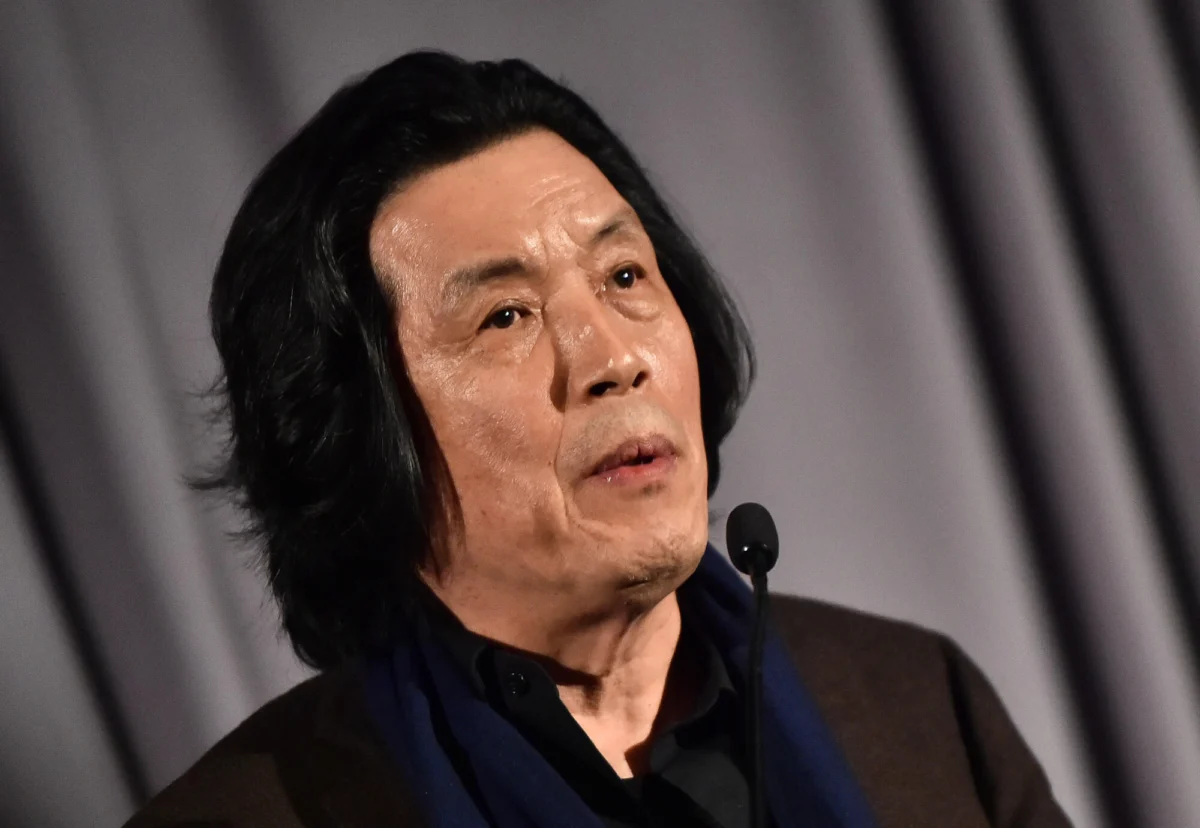
Speaking exclusively to Variety at the Malaysia International Film Festival (MIFFest), where he was honored with a Lifetime Achievement Award, the South Korean auteur reflected on the nature of his craft, the influence of his predecessors, and the precarious future of the industry that made him a global icon.
Chronology of a Master: From Literature to the Lens
Lee Chang-dong’s trajectory is unique among his peers. Before he was a director, he was a novelist—a background that continues to inform his approach to narrative structure, character interiority, and the rhythm of dialogue. His transition into cinema in the late 1990s brought a literary sensibility to the screen that transformed Korean cinema.
- 1997: Lee makes his directorial debut with Green Fish, a gritty, melancholic look at the erosion of innocence in the face of urban sprawl and organized crime.
- 2000s: Films like Peppermint Candy (2000) and Oasis (2002) establish him as a master of exploring the human condition under extreme social and historical pressure.
- 2007-2010: Secret Sunshine and Poetry achieve international acclaim, with Poetry winning the Best Screenplay award at Cannes, solidifying his reputation as an essential global filmmaker.
- 2018: Burning, an adaptation of a Haruki Murakami short story, receives universal acclaim for its ambiguous, slow-burn tension, marking the pinnacle of his career thus far.
- 2024: Following a deliberate, thoughtful hiatus, Lee returns to the international circuit with Possible Love, set to compete at the Venice International Film Festival.
For Lee, these projects are not merely career milestones; they are chapters in an ongoing investigation into what it means to be alive. "I’ve loved stories since I was young," Lee reflects. "I’ve tried to understand life through stories. It’s also how I communicate with audiences. Just as I’m looking for stories, I’m also looking for meaning in life."
Supporting Data: The Art of the Encounter
While the industry often fixates on the quantitative metrics of a director’s success—box office returns, festival trophies, and streaming figures—Lee maintains a steadfast focus on the qualitative. To him, the Lifetime Achievement Award is not a period at the end of a sentence, but rather an invitation to continue the dialogue.
"It’s not an achievement," Lee insists. "It’s more like encouragement that makes me want to make better films in the future."
In an era dominated by algorithmic content and franchise tentpoles, Lee remains deeply concerned with the physical, emotional connection between film and viewer. He notes that while modern directors are increasingly judged by the cold data of the industry, the soul of cinema lies in the intangible. "The key reason I keep making films is the audience—their facial expressions, their encounters with the film. Thanks to cinema, I feel connected to something much bigger."
His approach to filmmaking is deeply influenced by his roots in literature. "Literature is completed when it reaches the reader," he explains. "Once someone reads a sentence in a novel, they create their own imagination. Cinema, in its best form, does the same thing. It asks the audience to participate in the construction of meaning."
Official Responses and Influences
During his time at MIFFest, Lee took the opportunity to pay homage to the giants who paved the way. He specifically cited Taiwanese auteur Hou Hsiao-hsien’s 1983 classic, The Boys From Fengkuei, as a cornerstone of his own creative DNA.
Recalling his first experience with the film—watched on a grainy VHS tape with English subtitles—Lee describes a moment of profound recognition. "When I first saw it, I felt as if I had lived that life," he says. "It was as if I had made the film myself." This encounter with Hou’s work helped Lee understand that cinema is not just a medium for storytelling, but a vessel for capturing the texture of existence—the quiet moments, the unspoken tensions, and the passage of time.
Meeting Hou years later during a retrospective in South Korea served as a full-circle moment, reinforcing Lee’s belief in the universality of the cinematic language. It is this lineage—a tradition of patient, observational, and deeply humanist filmmaking—that Lee carries forward into his own work.
Implications: The Future of Korean Cinema
The "Korean Wave" (Hallyu) has been one of the most significant cultural phenomena of the 21st century. With the global success of Bong Joon-ho’s Parasite and the ubiquity of Korean television and music, the world is looking to Seoul for the next great creative movement.
However, Lee approaches this surge of international attention with a measured, cautionary perspective. While he acknowledges the excitement, he is also concerned about the sustainability of this creative energy.
"It’s very exciting that Korean cinema is receiving so much attention," Lee notes. "But I also wonder whether younger filmmakers will be able to sustain this creative energy in the future. I think that’s something all filmmakers should continue thinking about."
His concern stems from the pressure to replicate success. When a national cinema becomes a brand, the risk of commodification increases. For a director like Lee, who prioritizes the integrity of the vision over the speed of production, the challenge for the next generation is to resist the lure of the commercial machine and maintain the same rigor that brought them to the world stage in the first place.
The Road to ‘Possible Love’
As the film community prepares for the release of Possible Love, the anticipation is palpable. Given Lee’s history of transforming simple, often mundane premises into complex existential puzzles, the film is expected to be another landmark in his filmography.
His process is famously slow, involving years of writing and re-writing. He does not rush to the set; he waits until the story has fully "lived" in his mind. This patience is a radical act in an industry that demands constant output. By choosing to step away for eight years, Lee has effectively curated his own pace, ensuring that when he does speak through his films, the message is one that has been carefully considered and deeply felt.
The return of Lee Chang-dong is more than just a release date on a calendar; it is a reminder of the power of the filmmaker as an author. In an age of rapid consumption, his work serves as a necessary anchor—a call to slow down, to look closer, and to find the hidden threads that connect us all.
"I am still looking for meaning," Lee says, his words echoing the central themes of his entire body of work. "And as long as I am looking, there will be stories to tell."
As Possible Love makes its way to the screens of Venice, the world waits to see what new truths Lee has discovered in the silence of his eight-year wait. For his audience, the wait has never been about the absence of film; it has been about the anticipation of a new, profound encounter with the human experience.