The Resurrection of a Neo-Noir Classic: Jason Patric and the Enduring Legacy of ‘After Dark, My Sweet’
In the mid-1980s, the landscape of independent cinema was shifting. At the center of this movement was Brooksfilms, the production powerhouse founded by comedy legend Mel Brooks. Having shepherded critical darlings and box-office successes like David Lynch’s The Elephant Man, Frances, and David Cronenberg’s The Fly, the company was the gold standard for prestige independent filmmaking. For a 19-year-old Jason Patric, landing a starring role under the Brooksfilms banner in 1986 felt like an initiation into the pantheon of serious acting.
However, the reality of the industry soon proved jarring. The project, Solarbabies, was intended to be a blockbuster, a high-concept, sci-fi-infused teenage riff on Rollerball and Mad Max. Instead, upon arriving on location in Spain, Patric found himself on the set of a creative disaster. The experience was so disillusioning that it nearly ended his career before it had truly begun. "I got there and just went, ‘Oh my God,’" Patric recalled in a recent interview. By the time the cameras stopped rolling, the young actor was questioning whether the business of Hollywood was worth the emotional toll.
Yet, from that nadir emerged a trajectory of artistic integrity that would define the next four decades of Patric’s career. His journey—from the brink of quitting to becoming the face of some of the most respected, gritty, and daring films of the 1990s—is inextricably linked to his creative partnership with filmmaker James Foley.
A Meeting of Minds: The Foley Connection
Following the Solarbabies debacle, Patric sought firmer ground. He found it in Joel Schumacher’s The Lost Boys (1987), which solidified his status as a burgeoning star. He followed this with Kevin Reynolds’ The Beast, a stark, unconventional war drama. While the film was "dumped" by the studio—receiving a limited release that saw it disappear almost immediately—it found its way into the hands of director James Foley.
Foley, who had made a splash with the 1984 debut Reckless and the 1986 crime masterwork At Close Range, was at a professional crossroads. His 1987 follow-up, Who’s That Girl, had paired him with the world’s most famous star, Madonna, but the resulting critical and commercial failure had effectively made him a pariah in the studio system.
The meeting between Patric and Foley was not a standard industry pitch. "I don’t know how he saw [The Beast], because it was only in two theaters for one week," Patric noted. When they finally met, the conversation bypassed career maneuvering entirely. "We talked for two or three hours. He didn’t bring up the project, and he never brought it up again. But from that moment on, we were as tight as we could be."

The "After Dark" Mandate: A Defining Moment
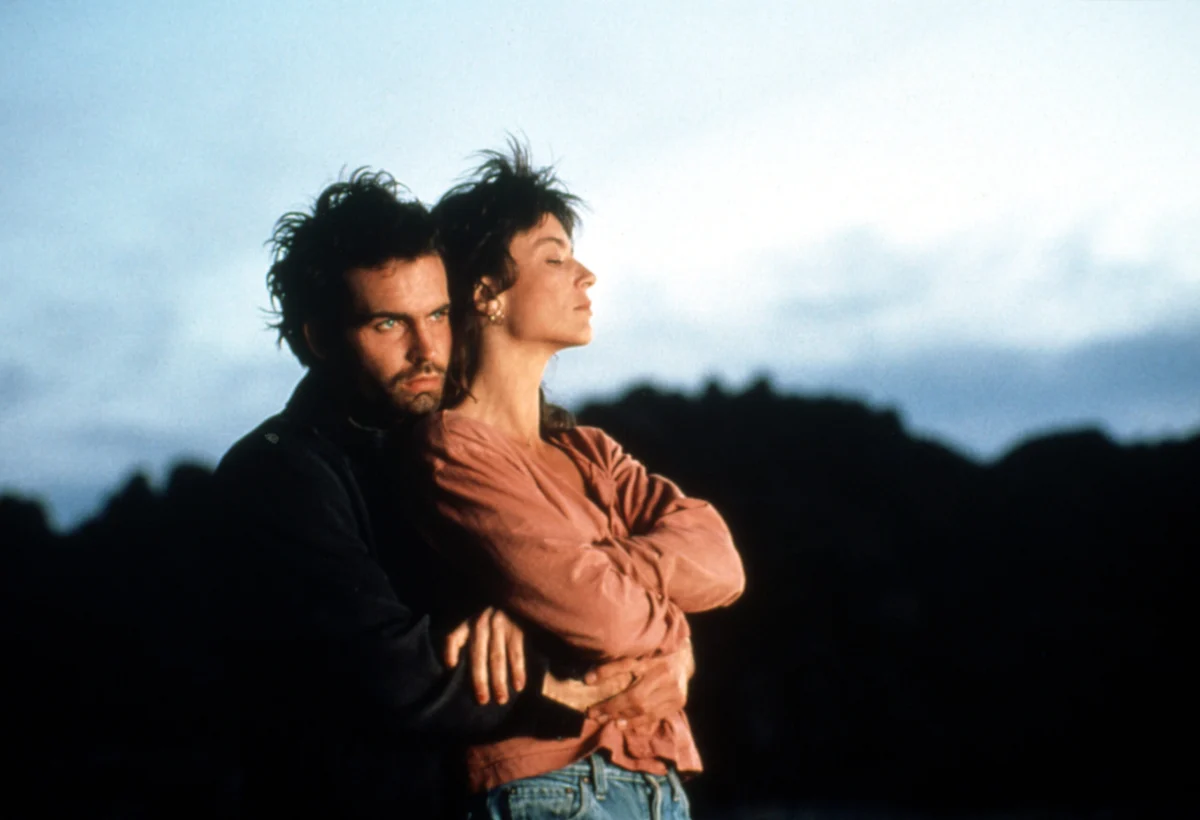
Both men were hungry for a project that would allow them to exercise their full range as artists. They found their catalyst in an adaptation of Jim Thompson’s noir novel, After Dark, My Sweet.
For Patric, the stakes were existential. "I was at a point where I knew what I could do and how I wanted to do it, but nothing was coming in," he explained. When the script landed on their desks, the shared recognition was immediate. Patric, then only 23, made a bold declaration to his director: "I told Foley that if I couldn’t nail this guy, I was packing it in. I knew I would only get an opportunity like this a handful of times."
Patric’s philosophy on the nature of a career is one of rigorous selectivity. He views an actor’s legacy not through the volume of work, but through a few pillars of excellence. "Look at your favorite actors, whoever they are. I don’t care if they had 40-year careers, there are only six movies you really talk about. And you know when one of those is coming along."
Method and Craft: Building ‘Kid’ Collins
To inhabit the role of "Kid" Collins—an ex-boxer struggling with the wreckage of his past—Patric embarked on a deep immersion. He trained in the boxing ring to understand the physical toll of the sport, but more importantly, he worked to craft a specific, elusive body language. The character required a delicate balance of vulnerability and volatility. Was he a victim of his own circumstances, or a man whose dim-wittedness masked a darker nature?
The resulting performance was a masterclass in ambiguity. When the film premiered in 1990, it failed to ignite the box office, but it struck a deep chord with critics. Roger Ebert, one of the most influential voices in film history, championed the work, declaring it one of the best films of 1990 and identifying Foley as a chronically underappreciated visionary.
The Implication of Cult Status and Institutional Memory
Despite critical acclaim, Foley’s career continued to be a cycle of feast and famine. He would go on to direct the powerhouse adaptation of David Mamet’s Glengarry Glen Ross, the stylized teen thriller Fear, and significant episodes of prestige television like House of Cards and Hannibal. Yet, Foley remains an enigmatic figure—a "filmmaker’s filmmaker" who never quite achieved the household name status of his contemporaries.

However, the cultural memory of After Dark, My Sweet has proven remarkably resilient. In an era where streaming platforms often flatten the cinematic experience, physical media releases from boutiques like Kino Lorber and Imprint have introduced the film to a new generation.
This resurgence was made tangible in May, when Patric screened his own personal 35mm print of the film at Vidiots in Los Angeles. The event was a sell-out, a testament to the enduring power of the collaboration. Following this success, Patric is bringing that same print to the Roxy Cinema in New York for a two-night engagement in August.
For Patric, the big screen is the only appropriate venue to appreciate the subtlety of Foley’s direction. "It’s beautifully shot in a way where you don’t notice how complicated the shots are," Patric said. "It’s not showy in any way, but every camera movement is really connected to the scene and to the actor. And that’s imperative because it’s a subjective piece of filmmaking."
The "Six Movies" Theory: A Legacy of Risk
The failure of After Dark, My Sweet to find a mass audience did not deter Patric from his path; instead, it provided the blueprint for his career. "The movie was not financially successful at all, but it was a big critical hit," he noted. "For the next couple of years, I could pretty much do what I wanted to do."
This creative freedom led to a string of roles that define his "six movies" criteria:
- Rush (1991): A visceral, drug-fueled police drama.
- Geronimo: An American Legend (1993): A somber historical epic under Walter Hill.
- Sleepers (1996): A harrowing examination of trauma directed by Barry Levinson.
- Your Friends & Neighbors (1998): A scathing look at modern morality by Neil LaBute.
- Narc (2002): A gritty, hard-boiled crime thriller.
Patric acknowledges the "dark" reputation that followed him through these projects, though he remains dismissive of the label. "I always got targeted as being dark," he says. "I wasn’t doing anything darker than Pacino or De Niro did in the 1970s. The culture was just different."

Looking Forward: The Value of Longevity
The persistence of these films in the public consciousness validates Patric’s long-standing belief in the longevity of art over the fleeting metrics of opening-weekend box office numbers. In a landscape increasingly dominated by franchise intellectual property, the rediscovery of films like After Dark, My Sweet serves as a reminder of the power of character-driven, auteur-led cinema.
"I always felt that movies should last," Patric concluded. "And it’s good if they get discovered later on when all the detritus is gone."
As fans gather at the Roxy Cinema this August to witness the film in its original 35mm glory, they are participating in more than just a screening; they are honoring a commitment to craft that survived the pressures of 1980s Hollywood. For Jason Patric and James Foley, the "six movies" that matter are not merely a career achievement—they are a testament to the idea that if a film is made with enough honesty, it will eventually find its audience, no matter how long the shadows of the industry may be.
‘After Dark, My Sweet’ will screen at the Roxy Cinema on August 5 and 6, with Jason Patric in attendance for post-screening Q&A sessions.