
Rewriting the Frontier: How Netflix’s ‘Little House on the Prairie’ Reclaims a Complicated Legacy
[Editor’s note: The following article contains significant spoilers for the first season of the Netflix adaptation of “Little House on the Prairie.”]
For generations, the name Laura Ingalls Wilder has been synonymous with the American frontier mythos—a story of grit, self-reliance, and the pioneer spirit. Yet, for many contemporary scholars and Indigenous communities, the classic children’s novels and their subsequent 1970s television adaptation have long carried a darker, often unexamined subtext: the erasure and dehumanization of the Osage Nation and other Indigenous peoples.

With the launch of its ambitious, reimagined adaptation of “Little House on the Prairie,” Netflix is attempting to bridge this historic divide. Under the guidance of showrunner Rebecca Sonnenshine, the series does not merely retell the story of the Ingalls family; it actively reconstructs it, placing the Osage experience at the heart of the narrative. By centering the perspectives of those who were present long before the settlers arrived, the show aims to transform a legacy of exclusion into a complex, nuanced examination of land rights, colonial tension, and the possibility of reconciliation.
A Vision for Inclusion: Expanding the Frontier Perspective
In developing this new adaptation, Sonnenshine felt an urgent necessity to rectify the historical imbalances of the source material. “The reason to tell this story in 2026 is that we get the opportunity to tell the Osage point of view,” Sonnenshine told IndieWire. “They’re in the book, but we see them from afar. We never get to know them; we don’t get to characterize them. This show gives us the opportunity to portray them as parents and children and brothers and sisters.”

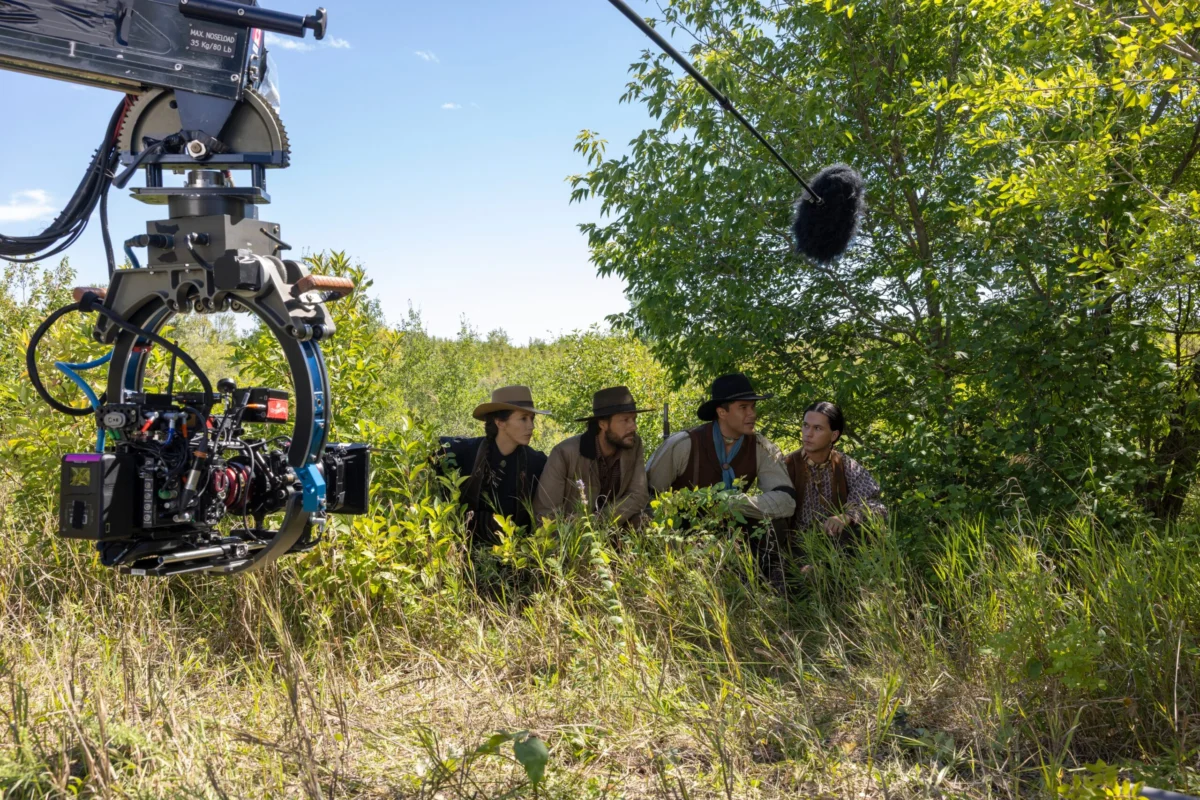
The first season, spanning eight episodes, follows the familiar trajectory of the Ingalls family—patriarch Charles (Luke Bracey), matriarch Caroline (Crosby Fitzgerald), and sisters Laura (Alice Halsey) and Mary (Skywalker Hughes)—as they settle in Kansas. However, their story is now inextricably linked to the Mitchells, a neighboring Osage family. Their daughter, Good Eagle (Wren Zhawenim Gotts), becomes Laura’s closest friend, creating an intimate, cross-cultural bond that serves as the emotional anchor of the series.
A Legacy of Criticism and the Quest for Accuracy
The impetus for this tonal shift is not accidental. The Ingalls Wilder books have faced intense scrutiny for decades. In 2018, the American Library Association took the significant step of stripping Wilder’s name from its most prestigious children’s literature award, citing the works’ “dated cultural attitudes toward Indigenous people and people of color that contradict modern acceptance, celebration, and understanding of diverse communities.”

To avoid repeating the mistakes of the past, Sonnenshine’s production prioritized indigenous voices from the outset. The show recruited Osage Nation citizens for key creative roles: P. Carter Kristensen penned the fourth episode, while University of Kansas professor Robert Warrior served as a consultant for the historical framework of the Osage Diminished Reserve. Furthermore, the production enlisted Julie O’Keefe, an expert who previously worked on Martin Scorsese’s Killers of the Flower Moon, to serve as the on-set cultural consultant.
Chronology of the Land: The Drum Creek Treaty
Central to the series’ dramatic arc is the historical reality of the Drum Creek Treaty of 1870. The seventh episode, “A Softer Note in the Sound of the Wind,” written by Cherokee writer Tom Hanada and directed by Navajo filmmaker Sydney Freeland, dramatizes the forced migration of the Osage from Kansas to what is now Oklahoma.

The showrunners drew inspiration from the book’s chapter titled “Indian Jamboree,” transforming a vague, romanticized literary event into a grounded, historically accurate council meeting. Through meticulous research at the Osage Museum and the use of archival 1870s photographs, the production team recreated an entire Osage village. The result was a set so detailed that members of the Osage Nation were, in the words of O’Keefe, “gobsmacked” by the authenticity of the cultural items, more than 3,000 of which were sourced or hand-crafted by community artisans.
The Human Element: Acting and Agency
For Meegwun Fairbrother, who portrays the patriarch William Mitchell, the role represented both a challenge and a catharsis. A mixed-blood Ojibwe citizen from the Treaty 3 territory, Fairbrother brought his own lived experiences of displacement and the legacy of residential schools to the role.

“The best way to honor a Nation is to know their language, and then you understand them as a people,” Fairbrother noted. His dedication to learning the Osage language—a critically endangered tongue—culminated in a poignant moment on set where Osage chiefs, upon hearing his performance, asked if he was a native speaker.
The series also takes a surprising turn with the character of Caroline Ingalls. While historically portrayed with attitudes of prejudice, this version of Caroline begins to develop a genuine, maternal bond with White Sun (Alyssa Wapanatâhk). Sonnenshine explains this departure as a necessity for modern storytelling: “Caroline and White Sun are both married to very open-hearted men who have interesting ideas about changing their future… Once you get to know people, it’s not just an idea of another culture, but actually a one-on-one conversation about small things.”

Implications: The Price of Progress
The series does not shy away from the harsh realities of the era. A recurring theme is the clash between the missionaries’ belief in “dominion over the land” and the Osage philosophy of stewardship and reciprocity.
“The Osage were like, ‘No, that’s wrong. We look after the land. We protect the land. We live with the land. We share the land,’” Fairbrother says. This difference in ideology is what drives the series toward its bittersweet conclusion. By the end of the season, the Mitchells must make the agonizing decision to leave their home to ensure the survival of their people, leaving behind their deceased daughter’s grave.

“In order to survive, we have to move on,” Fairbrother explains. “That was just the truth of what happened at those times.”
Looking Forward: A Growing Narrative
As the Ingalls head toward Walnut Grove, Minnesota, and the Mitchells relocate to Oklahoma, the show makes it clear that while their paths diverge, their stories remain connected. The writers have teased that the friendship between Laura and Good Eagle, which involves a correspondence of letters, will continue to play a role in future seasons.

With a second season already greenlit, the production team remains committed to the idea that every location in the American West holds a story of the Indigenous people who lived there. By moving beyond the static, exclusionary narratives of the past, Netflix’s Little House on the Prairie is doing more than rebooting a franchise; it is engaging in a necessary act of historical reckoning.
As Sonnenshine aptly summarizes: “Every inch of this land that we are all living on right now was inhabited by Indigenous peoples. So, of course, anywhere they go, there is a story to be told.” By centering that story, this new iteration ensures that the “little house” on the prairie is no longer a symbol of singular pioneer triumph, but a space where multiple, often conflicting, histories are finally allowed to coexist.