The Brat Prince Takes the Stage: Behind the Electric Atmosphere of ‘The Vampire Lestat: One Night Only’
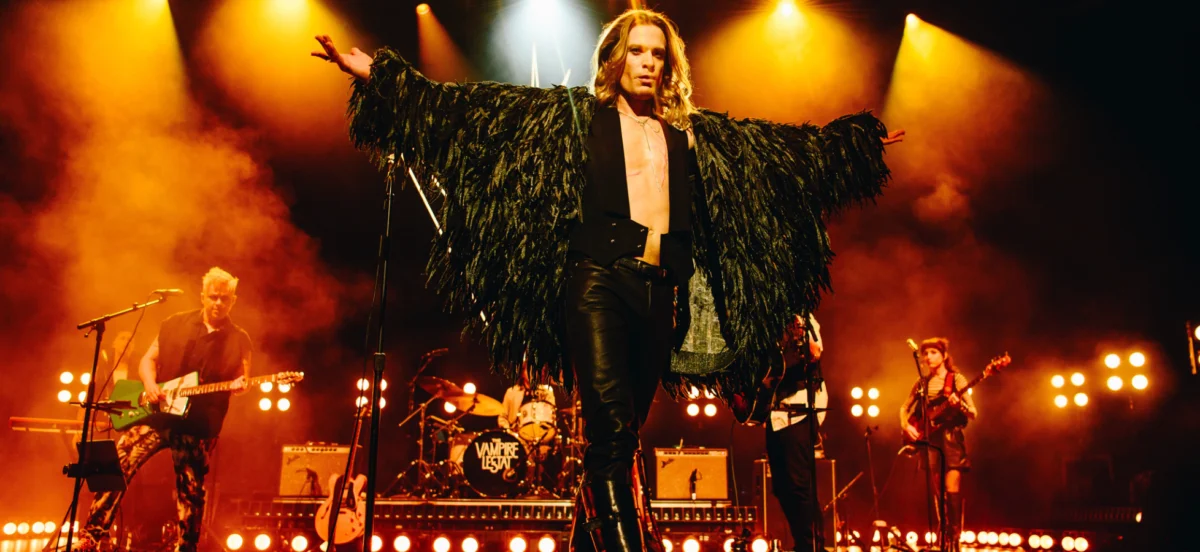
The air inside New York City’s historic Beacon Theatre was thick with anticipation, a palpable electricity that only a fandom as devoted as that of Anne Rice’s The Vampire Chronicles can conjure. Before the curtains rose on The Vampire Lestat: One Night Only LIVE, the collective roar of the crowd served as a reminder of the cultural weight carried by this specific iteration of the undead. When Sam Reid, embodying the iconic Lestat de Lioncourt, finally took the stage, he did so with the effortless, predatory grace of a rock star who has spent two centuries preparing for his moment in the spotlight.
The performance was not merely a promotional event for the third season of AMC’s acclaimed series; it was a masterclass in cross-media world-building. With ears ringing and the audience left in a state of euphoric exhaustion, it was clear that the line between television fiction and reality had been permanently blurred.
A Chronology of Chaos: From Script to Stage
The journey to the Beacon Theatre stage was a meticulous, months-long endeavor that began in the writers’ room. Composer and songwriter Daniel Hart, whose previous work includes the evocative scores for The Green Knight and his tenure with Dark Dooms, served as the architect of Lestat’s sonic evolution.
Hart’s process began in earnest during the summer of 2024. The catalyst was a pressing need for a song to debut at San Diego Comic-Con. "I wrote the first song, ‘Long Face,’ at the end of June 2024," Hart recalls. "It wasn’t until September that I really dove into the rest of the repertoire."
As Hart delved deeper into the psyche of the Brat Prince, he found that Lestat was a far more vocal—and perhaps more petulant—collaborator than expected. By the time production shifted to Toronto in June 2025, a robust catalog of original tracks had been recorded. The process culminated in the June 2, 2026, performance at the Beacon, a high-stakes event that served as the grand unveiling of the music that would define the third season.
The Architecture of Vampiric Rock: Supporting Data and Creative Vision
The music of Lestat is not merely background noise; it is a narrative device designed to chart a journey of self-discovery. Hart, who drew heavily from glam rock legends like David Bowie and T. Rex, sought to capture the "beautiful circus" of Lestat’s existence.
Technical Proficiency vs. Emotional Authenticity
One of the most significant debates within the writers’ room concerned the musicality of Lestat’s band. While the initial instinct was to make them a powerhouse of technical virtuosity, the creative team realized that a more flawed, human dynamic was narratively superior.
"We decided early on that the more interesting story would be if the band wasn’t as successful as Lestat wanted them to be," Hart explains. "He didn’t need a shredder on guitar or a technical prodigy on drums. He needed someone with the right feel—someone like John Bonham, who anchors a song through weight and intent rather than showiness."
This philosophy extended to the stage presence of the actors. Ryan Kattner, who portrays Salamander in the series, was instrumental in shaping the band’s chaotic, lived-in aesthetic. Drawing from his own experiences as a touring musician—specifically tales of van-side brawls and field-side recovery—Kattner helped ground the fictional band in the gritty reality of the road.
Official Perspectives: Bridging the Gap Between Actor and Rocker
The transition from screen to stage presented unique challenges for Sam Reid. As an actor trained in a method that prioritizes neutrality to avoid "imprinting" emotions before a take, singing presented a fundamental conflict of technique.
"Sam comes from a school of acting where you learn your lines neutrally," says Hart. "But when you record a song, you have to know the pitch, the rhythm, and the melody. You have to commit. It was a challenge for him to reconcile that, but he did the homework."
Working alongside vocal coach Matthew Santos, Reid underwent an intensive process of vocal conditioning. The result was a performance that felt both effortless and deeply researched. Hart notes that Reid’s approach to Lestat’s voice—a nuanced baritone—was carefully modulated to distinguish the character’s musical identity from his own. The goal was to ensure that the music reflected the superficiality of early-season Lestat while leaving room for the profound emotional shift seen in tracks like "The Loneliness."
Implications: The Future of the Vampire Rock Star
The success of the Beacon Theatre performance has raised immediate questions regarding the future of Lestat as a touring entity. While the band currently has no official tour dates, the appetite for such an experience is undeniable.
"We both said to each other that we would really like to do it again," Hart admits. "Doing it only once isn’t enough." However, the realities of production schedules, with Reid currently committed to theatrical projects in Australia, necessitate a patient approach.
Beyond the logistical hurdles, the performance serves as a significant milestone for AMC’s The Vampire Chronicles franchise. By investing in a high-fidelity musical component that can stand on its own outside the series, the production has effectively expanded the IP’s footprint. The music is not just a soundtrack; it is a manifestation of the character’s internal conflict, providing fans with a deeper, more visceral connection to the source material.
The Evolution of the Character
The music also serves as a mirror for the audience’s relationship with Lestat. As the season progresses, the songs become increasingly vulnerable, mirroring Lestat’s own movement away from the "petty and silly" exterior he presents to the world. "The Loneliness," in particular, marks a turning point, showcasing a version of the character that is forced to confront truths he would rather keep buried.
As Hart turns his attention back to his own solo projects, the legacy of the Beacon performance remains a testament to the power of immersive storytelling. The "beautiful circus" of the Vampire Lestat has proven that even after two centuries, the Brat Prince still knows exactly how to command a crowd.
Conclusion
The One Night Only event at the Beacon Theatre was more than a concert; it was a profound synthesis of performance art and television production. Through the collaborative efforts of Daniel Hart, Sam Reid, and the entire writing team, the show managed to capture the essence of Anne Rice’s most flamboyant character in a way that feels both authentic to the books and essential to the modern screen. Whether or not the band ever hits the road for a full tour, the performance stands as a definitive moment in the cultural life of Lestat de Lioncourt—a night where the fictional became undeniably, beautifully real.