The Revolutionary Lens: Boots Riley’s I Love Boosters and the Cinema of Collective Power
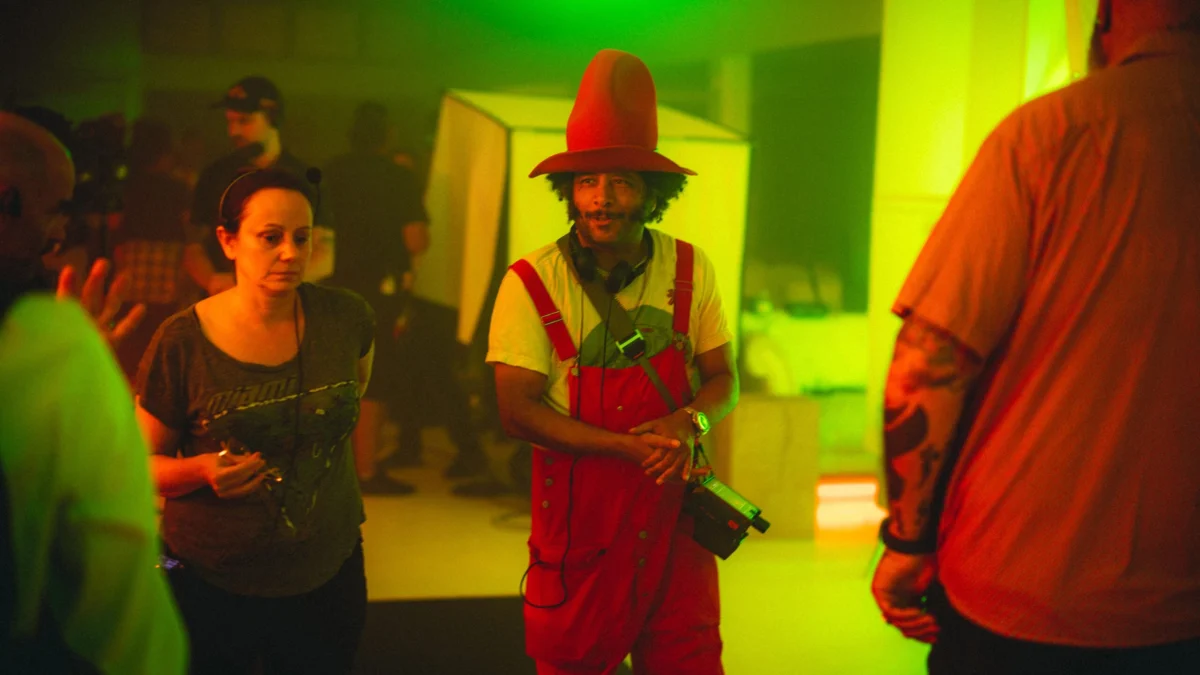
In the landscape of contemporary American cinema, few voices are as distinct—or as insistently radical—as that of Boots Riley. Known for his uncompromising blend of surrealist humor, biting political satire, and profound Marxist theory, the filmmaker has consistently challenged the boundaries of the medium. With his latest project, I Love Boosters, arriving in theaters this month, Riley once again invites audiences into a high-stakes, kaleidoscopic world where the absurdity of late-stage capitalism meets the gritty, tactical reality of the working-class struggle.
The Film Comment podcast recently hosted an in-depth conversation between the director and editor Devika Girish, peeling back the layers of a film that promises to be one of the most provocative releases of the year. From the mechanics of organized shoplifting to the philosophical underpinnings of his cinematic "wins," Riley remains a filmmaker who refuses to separate his art from his activism.
The Evolution of a Visionary: From Music to the Silver Screen
To understand the trajectory of I Love Boosters, one must look at the foundation laid by Riley’s previous works. Before his transition to film, Riley was best known as the frontman for the revolutionary hip-hop collective The Coup, where he spent decades honing a lyrical style that mixed political theory with infectious, danceable funk.
This thematic continuity was solidified with his 2018 feature debut, Sorry to Bother You, a film that utilized magical realism to critique the dehumanizing nature of corporate labor. Following that success, Riley pivoted to the small screen with the 2023 streaming series I’m a Virgo, an ambitious project that explored the intersection of hyper-capitalism and the individual body through the eyes of a giant.
I Love Boosters serves as a culmination of these experiments. While his previous works often focused on the individual’s struggle against the monolith of power, this new film shifts the focus toward the collective power of the "booster"—the professional shoplifter. In Riley’s world, these figures are not merely criminals; they are tactical agents navigating a landscape defined by surveillance, consumerist excess, and the inherent contradictions of a system that profits from theft while simultaneously criminalizing the act.
A Chronology of the "Boosters" Project
The development of I Love Boosters has been as unconventional as the film itself. According to Riley, the concept began as a series of observations about the "retail apocalypse" and the way corporations utilize loss-prevention technology to solidify their control over public space.
- 2023: Following the critical acclaim of I’m a Virgo, Riley began drafting the screenplay for I Love Boosters, seeking to push the boundaries of what he describes as "radical genre filmmaking."
- Early 2024: Casting announcements began to roll out, signaling a massive production scale. The inclusion of Keke Palmer as the lead set the tone for a film that would prioritize high-energy performance alongside its intellectual weight.
- Late 2024–Early 2025: Principal photography took place, with Riley emphasizing a collaborative environment that mirrored the very organized labor he champions in his narratives.
- Summer 2026: As part of the Film Comment Summer 2026 issue, the film is poised for its theatrical debut, accompanied by a promotional cycle that focuses on the intersection of fashion, feminism, and revolutionary theory.
The Ensemble: An Unparalleled Cast
One of the most striking elements of I Love Boosters is its cast. The production has secured an ensemble that balances established Hollywood icons with some of the most exciting performers working today.
Leading the charge is Keke Palmer, whose portrayal of a seasoned booster provides the film’s emotional and tactical anchor. She is joined by a powerhouse cast including:
- Naomi Ackie and Taylour Paige: Bringing layers of nuance to the complexities of the booster underground.
- Demi Moore and Eiza González: Providing sharp, multi-dimensional perspectives on the film’s critique of the luxury industry.
- Will Poulter, Don Cheadle, and LaKeith Stanfield: Returning to the Riley fold, Stanfield—who anchored Sorry to Bother You—brings a familiar energy to this new, more surreal environment.
The chemistry between these actors is intentional. Riley notes that the ensemble was curated to represent a cross-section of society, allowing the film to explore how different demographics are affected by, and participate in, the "retail war."
Supporting Data: The Marxist Mechanics of the Film
At the heart of I Love Boosters lies a "Marxist teleportation device"—a narrative device that serves as a literal and metaphorical shortcut through the barriers of capital. In the film, Riley uses these surreal elements to externalize the internal contradictions of the economy.
Riley argues that the "boost" is a form of wealth redistribution, however micro-level it may be. By centering the film on the act of shoplifting, he forces the audience to confront the morality of private property in a society where necessities are gated behind paywalls.
During his interview with Devika Girish, Riley touched on a surprising influence: fashion. He revealed that his deep dive into the world of high-end aesthetics began during a period of personal depression, where he found that the language of clothing—its construction, its history, and its performative nature—offered a new way to communicate his political ideas. In the film, the "booster" lifestyle is rendered in a high-fashion aesthetic, blurring the lines between consumerist desire and revolutionary subversion.
Official Responses and The Director’s Philosophy
When asked about the "bleak" nature of his work, Riley offers a sharp rebuttal. He emphasizes that his goal is not to document despair, but to demonstrate that "the left can win."
"Many films are content to show the rot," Riley told Film Comment. "My work is about showing the demolition. It’s about organizing, strategy, and the terrifying but beautiful realization that if we act together, we can change the architecture of our lives."
The industry response to the film has been one of cautious anticipation. Neon, the studio behind the project, has leaned into the film’s provocative nature, framing it as a "kaleidoscopic joyride" that defies easy categorization. Critics who have seen early cuts describe it as a "fever dream of class warfare," noting that it manages to balance its heavy theoretical payload with the pace and thrills of a heist movie.
Implications: The Future of Radical Cinema
The implications of I Love Boosters extend far beyond the box office. If the film succeeds, it could set a new benchmark for "political blockbuster" filmmaking, proving that audiences are hungry for narratives that don’t just critique the status quo but actively imagine alternatives.
The film poses a series of fundamental questions to the viewer:
- Who owns the products of our labor?
- Is the "crime" of stealing from a corporation truly a moral failure, or is it a symptom of a larger, systemic theft?
- How can we reclaim space in a world that is increasingly defined by surveillance and privatization?
By weaving these questions into a narrative filled with demons, teleportation, and high-fashion heists, Riley avoids the trap of the "didactic lecture." He understands that for revolutionary ideas to resonate, they must be entertained.
Conclusion: The Joy of the Struggle
As I Love Boosters prepares for its theatrical release, it stands as a testament to the idea that art is a battlefield. For Boots Riley, the screen is not a place for passive consumption; it is a place for training, for provocation, and for the radical joy of imagining a different world.
In a climate where many filmmakers are retreating into safe, franchise-driven nostalgia, Riley remains a dangerous, vital outlier. He reminds us that the struggle is not just about survival—it’s about the audacity to steal back our future, one "boost" at a time. Whether or not the audience is ready for the revolution, they are certainly going to enjoy the ride.
For more on this topic, read the full, in-depth feature in the Summer 2026 issue of Film Comment, and listen to the latest episode of the Film Comment podcast.