The Puppet’s Grisly Awakening: Exploring the Sonic and Cinematic World of Pinocchio: Unstrung
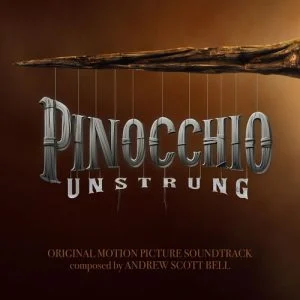
The landscape of modern horror has undergone a radical transformation, fueled by the subversion of beloved childhood icons. At the forefront of this movement is Jagged Edge Productions’ "Twisted Childhood Universe," a cinematic experiment that has systematically dismantled the innocence of fairy tales. With the release of their latest feature, Pinocchio: Unstrung, the studio turns its dark lens toward the world’s most famous wooden boy. To underscore the visceral horror of this reimagining, Dark House Music has officially released the original motion picture soundtrack, composed by the prolific Andrew Scott Bell.
The Sound of Sinister Strings: Andrew Scott Bell’s Score
The sonic architecture of Pinocchio: Unstrung is crafted by Andrew Scott Bell, a composer who has become the definitive voice of the Jagged Edge Productions aesthetic. Having previously lent his unsettling talents to Winnie-the-Pooh: Blood and Honey, The Death of Snow White, and Psycho Storm Chasers, Bell possesses a unique ability to marry the whimsical nature of children’s stories with the discordant, anxiety-inducing textures of slasher cinema.
The soundtrack, now available on all major digital platforms including Amazon, serves as a companion piece to the film’s narrative descent. Bell’s compositions move from the eerie, nursery-rhyme simplicity of early tracks like "Once Upon a Time There Was a Piece of Wood" to the industrial, frantic rhythms of "A Crash Course in Dentistry" and "Meat Marionette." It is a score that does not merely provide background noise; it acts as a character in its own right, mirroring the puppet’s fractured psyche as he attempts to carve himself into a human being.
A Chronology of a Twisted Universe
The Twisted Childhood Universe (TCU) did not emerge in a vacuum. It represents a calculated effort by director Rhys Frake-Waterfield to build a cinematic ecosystem where the boundaries between public domain innocence and modern gore are blurred.
The Genesis of the TCU
The project began in earnest with the viral success of Winnie-the-Pooh: Blood and Honey. What was initially a low-budget curiosity exploded into a global conversation about copyright, nostalgia, and the limits of intellectual property. Recognizing the audience’s appetite for "ruined childhoods," Jagged Edge Productions fast-tracked a slate of projects, including Pinocchio: Unstrung.
The Production Pipeline
Pinocchio: Unstrung follows a specific, high-velocity production model. Written and directed by Frake-Waterfield, the film was conceived as the fifth major installment in the expanding universe. The production moved from script to screen with a speed that mirrors the relentless nature of its antagonist. Filmed on location in England, the production utilized an elite London prep school as its primary setting—a stark, institutional backdrop that provides a chilling contrast to the supernatural carnage unfolding within its halls.
The Festival Circuit and Wide Release
The film first made its mark at the Brussels International Film Festival, where it was scrutinized by genre enthusiasts and critics alike. Following this debut, Viva Pictures and ITN Distribution confirmed a widespread theatrical release for the United States, scheduled for Friday, July 24. This release strategy is designed to capitalize on the momentum of the horror summer season, positioning the film as a must-see for fans of high-concept, low-budget slasher spectacles.
Supporting Data: The Anatomy of a Slasher
At its core, Pinocchio: Unstrung is a brutal examination of identity and obsession. The plot centers on the title character, who, driven by an insatiable desire to be "real" like his brother James, embarks on a campaign of violence. Every kill is not merely a death; it is a component of a larger, horrific puzzle as the puppet harvests materials to complete his transformation.
Cast and Crew
The film boasts a notable ensemble, blending established horror icons with rising talent.
- Robert Englund: In a casting coup that signals the film’s dedication to genre roots, the A Nightmare on Elm Street legend provides the voice of the Cricket, offering a gravitas that anchors the film’s more absurd elements.
- Richard Brake: Known for his roles in Rob Zombie’s films and Game of Thrones, Brake brings a seasoned intensity to the production.
- Title Character: Voiced by Jude-Evan Lloyd, Pinocchio is portrayed as a relentless force of nature rather than a tragic figure.
- Supporting Cast: The ensemble is rounded out by Cameron Bell, Jessica Balmer, and Peter DeSouza-Feighoney, who populate the prep school setting that serves as the puppet’s hunting ground.
The Track List: A Narrative Roadmap
The soundtrack album provides a clear timeline of the film’s escalation. Tracks like "Pinocchio Meets Cricket" (Track 19) suggest a pivotal turning point in the protagonist’s development, while the final tracks, such as "I’m Not Your Puppet Anymore" (Track 31) and "We’ll Lie / Credits" (Track 32), hint at a climax that shatters the traditional moralistic ending of the original Carlo Collodi tale.
Official Responses and Creative Vision
Rhys Frake-Waterfield has consistently defended the TCU’s approach, arguing that his films serve as a cathartic release for audiences tired of sanitized intellectual properties. "We are playing in a sandbox of our own making," a studio spokesperson noted during the press cycle for the film. "By taking these stories that everyone thinks they know and stripping away the ‘happily ever after,’ we aren’t destroying the originals; we are simply exploring the dark corners they were always meant to have."
The inclusion of Robert Englund has been cited as a "passing of the torch" moment for the production. Englund’s involvement, in particular, has lent a level of legitimacy to the project, suggesting that the industry’s perception of the Twisted Childhood Universe is shifting from a mere "gimmick" to a recognized niche in the horror genre.
Implications for the Future of Horror
The success of Pinocchio: Unstrung—and the robust performance of its soundtrack—carries significant implications for the future of horror filmmaking.
The Copyright Frontier
The Twisted Childhood Universe has effectively demonstrated that the expiration of copyright on classic characters is a goldmine for independent filmmakers. As more iconic characters enter the public domain, we can expect a surge of similar "reimaginings." The implication is that the horror genre is entering an era of "remix culture," where the sanctity of a character’s legacy is secondary to the potential for brand recognition and viral marketing.
Sonic Branding
Andrew Scott Bell’s involvement highlights a growing trend in modern horror: the importance of "sonic branding." In a crowded marketplace, where hundreds of films are released annually, the ability to create a signature, recognizable soundscape is vital. Bell’s work on Pinocchio proves that even with a limited budget, a strong, thematic, and meticulously crafted score can elevate a film, turning a standard slasher into a cult-status event.
The Sustainability of the "Universe" Model
Whether the Twisted Childhood Universe can maintain its momentum remains to be seen. The danger of this model is audience fatigue. However, by diversifying the types of stories they tell—moving from the animal-based horror of Winnie-the-Pooh to the human-crafting gore of Pinocchio—Jagged Edge Productions is ensuring that the "Twisted" brand remains unpredictable.
Final Thoughts: A Puppet Reborn
As Pinocchio: Unstrung hits theaters, it invites audiences to reconsider the morality of the puppet who longed for humanity. By combining the visceral direction of Rhys Frake-Waterfield with the haunting, precise musical contributions of Andrew Scott Bell, the film offers a definitive—if gruesome—answer to the question of what happens when a wooden boy stops listening to his conscience.
Whether one views this as a desecration of classic literature or a bold, necessary evolution of the slasher genre, the cultural footprint of the Twisted Childhood Universe is undeniable. As the credits roll to the final track of Bell’s score, audiences will be left with the unsettling realization that some stories were never meant to end in a fairy tale—they were meant to end in a workshop, under the blade of a puppet who has finally decided to carve his own path.
The soundtrack, with its intricate track list and dark melodies, remains the best way to experience the chilling essence of this film long after the final frame has faded. Pinocchio: Unstrung is not just a movie; it is a manifestation of the collective dark curiosity of the modern era, and its impact on the genre will likely be felt for years to come.