The Constitutional Reckoning: Ava DuVernay’s ‘14th’ to Close the 64th New York Film Festival
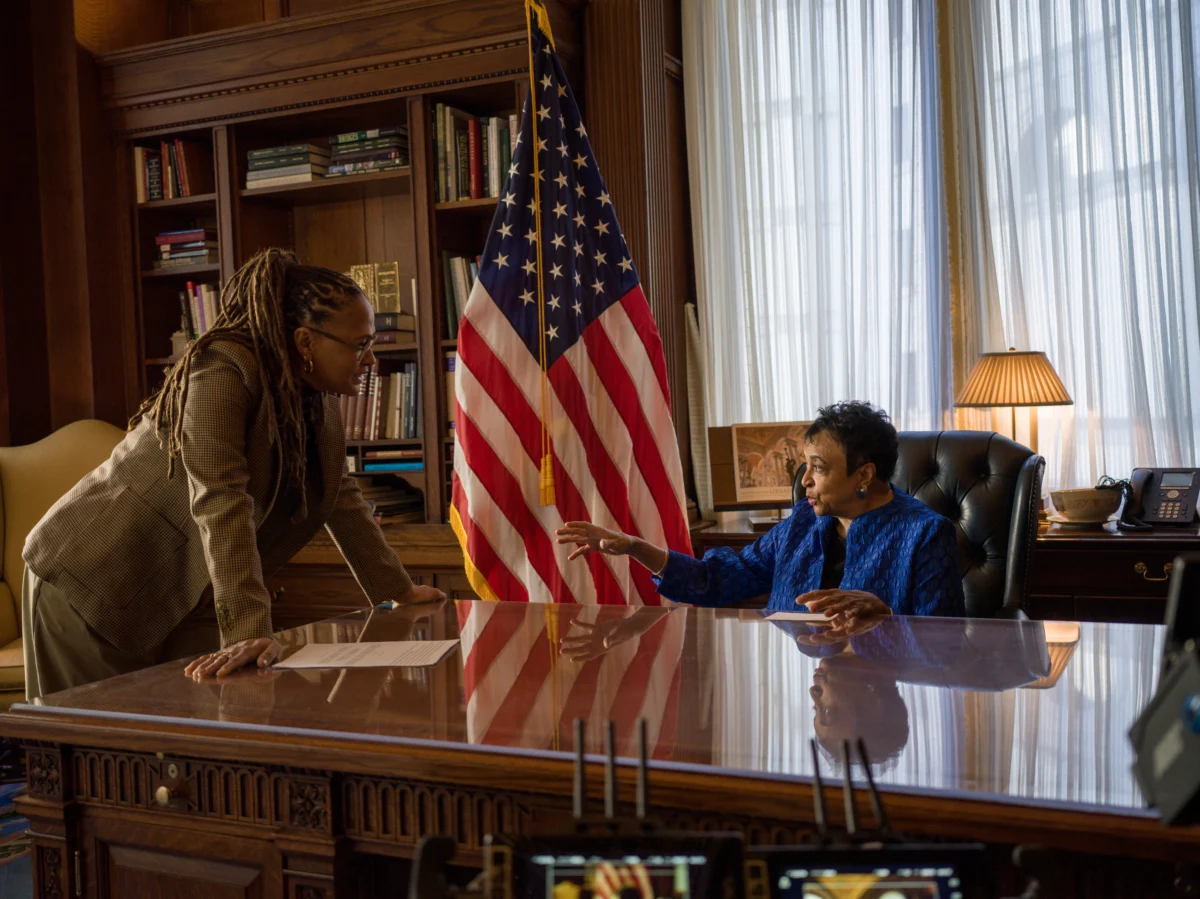
In a move that carries profound symbolic weight, the New York Film Festival (NYFF) has announced that Ava DuVernay’s latest documentary feature, 14th, will serve as the official Closing Night selection for its 64th edition. The world premiere is set for October 9 at Lincoln Center’s iconic Alice Tully Hall, marking a decade-long thematic arc that has defined one of the most significant documentary projects of the 21st century.
14th arrives as an urgent, spiritual, and intellectual successor to DuVernay’s 2016 seminal work, 13th. While its predecessor famously opened the 54th NYFF, the decision to position the sequel as the closer for the 64th iteration suggests a deliberate effort to frame the current political climate as a culmination of the struggles DuVernay began documenting ten years ago.
A Legacy of Interrogation: The Chronology of a Vision
To understand the gravity of 14th, one must look back to the cultural landscape of 2016. When 13th premiered, it offered a searing examination of the U.S. Constitution’s 13th Amendment. DuVernay masterfully traced the historical trajectory from the abolition of slavery to the rise of mass incarceration, arguing that the amendment’s "exception clause"—which permits involuntary servitude as punishment for a crime—created a loophole that fueled the systematic disenfranchisement of Black Americans. Released on the precipice of the 2016 presidential election, the film became a touchstone for social justice movements worldwide, eventually earning an Academy Award nomination and cementing DuVernay’s status as a preeminent chronicler of American civil rights.
If 13th was a study of the mechanisms of bondage, 14th serves as an interrogation of the mechanisms of belonging. The 14th Amendment, ratified in 1868, is arguably the most complex and contested pillar of the U.S. Constitution. It enshrines birthright citizenship, due process, and equal protection under the law. In the years following her first documentary, DuVernay watched as these foundational tenets—and the prohibition against insurrectionist activity by government officials—faced unprecedented challenges.
"If 13th asked who gets caged, then 14th asks who gets counted," DuVernay stated during the project’s initial announcement in July 2026. This distinction marks a shift from the physical walls of the prison industrial complex to the conceptual boundaries of the American electorate and the rule of law itself.
The Pillars of the Narrative: Diverse Perspectives on Democracy
The production of 14th reflects the breadth of the constitutional crisis it aims to dissect. Eschewing a singular ideological lens, DuVernay has compiled an expansive roster of interviewees that spans the American political and academic spectrum.
The film features insights from high-profile political figures, including Representatives Alexandria Ocasio-Cortez (D-NY) and Anna Paulina Luna (R-FL). By bridging the divide between the progressive left and the populist right, DuVernay seeks to highlight how the 14th Amendment’s protections—and their potential erosion—impact the entirety of the American democratic experiment.
Supporting these political voices are legal luminaries such as Sherrilyn Ifill and Robert Chang, alongside influential social commentators like Stacey Abrams, Donald T. Critchlow, and Hasan Piker. These contributors delve into the "foundational principles" of the amendment, specifically focusing on how the prohibition of insurrectionists holding office has been tested by recent political upheavals. The film moves beyond mere historical recitation, instead functioning as an active inquiry into how the document’s promises are being interpreted—and weaponized—in the contemporary era.
Official Responses and Curatorial Vision
The selection of 14th for the closing slot of the NYFF was a decision met with significant anticipation within the film industry. Dennis Lim, the Artistic Director of the New York Film Festival, emphasized that the film’s selection was driven by its unique ability to synthesize the "fog of the present."
"We are honored to close this edition of the New York Film Festival with Ava DuVernay’s supremely timely follow-up to 13th," Lim stated. "This is a movie for the moment that sees through the noise. The great gift of this urgent and essential work is its clarity: Ava has made a film that shows us precisely what led us here, and what is at stake right now."
For DuVernay, the return to Lincoln Center is deeply personal. "Exactly a decade after 13th opened the festival, it feels especially meaningful to return with 14th as the 2026 Closing Night Selection," she remarked. "NYFF has always been a place where films invite conversation rather than simply applause. To that end, 14th attempts to interrogate a promise powerful enough to change a nation—and controversial enough to divide it for more than 150 years. There’s no better place to begin that conversation than NYFF."
Implications: The 14th Amendment at a Crossroads
The release of 14th comes at a time when the legal and social fabric of the United States feels particularly fragile. The implications of the film are likely to reverberate well beyond the festival circuit. By focusing on the 14th Amendment, DuVernay is centering the debate on birthright citizenship and the legal requirements for public office—topics that are currently at the heart of legislative and judicial battles across the country.
The film does not merely document the past; it attempts to map the future. DuVernay has explicitly stated her desire for the film to leave audiences "debating, questioning, and, above all, imagining what is still possible." In doing so, she positions the documentary not as a final word, but as a catalyst for civic engagement.
The timing of the release—slated for a wider debut on Netflix later this year—ensures that the questions posed at the New York Film Festival will reach a global audience. As the 64th NYFF prepares to open on September 25 with James Gray’s crime drama Paper Tiger (starring Adam Driver, Scarlett Johansson, and Miles Teller), the closing ceremony with 14th provides a stark, intellectual counterpoint. While the festival opens with the high-stakes drama of a fictional narrative, it will close with the high-stakes reality of American constitutional law.
Conclusion: The Architecture of a Nation
Ava DuVernay’s body of work—which includes the historical epic Selma, the ambitious A Wrinkle in Time, the critically acclaimed Origin, and the devastatingly effective series When They See Us and Queen Sugar—has consistently explored the tension between the American dream and the American reality.
14th represents a synthesis of her career-long preoccupation with the structural barriers to equality. By choosing to frame her argument around the 14th Amendment, DuVernay is tackling the very architecture of the nation. As she notes, this is a document that has the power to define who we are as a people. Whether that definition is inclusive or exclusionary remains the central question of our time.
As the film world turns its eyes to Alice Tully Hall on October 9, the expectation is that 14th will provide more than just historical context. It is poised to be an essential, uncomfortable, and ultimately necessary exploration of the promises that underpin modern democracy. For those who attended the premiere of 13th a decade ago, this closing night will serve as a full-circle moment, a chance to reflect on the distance traveled and the precariousness of the ground that remains.
The New York Film Festival, running from September 25 through October 12, remains one of the most vital platforms for such discourse. By placing 14th at the center of this year’s festival, the organizers have signaled that cinema is not just an escape, but a mirror—one that, in the hands of a filmmaker as precise and passionate as DuVernay, reflects the urgent, shifting realities of the world we inhabit.