The Battle for Resilience: Takaichi Pushes Secondary Capital Bill as Parliamentary Session Nears Climax
TOKYO – With the clock ticking down on an extended parliamentary session, Prime Minister Sanae Takaichi finds herself at a critical juncture. As the Diet enters its final hours before Saturday’s deadline, the administration is locked in a high-stakes legislative maneuver to secure the passage of a bill establishing a secondary capital—a project framed as essential for national disaster resilience but one that has become a lightning rod for political friction.
The legislation, currently under intense scrutiny by an Upper House committee, represents more than just urban planning; it is a fundamental shift in Japan’s administrative architecture. While the government argues that a secondary seat of power is a prerequisite for long-term survival in the face of a "Big One" earthquake, the political machinations behind the bill have exposed fractures within the coalition and highlighted the difficulties of governing in a polarized legislative environment.
Main Facts: The Vision for a Secondary Capital
The proposed legislation aims to establish a legal framework for designating a "secondary capital" city. This municipality would be specifically equipped to inherit core governmental functions—including the command of the Japan Self-Defense Forces and critical ministerial oversight—should Tokyo be rendered inoperable by a catastrophic natural disaster.
Beyond disaster contingency, the bill envisions the chosen city serving as a regional economic powerhouse. The intent is to alleviate the hyper-concentration of resources in the Kanto region, fostering a more decentralized national economy.
However, the bill has become a flashpoint for debate regarding the efficacy of such a move. Critics argue that the cost of building redundant government infrastructure is prohibitive, while proponents—led by the Japan Innovation Party (JIP)—contend that the current centralization of power is a systemic risk that Japan can no longer afford to ignore.
Chronology: A Session Extended by Necessity
The path to this week’s parliamentary showdown was marked by a series of strategic delays and tactical negotiations.
- Early July: Prime Minister Takaichi prioritized the secondary capital bill as a centerpiece of her mid-year legislative agenda, aiming to fulfill promises made during coalition negotiations.
- Mid-July: Discussions stalled as opposition parties raised concerns over the ambiguity of the bill’s implementation, particularly regarding the selection criteria for the secondary capital.
- Wednesday, July 22: Takaichi’s administration officially announced an eight-day extension of the parliamentary session. The move was widely interpreted as an admission that the government had failed to build sufficient consensus, necessitating a "sprint to the finish."
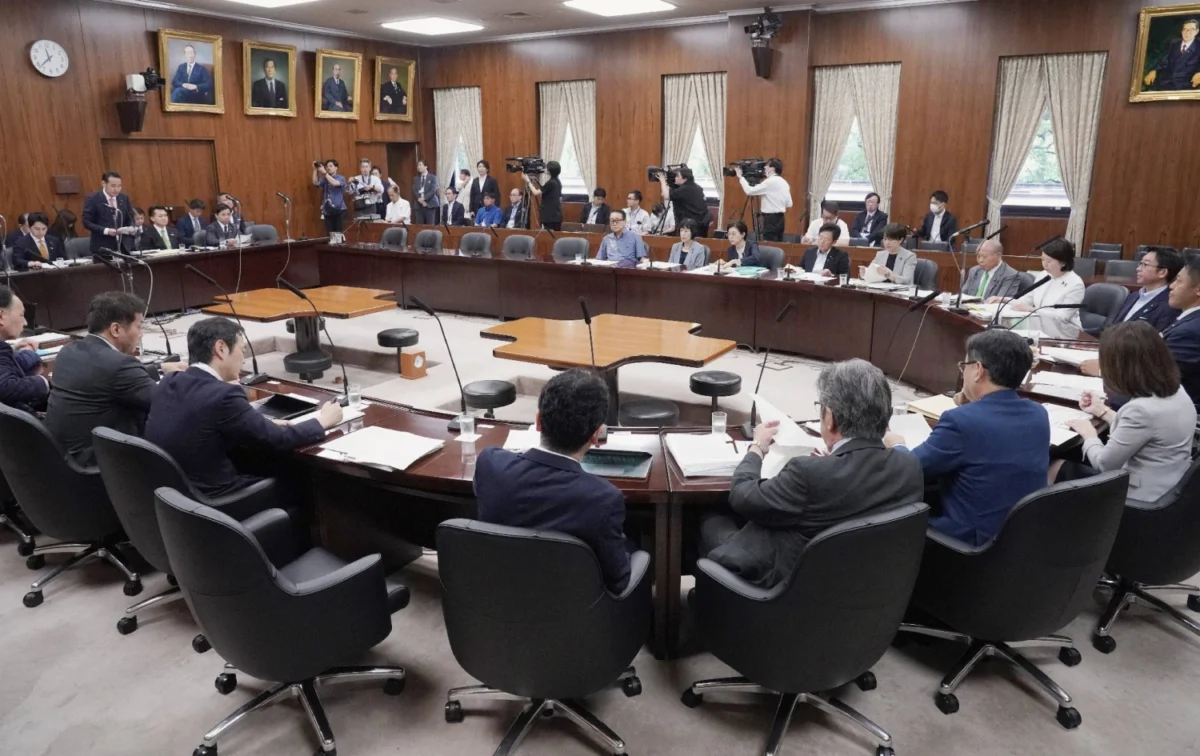
- Thursday, July 23: The Upper House committee reconvened for a marathon session, with Takaichi’s Cabinet pushing for a committee vote to clear the way for a final floor vote before the Saturday deadline.
- Friday, July 24: Ongoing negotiations continue in the background as the Cabinet attempts to balance the secondary capital bill with stalled economic relief measures, which have been sidelined by the intense focus on the infrastructure legislation.
Supporting Data: Why Decentralization?
The argument for a secondary capital is rooted in stark geographical and economic data.
The Seismic Risk
According to the Cabinet Office’s disaster management division, the probability of a Nankai Trough earthquake—which would strike the Pacific coast and potentially paralyze the Tokyo metropolitan area—remains high. Modeling suggests that a direct hit on the capital could result in economic losses exceeding 200 trillion yen, causing a systemic collapse of national logistics and financial clearinghouses.
Demographic Concentration
Current statistics indicate that Tokyo’s population density is among the highest in the world, with over 30% of the national population concentrated in the Greater Tokyo Area. This extreme centralization creates a "single point of failure" for the Japanese state. The secondary capital bill is designed to mitigate this by ensuring that if the "brain" of the government is incapacitated, the "nervous system" can continue to function from a secondary hub.
The Osaka Push
The Kansai region, led by the JIP, has been the primary advocate for this shift. Osaka, with its established infrastructure and history as a commercial hub, is the frontrunner for the designation. JIP officials argue that by relocating specific administrative functions to Osaka, Japan can stimulate a stagnant regional economy, which has long struggled to compete with the Tokyo-centric gravity of the national market.
Official Responses and Political Maneuvering
The push for this legislation has not been without significant political cost. For Prime Minister Takaichi, the bill is a litmus test for her leadership and the stability of her governing coalition.

The Japan Innovation Party’s Leverage
For the JIP, the bill is the "tangible reward" for their entry into the governing coalition. Having agreed to support Takaichi’s broader platform, the JIP views the secondary capital project as a non-negotiable component of their political mandate.
However, this partnership has been far from smooth. Takaichi recently weathered a "bruising attempt" to advance another JIP demand: a 10% reduction in Lower House seats. The backlash from established political factions against this reduction has left the Prime Minister in a precarious position, forced to expend significant political capital to keep her coalition partners satisfied while managing internal party dissent.
Opposition Skepticism
Opposition leaders in the Upper House have remained vocal in their criticism. They argue that the government is rushing the legislation to score a political win rather than conducting a thorough analysis of the long-term fiscal impact. "This is not about national resilience; it is about building a monument to political horse-trading," one opposition lawmaker stated during Thursday’s committee hearing.
Implications: A Shifting National Landscape
The implications of passing the secondary capital bill are twofold: structural and symbolic.
Structural Changes
If passed, the bill will trigger a multi-year process of site selection and infrastructure development. It would necessitate the relocation of certain administrative departments, a move that would fundamentally alter the lifestyle of thousands of civil servants and redefine the relationship between the central government and local municipalities.
Symbolic Power
Symbolically, the move would signify a decline in the "Tokyo-first" era of Japanese governance. It would acknowledge that the 20th-century model of extreme centralization is ill-suited for the 21st-century realities of climate change, seismic risk, and economic volatility.
However, if the bill fails, the damage to Takaichi’s administration could be severe. A failure to pass the legislation would signal a lack of control over the coalition, potentially empowering internal challengers and complicating the government’s ability to pass critical economic relief measures in the upcoming autumn session.
The Economic Relief Conundrum
Perhaps the most immediate implication of the current impasse is the delay in economic relief. With the parliamentary focus entirely on the secondary capital, the government has yet to reach a meaningful consensus on how to address the rising cost of living and stagnant wage growth. As inflation continues to erode purchasing power, the public’s patience is thinning. The Prime Minister is now walking a tightrope: she must satisfy her coalition partners to keep the government afloat, while simultaneously delivering results that address the immediate needs of the citizenry.
Conclusion: The Final Countdown
As the curtain falls on this extended session, the atmosphere in the Diet is one of frantic negotiation and high-stakes maneuvering. Prime Minister Takaichi’s ability to navigate these final hours will likely define the tone of the remainder of her term.
Whether or not the secondary capital becomes a reality, the debate itself has revealed the deep-seated tensions within the Japanese political system. It has brought to the forefront the question of what a modern Japanese state should look like—and whether it is capable of evolving before the next great crisis forces it to do so.
For now, all eyes are on the Upper House committee. The outcome of their final deliberations will not only determine the future of the nation’s administrative structure but will also serve as a definitive statement on the resilience of the current governing coalition. As the session draws to a close this Saturday, the nation waits to see if the Prime Minister can secure her victory, or if this ambitious project will be relegated to the annals of legislative "what-ifs."