The Sanctity of the Scarred: Julia Ducournau’s Alpha and the Architecture of Grief
With the flesh-hungry cannibal siblings of Raw (2016) and the metallic, androgynous yearning of Titane (2021), filmmaker Julia Ducournau firmly established herself as the leading architect of the "New French Extremity." Her cinema has always existed in the liminal spaces where sex, fear, and death collide—a visceral playground where the fantastical dimensions of her characters reify our basest instincts toward "the Other." However, with her third theatrical feature, Alpha, which premiered in the main competition at the Cannes Film Festival, Ducournau has executed a masterful pivot. While the film retains her trademark penchant for the surreal and the erotic, it is anchored by a haunting, grounded historical resonance.
The Anatomy of an Epidemic: A History Reimagined
Alpha presents a world plagued by a mysterious, transformative disease. Victims do not merely sicken; they turn into marble, their bodies slowly calcifying until they bleed fine, crimson dust. It is a striking visual conceit, yet every element of this science-fiction premise serves as a surgical mirror to the real-world history of the 1990s AIDS epidemic. The infection is transmitted via needles and intimate contact; it is shrouded in societal taboo; and those afflicted are systemically ostracized and decimated by an indifferent global infrastructure.
In this film, the horror is not relegated to the screen’s artifice. Instead, it is found in the painful history it highlights—the institutional abandonment of a marginalized population and the collective trauma of a generation forced to view intimacy through the lens of mortality.
A Coming-of-Age Amidst the Calcified
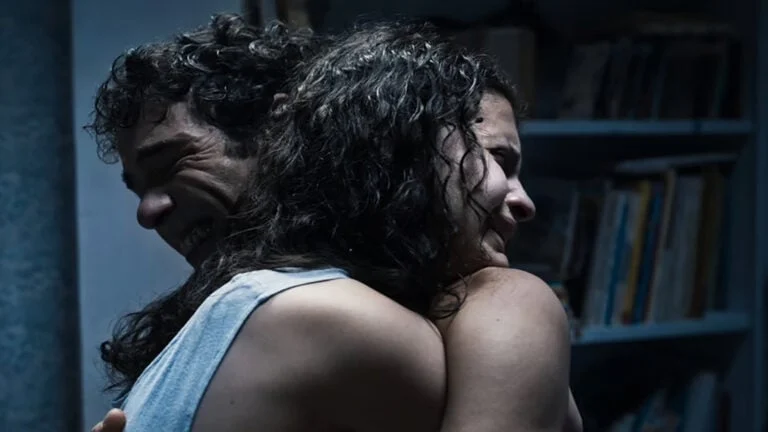
At the epicenter of this crisis is 13-year-old Alpha (Mélissa Boros), a young girl navigating the turbulent transition into puberty. Her journey toward understanding desire, rebellion, and femininity is set against a backdrop of stifling paranoia. Her mother, portrayed with fierce, weary resolve by Golshifteh Farahani, is a doctor fighting a losing battle in a local hospital where the staff has largely abandoned their posts. The domestic equilibrium is shattered by the arrival of the mother’s brother, Amin (Tahar Rahim), a man whose body is ravaged by both substance abuse and the encroaching marbling disease.
Ducournau employs a fractured narrative structure, blurring the lines between past and present. As the film progresses, chronological markers dissolve, allowing memory and reality to bleed into one another. This technique evokes the non-linear, disjointed experience of familial grief—the agony of attempting to hold onto a person whom the world has decided never to mourn.
The Medical Roots of Visionary Filmmaking
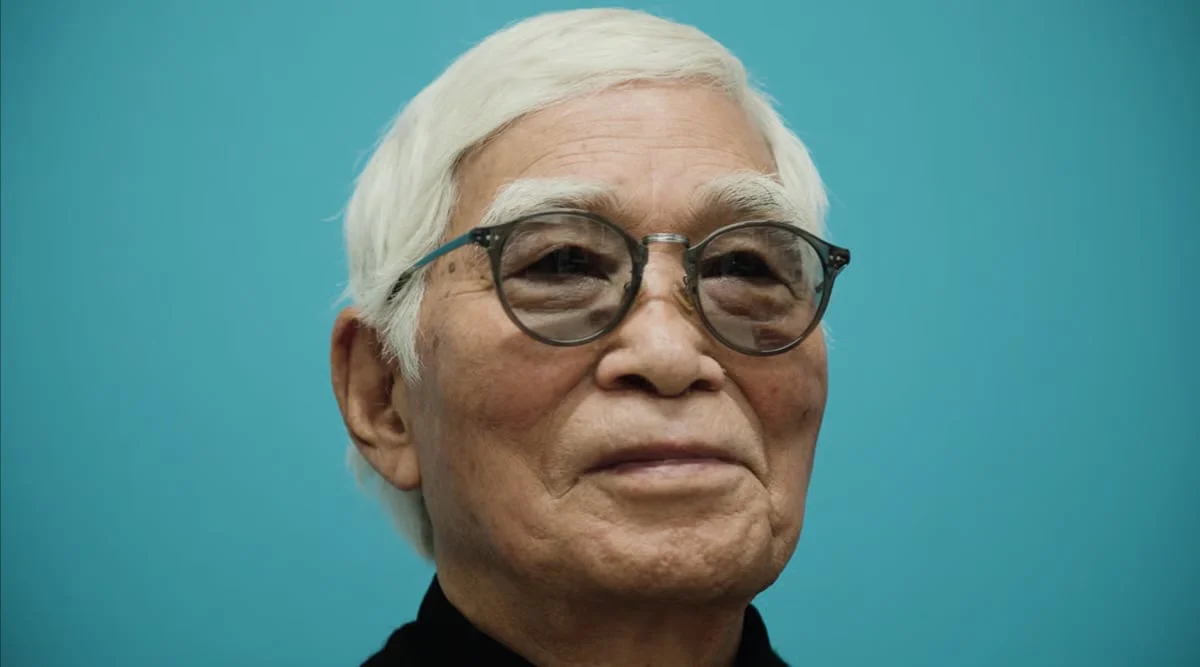
In an exclusive conversation regarding the film’s themes of empathy, beauty, and loss, it becomes clear that Ducournau’s fascination with the body is deeply rooted in her upbringing. Born to a gynecologist mother and a dermatologist father, the director grew up surrounded by the literature and imagery of the medical profession.
"If you have doctor parents, you always have magazines and books around," Ducournau explains. "I’ve seen some stuff, especially on the dermatology aspect, that triggered my imagination." Yet, she notes that the most profound lesson was not anatomical, but existential. "What I keep with me the most is the fact that, in their jobs, there is a constant sense of doubt. We understand why they have to have a cold approach to mortality, but at the same time, this constant questioning implies a great sense of empathy. My parents always told me there is one case per patient; everyone is unique and reacts differently under the same circumstances."
This focus on the individual within the aggregate is the moral pulse of Alpha. For Ducournau, the film is an exploration of unconditional love. "It’s especially in dreadful circumstances—the ones that we are living now or the ones that were happening in the ’90s—that this empathy becomes a moral duty."
The "Red Wind": A Metaphor for Mourning
Perhaps the most striking visual element of the film is the "red wind," a recurring, surreal weather phenomenon that leaves a trail of crimson dust in its wake. When asked about the creative choice behind this imagery, Ducournau emphasizes the preservation of humanity.
"The reason it’s red stems from the scene where Amin’s back disintegrates," she says. "I chose red because if it had been white, like marble, I would have made the patients statues—something that was no longer human. By keeping the blood red and just making it calcified, I keep his humanity."
The red wind serves as a multi-layered metaphor. To the characters, it is a harbinger of death, a demonic force. To the director, it represents the persistence of memory. "It’s about how you keep in your skin the memory of the people that you’ve lost," she reflects. "The wind wipes the hurt away, but the dust lingers. It says something about the fact that grieving changes your state of being in the world."
Societal Implications: The Scapegoating of the 1990s
The film’s portrayal of the 1990s serves as a sobering reminder of the political and social climate surrounding the AIDS crisis. Ducournau recalls her own upbringing during that era, noting a pervasive sense of denial and fear.
"Sex was not healthy. Sex meant that you were doing something profoundly wrong, something very taboo that could kill you or kill someone else," she says. "We were at the peak of sexual liberation, and it went down in a snap of a finger because of fear and because this huge trauma was never acknowledged."
This denial manifests in Alpha through the casual, venomous bigotry directed at the afflicted. When younger audience members describe the film’s depiction of homophobia and xenophobia as "dystopian," Ducournau finds it profoundly revealing. "It’s quite a shock to hear that people think that my movie could be set in the future. I always answer that this scene proves that it’s set in the ’90s."
The Search for Martyrdom and Beauty
One of the most poignant moments in the film occurs in a hospital waiting room, where young Alpha looks at a victim of the disease and tells him, "You’re beautiful." For Ducournau, this was a deliberate act of subversion. By associating the disease with the sanctity of marble—the material used for religious iconography and classical sculpture—she seeks to elevate those who were discarded by society.
"I wanted to find dignity and respect for them," she says. "I realized that as long as she [Alpha] sees him as beautiful, everyone will. Her point of view matters more than my point of view."
A Departure from Archetype
Alpha also stands apart from the director’s previous works through its warm, chaotic depiction of a Berber family. In Titane, the characters were mythic, archetypical figures—Uranus and Gaia. Alpha, conversely, is rooted in the raw, lived experience of the director’s own family.
"That is what our lunches or dinners looked like in my family during my childhood," she says, describing a scene of matriarchal strength and communal laughter. "This big chaos, this big matriarchy, where women take a lot of space and handle everything."
When asked about the political weight of representing a non-white family, Ducournau admits to a degree of frustration. "I noticed afterward that I was asked about it very much, and it left me disturbed. I wondered how much, when you represent a family that is not the standard white family, people need it to be a social or political agenda."
Conclusion: The Persistence of Existence
As the credits roll on Alpha, the viewer is left with the haunting image of the red-dusted landscape—a testament to the fact that grief is, in itself, an act of defiance. It is an insistence that those we have lost were once real, and that their existence mattered.
By refusing to categorize the film as a mere genre piece, Julia Ducournau has crafted a profound meditation on the human condition. Alpha is not just a film about a disease; it is a film about the transformative power of love and the moral imperative to witness the suffering of others. In the calcified dust of the past, Ducournau has found a way to breathe life into the forgotten, turning the scars of history into a monument of enduring beauty.