Okinawa Political Earthquake: Genta Koja Ousts Incumbent Denny Tamaki in Pivotal Gubernatorial Election
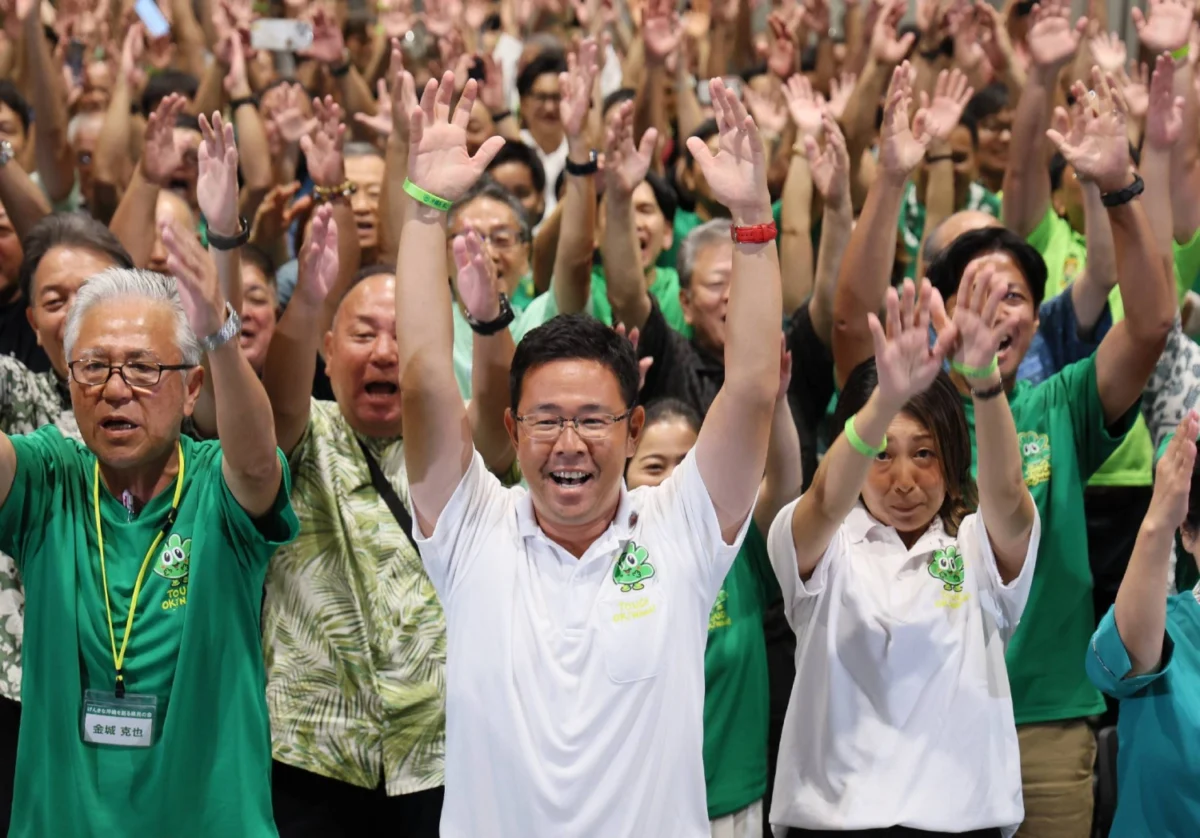
In a stunning political upset that has sent shockwaves through the corridors of power in Tokyo, Genta Koja, the candidate backed by the Liberal Democratic Party (LDP), secured a decisive victory in Okinawa’s gubernatorial election this past Sunday. The defeat of incumbent Governor Denny Tamaki, who was seeking a third term, marks a significant shift in the political landscape of Japan’s southernmost prefecture. The results of this poll are widely expected to have profound national reverberations, potentially altering the trajectory of Prime Minister Sanae Takaichi’s administration and the long-standing, contentious discourse surrounding the U.S. military presence in the region.
The Main Facts: A Shift in Power
According to exit polls and confirmed media reports, including extensive coverage by NHK, Genta Koja emerged victorious after a fiercely contested campaign. Tamaki, a stalwart of the opposition who has long campaigned on a platform of resistance against the central government’s base-relocation policies, fell short in his bid for re-election.
The coalition that propelled Koja to victory was broad and strategically unified. Beyond the LDP, Koja garnered endorsements from the Japan Innovation Party, the Democratic Party for the People, Sanseito, the Conservative Party of Japan, and the Okinawa prefectural chapter of Komeito. This diverse alliance signaled a concerted effort by conservative and centrist factions to reclaim Okinawa from the anti-base administration that has held sway for years.
Conversely, Tamaki’s campaign relied on the support of the Constitutional Democratic Party of Japan (CDP) and the Japanese Communist Party (JCP). While these parties have been the bedrock of opposition politics in Japan, their inability to secure a win for Tamaki highlights a potential disconnect between their national policy agendas and the evolving priorities of the Okinawan electorate.
A Chronology of the Campaign
The road to this election was paved with months of escalating tension, high-stakes public debates, and a flurry of campaign activity that drew national attention.
Early 2024: As the gubernatorial election cycle approached, the central government in Tokyo, under Prime Minister Sanae Takaichi, intensified its focus on Okinawa. Economic stagnation and the persistent "base issue" remained the primary pain points for local residents.
Spring and Summer 2024: The candidate field solidified. Incumbent Denny Tamaki formally announced his intention to seek a third term, emphasizing his commitment to the "All-Okinawa" movement. Shortly thereafter, the LDP and its partners rallied behind Genta Koja, positioning him as a candidate of "constructive cooperation" with the central government.
Late Summer 2024: The campaign officially kicked off, characterized by a stark divide. Tamaki focused his rhetoric on the environmental and social impacts of the U.S. Marine Corps Air Station Futenma relocation. Koja, meanwhile, pivoted to economic revitalization, arguing that Okinawa had suffered under the current administration’s combative stance toward Tokyo.
The Final Stretch: Four other candidates—Shun Kaneshima (48, company president), Masahiro Sueyoshi (73, medical corporation chairman), Takashi Higa (49, company representative), and Chosuke Yara (74, political organization head)—added complexity to the ballot. While none were expected to win, their participation underscored a broad desire for change among the Okinawan populace.
Election Day: On Sunday, polling stations saw steady turnout. By late evening, as exit polls indicated a clear lead for Koja, the political atmosphere in Naha shifted from anticipation to a realization that a major transition was underway.
The Core Issues: Futenma and Economic Revitalization
The election was defined by two dominant, and often intertwined, issues: the future of the U.S. military bases and the prefecture’s economic health.
The Futenma-Henoko Dilemma
The proposed relocation of the U.S. Marine Corps Air Station Futenma—currently situated in the densely populated heart of Ginowan—to the coastal waters of Henoko in Nago remains the most divisive issue in modern Japanese politics. For decades, Okinawans have protested the construction of the new facility, citing environmental damage to coral reefs and the burden of hosting the majority of U.S. forces in Japan.
Tamaki had made opposition to the Henoko landfill a pillar of his administration. Koja, however, advocated for a more pragmatic approach. His supporters argued that the current standoff has resulted in a stalemate that prevents necessary infrastructure improvements and limits the prefecture’s ability to negotiate effectively with the central government.
Economic Prospects
Beyond the bases, the Okinawan economy—heavily dependent on tourism and federal subsidies—became a focal point of the debate. Koja’s platform focused on leveraging his alignment with the ruling LDP to secure greater federal investment. He argued that the prefecture’s economic growth has been hindered by a confrontational relationship with Tokyo, suggesting that a change in leadership could open the taps for development funds and revitalized regional projects.
Official Responses and Political Repercussions
The immediate aftermath of the election saw a flurry of statements from Tokyo to Naha.
Prime Minister Sanae Takaichi, who had personally invested significant political capital in Koja’s campaign, hailed the result as a "mandate for cooperation and progress." The victory serves as a significant boost for her administration, which has faced recent scrutiny over domestic economic policies. By securing Okinawa, Takaichi has neutralized a major source of institutional opposition, providing her government with more breathing room to implement its national agenda.
The opposition parties, particularly the CDP and the JCP, expressed deep concern over the result. In statements issued on Monday, party leaders described the outcome as a "setback for democratic dissent" and pledged to continue their support for the anti-base movement, despite the change in gubernatorial leadership.
For the incumbent, Denny Tamaki, the loss is a definitive end to a transformative era in Okinawa. In his concession speech, he acknowledged the will of the voters while warning that the "pride and aspirations of the Okinawan people" regarding the military bases must not be sacrificed at the altar of economic convenience.
Implications: What Lies Ahead?
The election of Genta Koja is likely to trigger a domino effect across several policy sectors.
1. The Future of the Henoko Relocation
With a governor now in office who is aligned with the LDP, the primary obstacle to the Henoko construction project has been effectively removed. Analysts expect the central government to accelerate construction efforts, which had been repeatedly stalled by legal battles with the previous prefectural administration. This will likely lead to renewed, and potentially more intense, protests from local activists, setting the stage for a volatile period in Nago.
2. National Defense and Security
The victory is a win for the U.S.-Japan security alliance. The U.S. Department of Defense and the Japanese Ministry of Defense have long sought to resolve the Futenma issue to maintain a stable operational footing in the Indo-Pacific. A more compliant prefectural government will likely lead to smoother operations and potentially stronger cooperation between local municipalities and the Japan Self-Defense Forces (JSDF).
3. Impact on Prime Minister Takaichi’s Popularity
The LDP’s victory in a traditionally difficult prefecture provides Prime Minister Takaichi with a strong narrative of success. It demonstrates the efficacy of the party’s "cooperation-over-confrontation" strategy. This result could embolden the administration to take more assertive stances on other controversial national issues, feeling that the tide of public opinion has shifted in their favor.
4. A Divided Electorate
Despite Koja’s victory, the election results also reveal a deeply divided Okinawan society. The support for Tamaki, while not enough for victory, remains significant. The new administration faces the difficult task of governing a prefecture where a substantial portion of the population remains deeply suspicious of the central government’s intentions regarding the military bases. Whether Koja can bridge this divide or if he will govern as a representative of the conservative minority remains the defining question of his incoming tenure.
Conclusion
The 2024 Okinawa gubernatorial election will be remembered as a pivotal moment in the history of the prefecture. By ending the tenure of Denny Tamaki and ushering in Genta Koja, the voters have signaled a desire for a new chapter—one defined by economic pragmatism and a pivot away from the adversarial politics that have long characterized the relationship between Okinawa and Tokyo.
As the dust settles, the eyes of the nation remain fixed on Naha. The transition of power will not only reshape the internal politics of the islands but will also have lasting consequences for Japan’s security strategy and its democratic discourse. The challenge for Governor-elect Koja is clear: he must translate his political victory into tangible benefits for the people of Okinawa, while navigating the complex, often treacherous, waters of national security and local identity. The era of confrontation may be ending, but the era of hard, complex governance has only just begun.