Haunted by the Housing Market: A Deep Dive into Nicolas Curcio’s ‘Play House’
In the landscape of modern horror, the debut feature is often a litmus test for a director’s ability to balance thematic ambition with visceral terror. With Play House, director Nicolas Curcio—a victor of Fantastic Fest’s inaugural “Fantastic Pitches” competition—has transitioned from a promising concept to a fully realized nightmare. The film is a genre-bending exercise that transmutes the anxieties of the contemporary housing market, the digital erosion of innocence, and the “lost media” internet subculture into a cohesive, unsettling cinematic experience.
While the film draws from a well of familiar tropes, it manages to distinguish itself through a sophisticated blend of practical puppet effects, true-crime-inspired tension, and a scathing commentary on the generational hand-me-down of systemic failure.
The Genesis: From Pitch to Premiere
The journey of Play House began in the pressure-cooker environment of the Fantastic Fest pitch circuit. Curcio, alongside co-writer Kirby Gladstein, sought to create a project that didn’t merely mimic the viral aesthetics of “Creepypasta” or the recent wave of “evil children’s show” subgenre entries like Mr. Crocket or Buddy.
The film centers on Elliot (Will Harrison), a rudderless millennial struggling to find his footing in a world that feels increasingly out of reach. Recently bereaved and reeling from a fractured relationship with his ex-girlfriend, Cath (Jessica Sula), Elliot decides to anchor his identity in the ultimate symbol of adulthood: home ownership. He purchases a dilapidated SoCal fixer-upper, a structure rotting from the inside out—a literal manifestation of the protagonist’s own fractured mental state.
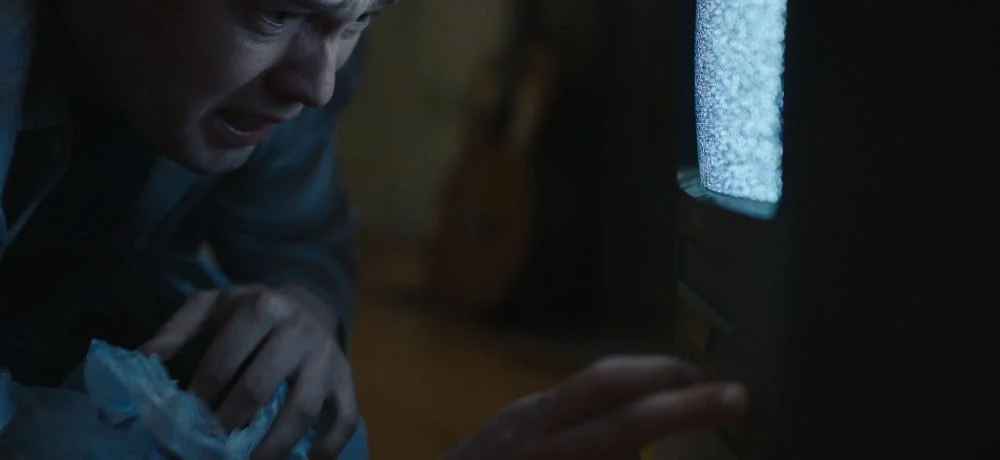
However, the house holds more than just black mold and structural rot. Beneath a clanking, outdated water heater, Elliot discovers a cache of numbered VHS tapes. These tapes contain episodes of a long-forgotten, localized children’s program titled Mr. Morton’s Monster Alley. What begins as a curiosity quickly spirals into an intrusive, psychological siege.
Chronology of a Descent
The narrative trajectory of Play House is expertly paced, moving from the mundane frustrations of home renovation to the surreal, sharp-edged terror of the supernatural.
Phase 1: The Fixer-Upper
The film establishes an initial tone of domestic comedy. Elliot’s influencer best friend, played with comedic precision by Jordan Gonzalez, provides a modern, fast-paced foil to Elliot’s earnest, if misguided, attempts at stability. The early scenes are thick with millennial malaise—bad puns, the obsession with influencer culture, and the desperate search for meaning in a life defined by “mastering nothing.”
Phase 2: The Discovery
As Elliot and Cath attempt to rekindle their romance amidst the dust and mildew of the house, the narrative shifts. The VHS tapes act as a corrupting influence, bleeding into their reality. The viewer is introduced to Mr. Morton (James Urbaniak), whose on-screen persona is a chilling pastiche of Mr. Rogers meets a desperate, failing television host. The puppets—Zieke the Zombie, Buttons the Clown, and Shelley Skeleton—are masterclasses in uncanny design. Their voices, strained and trembling as if the puppeteers behind them are acting under duress, provide the film’s most lingering auditory scares.
Phase 3: The Convergence
The final act of Play House sees the lines between the “Monster Alley” reality and the physical house dissolve. Curcio masterfully keeps the audience guessing, pivoting between psychological thriller, home-invasion horror, and supernatural dread. The film moves from subtle, shadowy movements in the basement to overt, terrifying incursions that force Elliot to confront the literal and figurative ghosts left behind by previous generations.
Supporting Data: The Mechanics of Fear
Curcio’s directorial style in Play House is characterized by its flexibility. He employs a “jab vs. haymaker” approach to pacing. The film does not rely on a singular style of horror, but rather keeps the audience off-balance by rotating its threats.
- Practical Effects vs. Digital Dread: The use of felt puppets that appear homemade but possess an inorganic, sinister life is the film’s strongest visual asset. These are not slick, CGI monstrosities; they are tactile, gritty, and deeply unsettling.
- The Urbaniak Factor: James Urbaniak delivers a standout performance. His portrayal of Mr. Morton is not a caricature but a nuanced, pathetic, and ultimately terrifying portrait of a man whose “plucky” facade is a mask for something truly malicious.
- Genre Synthesis: The screenplay functions as a “gloomy millennial gumbo.” It effectively folds in elements of The Black Phone (the connection between the past and the present), The ‘Burbs (the paranoia of the neighborhood), and Sinister (the corrupting power of media), yet it maintains a distinct voice.
Official Perspectives and Production Context
The critical consensus surrounding Play House suggests that the film’s greatest strength is its thematic weight. By framing the horror through the lens of a millennial trying to renovate a home that is physically and spiritually poisoned, Curcio touches upon a very real anxiety: the feeling that younger generations are being handed a world—and a housing market—that is fundamentally broken.
In press discussions, Curcio has emphasized that the "Monster Alley" show was designed to feel like a "public-access purgatory." The intent was to capture the feeling of watching content that feels illicit—media that shouldn’t exist, created by someone who shouldn’t have been given a camera. This aligns with the current digital cultural fascination with "lost media" and the uncanny valley of old children’s television.
Implications: The Millennial Gothic
The most significant implication of Play House is its success in elevating the “haunted object” subgenre. It suggests that the most frightening thing isn’t just a ghost or a monster, but the inescapable weight of history. Elliot isn’t just cleaning up mold; he is cleaning up the moral and physical rot left by those who occupied the house before him.
While some critics have noted that the film wears its influences on its sleeve—at times feeling like a patchwork of better-known horror hits—it avoids the trap of being a mere derivative. Its ability to maintain a consistent atmosphere of “home-sweet-home” dread, combined with its sharp social commentary, makes it a noteworthy entry in the 2026 horror slate.
Strengths and Weaknesses
- Strengths:
- Atmospheric Consistency: The film never loses its sense of unease, regardless of whether it is focusing on the characters’ interpersonal drama or the supernatural threat.
- Puppetry Design: The aesthetic of the Monster Alley characters is uniquely repulsive and memorable.
- Thematic Depth: It successfully uses horror as a metaphor for the systemic frustrations of modern adulthood.
- Weaknesses:
- Familiarity: Frequent genre watchers may recognize specific beats that have been executed in similar titles, potentially reducing the impact of certain "twist" reveals.
- Pacing Shifts: The rapid pivots between comedy and horror, while effective at maintaining momentum, occasionally threaten to undercut the gravity of the film’s darker moments.
Conclusion
Play House is a testament to the power of a strong, focused vision. Nicolas Curcio has successfully translated his “Fantastic Pitch” into a film that is as intelligent as it is terrifying. It is a movie that understands that the most effective hauntings are those that feel deeply personal—those that occupy our homes, our relationships, and our screens.
For audiences looking for a film that balances the "bones" of a classic ghost story with the modern anxieties of a generation lost in the static, Play House delivers a chilling, well-crafted experience. It is a feature debut that marks Curcio as a filmmaker to watch, proving that even when the house is falling apart, the foundations of good horror are rock solid.
Movie Score: 3.5/5