TORONTO — Early in her illustrious cinematic career, Spanish auteur Isabel Coixet captured global attention with her breakout masterpiece, My Life Without Me. The emotionally devastating 2003 drama starred Sarah Polley as a young mother who secretly compiles a list of things to do before she dies after receiving a terminal cancer diagnosis. Having thoroughly explored the heavy, profound terrain of mortality through that lens once before, Coixet was initially reluctant to revisit the subject. When producer Riccardo Tozzi first approached her about adapting Michela Murgia’s semi-autobiographical Italian bestseller Tre Ciotole (Three Bowls)—a poignant, unflinching chronicle of the author’s own kidney cancer diagnosis—the director instinctively balked.
However, persistent nudging from Tozzi ultimately led Coixet to open the pages of Murgia’s literary collection. What she discovered inside shifted her perspective entirely. Instead of a retread of past artistic triumphs, she found a masterclass in emotional cadence, proving that even in the face of inevitable farewells, grace and unexpected pockets of joy can endure.
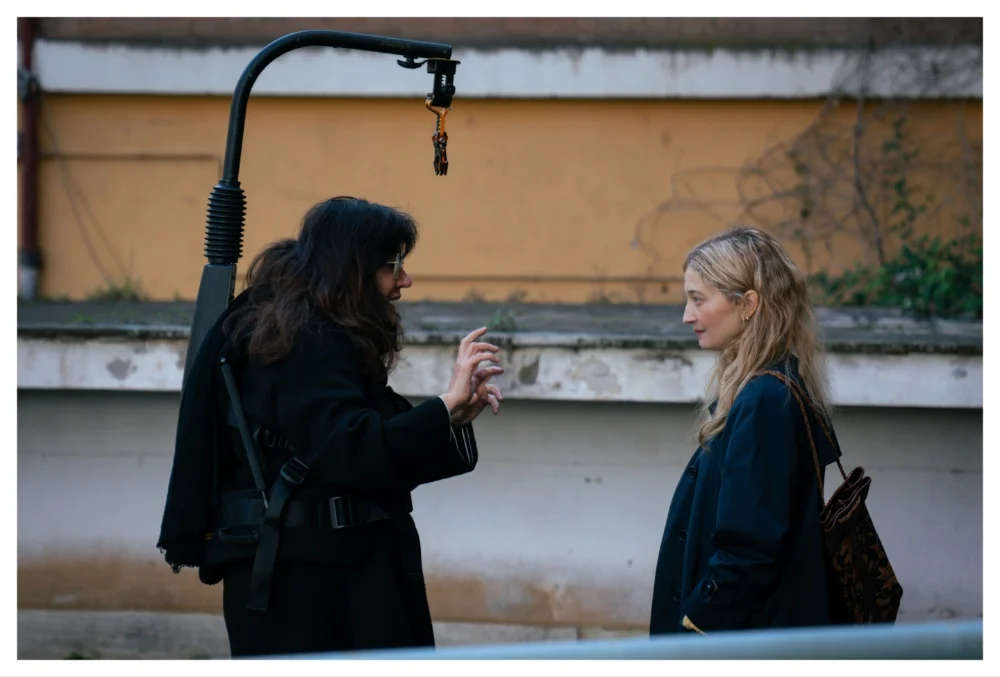
That emotional awakening blossomed into Three Goodbyes, a delicate yet vital cinematic exploration that celebrated its world premiere at the Toronto International Film Festival (TIFF) to widespread critical acclaim. Ahead of its Italian theatrical release on Oct. 9 via Vision Distribution, Coixet and star Alba Rohrwacher sat down to discuss the intricate process of bringing Murgia’s deeply personal legacy to the silver screen.
Main Facts: The Anatomy of ‘Three Goodbyes’
Three Goodbyes adapts Michela Murgia’s acclaimed literary work Tre Ciotole, transforming the author’s real-life reckoning with terminal illness into a narrative about love, loss, and human agency.
The story centers on Marta and Antonio, a couple whose lives unravel following a seemingly trivial argument that triggers their sudden separation. Marta, portrayed by acclaimed Italian actress Alba Rohrwacher (Maria), retreats deeply into herself, with her emotional withdrawal manifesting as a sudden, inexplicable loss of appetite. Antonio, an ambitious rising chef played by Cannes best actor winner Elio Germano (Our Life), buries himself in his grueling culinary career. Despite being the one who initiated the split, Antonio finds himself utterly haunted by Marta’s absence.
The narrative shifts dramatically when Marta’s persistent loss of appetite is diagnosed not as heartbreak, but as a symptom of a life-altering illness. With time running out, she refuses to let fear dictate her final chapter, confronting her fate with a fierce, vital resolve.
Behind the camera, Coixet weaves themes of food, unspoken grief, urban textures, and loneliness—the latter highlighted by a quirky, poignant narrative device: a cardboard cutout of a K-Pop idol named Jirko, who serves as Marta’s ultimate confidant.
Chronology: From Murgia’s Pages to the Toronto Red Carpet
The journey of Three Goodbyes traces a path from literary phenomenon to international cinematic event:
Pre-2003: Isabel Coixet establishes her international voice, later cementing her reputation with the release of My Life Without Me.
Literary Genesis: Italian author Michela Murgia pens Tre Ciotole (Three Bowls), channeling her real-life health struggles into a celebrated semi-autobiographical bestseller.
The Pitch: Italian producer Riccardo Tozzi acquires the rights to Murgia’s book and approaches Coixet to direct an adaptation. Coixet initially declines, weary of revisiting territory similar to My Life Without Me.
The Turning Point: Prompted by Tozzi, Coixet reads the book, breaks down in tears, and reverses her decision, immediately envisioning Alba Rohrwacher in the lead role.
Casting and Production: Rohrwacher joins the project, subsequently reuniting with her former co-star Elio Germano. Production commences in Rome, capturing the city’s lesser-known, textured neighborhoods rather than relying on postcard clichés.
Present Day:Three Goodbyes makes its high-profile world premiere at the Toronto International Film Festival, setting the stage for an October 9 theatrical rollout in Italy via Vision Distribution.
Supporting Data and Production Insights
The production of Three Goodbyes represents a convergence of European cinematic heavyweights, literary prestige, and deeply personal artistic choices.
Directorial Legacy: Isabel Coixet was famously inundated with scripts featuring terminally ill female protagonists following the success of My Life Without Me—estimating she turned down 30 to 40 identical pitches over two decades before Murgia’s book finally broke her resistance.
Stellar Cast: Lead actress Alba Rohrwacher brings prestige from Pablo Larraín’s Maria, while Elio Germano brings critical acclaim, including a Best Actor win at the Cannes Film Festival for Daniele Luchetti’s Our Life. The film marks a reunion for Rohrwacher and Germano, who previously played siblings in My Brother Is an Only Child.
Distribution: Vision Distribution holds the Italian rights, locking in an October 9 release date following the film’s festival circuit run.
Thematic Motifs: The film heavily utilizes food as a psychological mirror—drawing on the Feuerbach philosophy that "we are what we eat." Marta’s shifting diet (ranging from punishing herself with crackers and ketchup to embracing a liberating ice cream cone) serves as a visual language for her internal state.
Official Responses: Coixet and Rohrwacher on Crafting the Film
In a joint conversation with Variety, the director and her leading lady opened up about the emotional weight and creative joy of breathing life into Three Goodbyes.
Why Return to Illness?
Addressing why she finally decided to tackle terminal illness again after swearing off the subject for years, Coixet explained:
"After My Life Without Me they offered me all the films with a woman who has cancer… I always hate to repeat myself. But in this case, there was something [that grabbed me]… I found something very powerful in these stories. I was in tears reading them."
She added that the project allowed her to explore a lifelong thematic interest:
"The stories are very simple, but they contain something that I always wanted to say. I always wanted to do something about the human legacy — not something grandiose, just something about this sweet and human legacy that we experience with the people we love."
Building Marta Through Rohrwacher’s Eyes
For Rohrwacher, joining the project was a matter of total trust in Coixet’s singular vision, even before she had fully processed the source material:
"The first thing that grabbed me was the opportunity to work with Isabel, because I love her work and her way of looking at the world… I immediately thought it was not by chance that Isabel was adapting Murgia, because they both have an ability to show us reality from a fresh perspective."
The K-Pop Element and Marta’s Solitude
One of the film’s most striking and unconventional elements is Marta’s relationship with a cardboard cutout of a fictional K-Pop idol named Jirko—a direct nod to Murgia’s real-life obsessions. Coixet noted:
"I must admit, I am not very fond of K-Pop. But it was Michela Murgia’s obsession, and I wanted to respect that… When Marta talks to the cutout, it’s a way to point to the loneliness of her character. Not just the loneliness, it’s also the fact that she can only talk honestly about what’s happening to her to the cutout."
Capturing Rome Beyond the Postcards
As her first Italian-set film, Coixet was acutely aware of the cinematic clichés associated with the Eternal City. Rather than leaning on familiar tourist traps, she focused on tactile textures:
"I think every filmmaker in the world dreams of making a film in Rome. But I was very aware of the dangers of doing a postcard depiction. Neighborhoods like Pigneto, Testaccio, Trastevere. When Marta says: ‘Rome has all these Madonnas that look at you from above,’ that was Alba’s idea… Rome has 1,000 different tones of orange in its walls and I wanted to show these textures."
Implications: A Lasting Tribute to Michela Murgia
The arrival of Three Goodbyes carries profound cultural and emotional implications. As a cinematic adaptation of Michela Murgia’s final writings, the film functions as both an artistic milestone and a living monument to the celebrated author, who passed away in August 2023. Murgia’s distinct voice—characterized by sharp intellect, political fearlessness, and a deep appreciation for the absurdities and beauties of everyday life—finds a natural extension in Coixet’s empathetic direction.
Furthermore, the film challenges conventional cinematic tropes surrounding illness. Rather than framing a terminal diagnosis solely through the lens of tragedy or melodrama, Three Goodbyes focuses on agency, grace, and the small, defiant acts of living—whether that means talking to a K-Pop cutout, abandoning toxic silences, or simply deciding to enjoy an ice cream cone on a Roman street.
With its rapturous reception at the Toronto International Film Festival and a forthcoming Italian release, Three Goodbyes proves that stories about endings can ultimately serve as powerful celebrations of human connection, leaving behind a sweet and enduring legacy.