The Eight-Year Odyssey of Duncan Jones: How the Auteur Defied the Odds (and AI) to Bring Rogue Trooper to the Screen
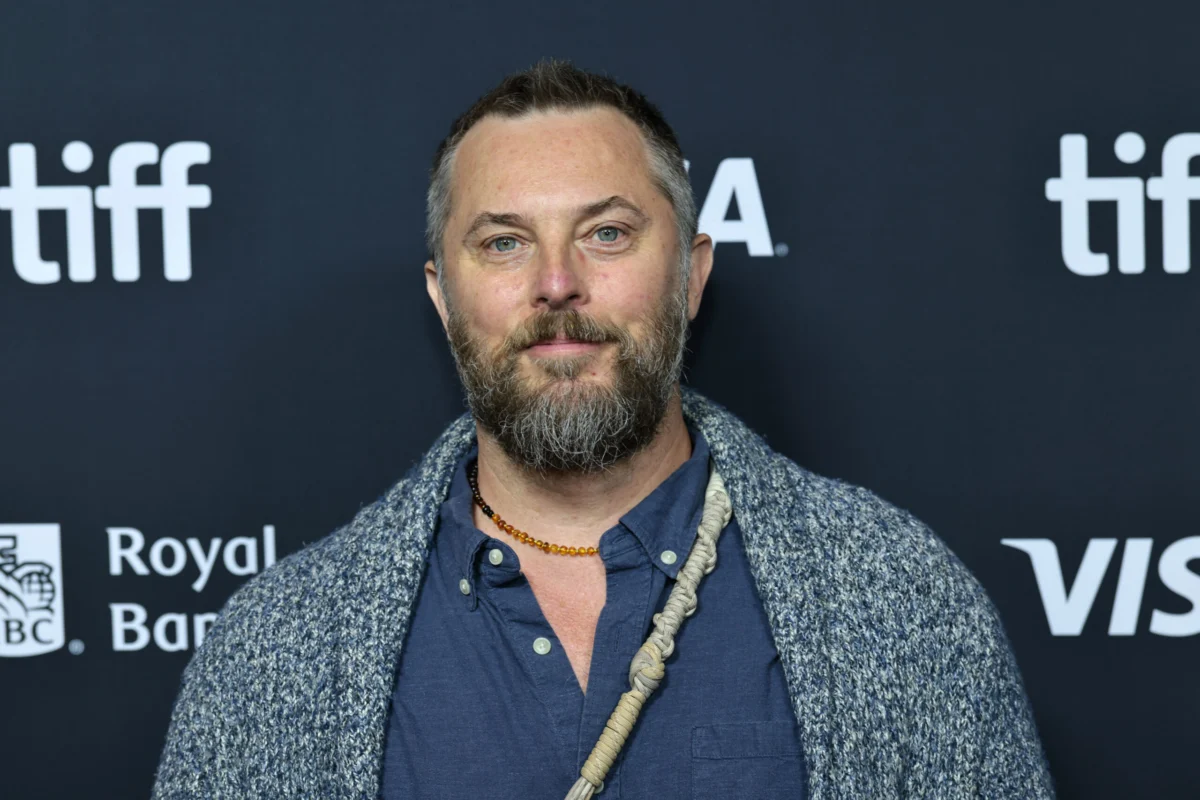
TORONTO — Duncan Jones wants to make one thing abundantly clear before anyone even asks: not a single pixel of his new animated feature, Rogue Trooper, was generated using artificial intelligence. In an era where Silicon Valley’s latest software tools have aggressively infiltrated Hollywood’s post-production pipelines, the filmmaker behind Moon and Source Code draws a hard, unyielding line.
"AI to me is a troubling one," Jones says, his voice cutting through the noise of the festival circuit. "It’s difficult to explain the use of AI in film as anything other than theft or being developed through the use of other people’s material, which was not paid for. So I find that troubling and I just want to stay away from it. If I can stay away from it, I will."
That stubborn adherence to human artistry, coupled with a deep-seated resistance to studio interference, helps explain why it has been a staggering eight years since audiences last saw a film from the British director. Following the premiere of Rogue Trooper at the Toronto International Film Festival, Jones opened up about the grueling independent financing marathon, the bleak landscape of modern mid-budget cinema, and why Hollywood’s obsession with algorithms threatens to cannibalize genuine creativity.

Main Facts: A British Icon Finally Makes the Leap
Rogue Trooper, which premiered at TIFF 2026, adapts the beloved British comic book series of the same name. Originating in the pages of the legendary sci-fi weekly 2000 AD—the very same anthology that birthed Judge Dredd—the story follows a genetic infantryman named 19 (voiced by Aneurin Barnard).
Left as the sole survivor of a catastrophic planetary massacre, 19 is joined by three of his fallen comrades. However, there is a distinct narrative twist: their brains have been downloaded onto computer chips and inserted directly into 19’s equipment, allowing them to converse, strategize, and bicker as he embarks on a bloody quest to track down a traitor. The film features a vibrant, eclectic ensemble of unsavory characters, gritty action, and a distinctly British comedic sensibility.
Crucially, the film was independently financed. Rather than bending the knee to major studio notes or leaning on risk-averse corporate algorithms, Jones and his team forged their own path, relying on a fiercely patriotic pitch: a British IP, starring British actors, shot in Britain, and executed without the digital short-cuts currently plaguing the industry.

Chronology: A 25-Year Waiting Game
To understand the long road to Rogue Trooper, one must look past the eight-year gap since Jones’s last feature, 2018’s Netflix sci-fi noir Mute. While Jones spent the intervening years raising a family, navigating the disruptions of the COVID-19 pandemic, and writing graphic novels alongside author Alex de Campi, the roots of this project stretch back decades.
- 25 Years Ago: Jones has his very first meeting with Jason and Chris Kingsley, the owners of 2000 AD. A lifelong fan of the comic anthology, Jones immediately identifies Rogue Trooper as a dream adaptation.
- 2009–2011: Jones bursts onto the global cinematic stage with his critically acclaimed directorial debut, Moon, followed swiftly by the high-concept studio thriller Source Code.
- 2016: Jones tackles his biggest budget to date with the epic fantasy adaptation Warcraft. Despite becoming the highest-grossing video game adaptation of all time globally, the complex Hollywood machinery leaves the director craving creative autonomy.
- 2018: Jones releases Mute on Netflix—a rare period where the streaming giant gave established auteurs total carte blanche—and publicly announces his plans to adapt Rogue Trooper.
- 2012–2020s (The Dredd Effect): Getting the project off the ground proves intensely difficult due to industry anxieties surrounding the commercial performance of past 2000 AD adaptations, particularly Pete Travis’s critically adored yet underperforming Dredd (2012) starring Karl Urban.
- 2022–2026: Utilizing independent financing models and evolving technological solutions (while strictly avoiding AI), Jones spends four intensive years physically producing the film, culminating in its 2026 TIFF premiere.
Supporting Data: The Independent Animation Struggle
Financing an independent animated feature aimed at adults is notoriously difficult. While live-action indie films rely on a crumbling network of international pre-sales, animation requires entirely different fiscal economics.
Jones and his production team initially experimented heavily with Epic Games’ Unreal Engine to handle the massive scale of the film’s sci-fi landscapes. However, early results proved overly reliant on a polished "video game" aesthetic. Approximately two years into production, facing a creative wall, Jones brought back VFX supervisor Marty Waters (who also worked on Mute). Together, they integrated supplementary visual effects techniques that married the foundational assets of the Unreal Engine with traditional, tactile animation pipelines.

This hybrid workflow allowed the production to achieve blockbuster-level scale at a fraction of the cost of a traditional studio animated feature, proving that technological innovation can serve human labor rather than replace it.
Official Responses: On AI Shortcuts and Studio Collapse
Jones is remarkably candid about why so many modern filmmakers succumb to the temptation of artificial intelligence, even if he personally refuses to touch it.
"If you’re a jobbing, working person in the arts, it’s already really hard to get work," Jones reflects. "And if you have the opportunity to get work and you need to pay your bills, I understand. I understand why you feel like you have to do that. And I know people who are making that choice. I’m not down with this."

When asked about the recent wave of public backlash targeting projects that utilize even minor AI touch-ups—such as Danny Boyle’s brief use of the technology in Ink—Jones points to a broader systemic anxiety. Filmmakers are navigating an industry where traditional safety nets have evaporated.
Regarding his own career trajectory, Jones compares his stubborn independence to other uncompromising auteurs like David Lynch and Terry Gilliam. "Unless you’re working at a super low budget and you’re just doing it yourself, I think it’s hard to work in that way these days," he notes. "The whole independent and middle ground of theatrical releases is very hard."
Implications: The Death of the Mid-Budget Auteur
The release of Rogue Trooper serves as both a triumph for independent animation and a stark warning about the future of cinema. Jones is deeply skeptical about where the current studio and streaming ecosystems are heading, warning that corporate reliance on data-driven algorithms will ultimately creative a reductive cinematic monoculture.

"The problem is the algorithm," Jones warns. "If they’re only showing a limited number of kinds of movies and their algorithm is saying, ‘Yes, this is popular,’ it’s just going to get smaller and smaller until you’re only making one kind of movie with two or three actors in it. I don’t know where they go from that unless they find a way to break out of that."
For now, Rogue Trooper stands as a defiant middle finger to homogenization. It proves that audiences are hungry for singular, risk-taking visions rooted in deep fandom rather than focus-grouped data points. As the film seeks a U.S. distribution partner following its triumphant TIFF debut, it carries the hopes of British sci-fi fans—and every artist fighting to keep the human soul alive in the editing room.