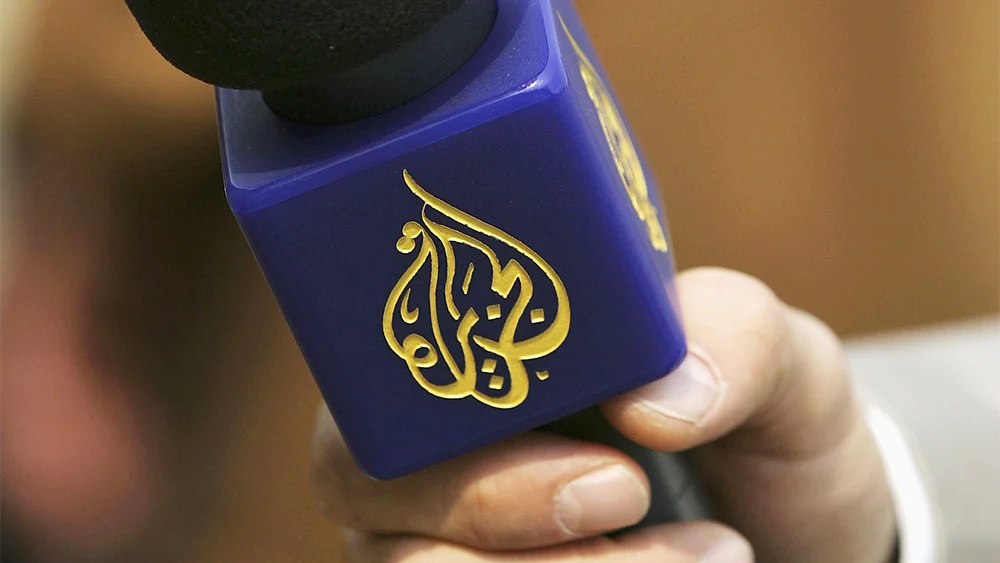
Al-Jazeera Launches International Legal Offensive Against Egyptian Authorities Amid Press Freedom Crisis
Executive Summary: A Clash of Narratives and International Law
The Qatar-based media conglomerate Al-Jazeera has officially initiated international legal proceedings against the Egyptian state, marking a significant escalation in the ongoing tension between the network and Cairo’s post-July military-backed government. Represented by the prominent London-based firm Carter-Ruck, which specializes in international media law, Al-Jazeera seeks redress for what it describes as a systematic campaign of harassment, arbitrary detention, and technical interference directed at its journalists.
The network alleges that since the ouster of President Mohammed Morsi in July, Egyptian security forces have engaged in a campaign to silence independent reporting, effectively attempting to monopolize the national discourse. This legal challenge, set to be pursued in international courts and before the United Nations, underscores a deepening crisis regarding the safety of journalists operating in the volatile political landscape of post-revolutionary Egypt.
Chronology of Conflict: From Tahrir to the Courtroom
The deterioration of the relationship between Al-Jazeera and the Egyptian authorities did not occur in a vacuum; it is the culmination of a months-long struggle for control over the narrative of Egypt’s democratic transition.
- July 2013: Following the military-led removal of President Mohammed Morsi, the atmosphere for media in Cairo shifted drastically. Al-Jazeera’s editorial stance, which provided significant coverage of pro-Morsi demonstrations, drew the ire of the interim government and large segments of the Egyptian public who supported the military intervention.
- Late July 2013: A internal crisis hit the network’s Cairo bureau when more than twenty staff members resigned en masse. The departing journalists, including prominent anchor Karem Mahmoud, publicly criticized the network for what they characterized as "biased coverage" and a departure from objective journalistic standards.
- August–September 2013: As the military crackdown on Islamists intensified, so did the friction between the state and the network. Reports of raided offices, the arrest of journalists without formal charges, and the periodic jamming of satellite signals became frequent.
- October 2013 (The Legal Pivot): Recognizing that traditional diplomatic channels were failing to secure the safety of its staff, Al-Jazeera engaged Carter-Ruck to formalize its grievances on the global stage, marking the shift from media-based outcry to judicial action.
The Allegations: Systematic Harassment and Technical Sabotage
Al-Jazeera’s legal brief against the Egyptian state is comprehensive, citing a "large number" of arrests involving its personnel. The network contends that these detentions are not rooted in criminal activity but are politically motivated, intended to intimidate staff and discourage critical reporting.
Arbitrary Detention and Intimidation
The network asserts that its reporters are being held without clear charges, often in conditions that violate international humanitarian standards. By targeting individual journalists, the authorities are accused of creating an environment of fear where the "chilling effect" prevents the gathering of news. The network argues that these actions are a direct violation of UN Security Council Resolution 1738, which mandates the protection of journalists in conflict zones.
Technical Interference and Censorship
Beyond physical harassment, Al-Jazeera has documented multiple instances of satellite signal jamming. This technical warfare, the network argues, is a deliberate attempt to cut off its audience from information that contradicts the official state narrative. By rendering the network’s transmissions unwatchable during key periods of political unrest, the state is effectively engaging in a form of digital censorship that violates the rights of the Egyptian public to access a plurality of information sources.
Supporting Data and Geopolitical Context
The conflict is heavily influenced by the regional dynamics of the Middle East. Qatar, the primary backer of Al-Jazeera, was a staunch supporter of the Muslim Brotherhood-led government of Mohammed Morsi. This political alignment has led many in Egypt to perceive Al-Jazeera not as a neutral news organization, but as a mouthpiece for Qatari foreign policy.
The Polarization of Egyptian Media
The Egyptian state-controlled media, alongside several private outlets, has launched a sustained counter-campaign against Al-Jazeera. Local pundits frequently accuse the network of inciting violence and undermining national security. This binary environment—where one is either with the state or a "traitor"—has left little room for neutral journalism, creating a dangerous climate for any entity perceived to be sympathetic to the deposed Brotherhood.
The Economic and Institutional Weight
The involvement of Carter-Ruck is a signal of the seriousness with which Al-Jazeera is approaching this dispute. The firm has a history of handling high-stakes international litigation, and its involvement suggests that Al-Jazeera is prepared for a protracted legal battle that will likely involve lobbying the United Nations and other international human rights bodies to apply diplomatic pressure on the Egyptian military government.
Official Responses: Two Versions of Reality
The Egyptian authorities have remained largely unmoved by the legal threats. Government spokespeople and representatives of the military have consistently defended the arrests as necessary actions taken in the interest of national security.
"Al-Jazeera is not a news agency; it is a tool for political propaganda that threatens the stability of our nation," a representative of the Egyptian interim government stated during a press conference. The state maintains that its actions against the media are not directed at journalists as a profession, but at individuals who "incite, provide misinformation, and collaborate with terrorist elements."
Conversely, Al-Jazeera’s spokesperson released a statement asserting: "The right of journalists to report freely in situations of this kind is protected by international law. Al-Jazeera cannot permit this situation to continue. We are taking all steps necessary worldwide to ensure that our journalists can operate freely, without fear of arbitrary arrest, jamming, or other forms of harassment and intimidation."
Implications for Global Press Freedom
This case has profound implications for the future of journalism in the Middle East and beyond.
The Legal Precedent
If Al-Jazeera successfully secures a ruling or a favorable resolution through international mechanisms, it could set a significant precedent for how media organizations hold sovereign states accountable for the mistreatment of their staff. It elevates the issue of press freedom from a domestic policy concern to a matter of international law, potentially triggering sanctions or diplomatic repercussions for nations that systematically harass the press.
The Erosion of Neutrality
The controversy also highlights the growing difficulty of maintaining "objective" journalism in highly polarized political environments. When a media network is perceived as a state actor or an extension of foreign policy, the distinction between a "journalist" and a "combatant" becomes dangerously blurred in the eyes of local authorities. This shift forces a conversation about the responsibilities of media organizations, the ethics of state-funded news, and the limits of state control in the age of global satellite broadcasting.
The Future of the "Cairo Bureau"
The long-term future of Al-Jazeera’s presence in Egypt remains uncertain. With the legal path now open, the network faces a choice between continuing to operate under a constant threat of harassment or withdrawing from the market entirely, a move that would represent a significant loss for the diversity of the Egyptian media landscape.
As the legal proceedings unfold, the world will be watching to see whether international institutions have the capacity to protect the press in a nation undergoing a fundamental and often violent transition of power. The outcome of this battle will likely serve as a litmus test for the resilience of international norms regarding freedom of speech and the safety of journalists in the 21st century.