Naza: Inside the Groundbreaking, Highly Polarizing Documentary Shaking the Global Film Landscape
As the fall film festival circuit reaches its fever pitch, few cinematic works have commanded as much urgency, acclaim, and ferocious backlash as the Israeli documentary Naza. Directed by Yuval Abraham and Rachel Szor, the film pulls back the curtain on the mechanics of modern warfare, detailing the implementation of mass surveillance and artificial intelligence in military targeting.
With a U.S. theatrical rollout approaching at the end of the month—preceded by a high-profile screening at the New York Film Festival—Naza is rapidly cementing its status as one of the most culturally disruptive and politically explosive pieces of cinema in recent memory.
1. Main Facts: Premise, Production, and Critical Reception
The Premise
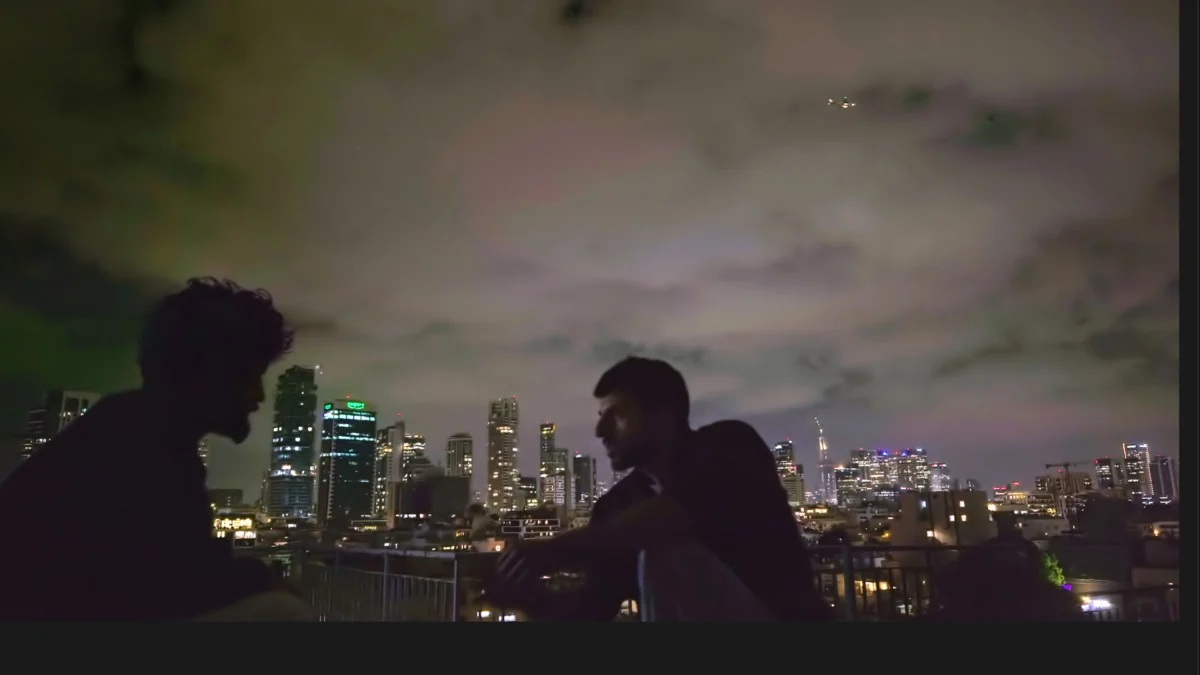
At its core, Naza is an uncompromising investigative documentary built around stark, prolonged interviews with 24 anonymous members of the Israeli intelligence apparatus. Filmed over the past few years on stark Tel Aviv rooftops, these subjects—their faces cloaked in shadow while director Yuval Abraham sits dimly lit across from them—describe in clinical, chilling detail how advanced A.I. technologies and automated mass surveillance systems were utilized to direct repeated strikes against Palestinian civilians during the hunt for Hamas operatives following the October 7, 2023 attacks.
The title itself carries heavy semantic weight. Naza is an acronym derived from the Hebrew phrase “nezek agavi”—a military term that translates directly to "collateral damage." The film uses this bureaucratic euphemism as a lens to examine the systematic quantification and normalization of civilian casualties in contemporary mechanized warfare.
The Creative Engine
The film is spearheaded by Israeli filmmakers Yuval Abraham and Rachel Szor. While Szor primarily operates behind the camera as cinematographer, Abraham steps in front of the lens as the interviewer. The pair previously collaborated on the international collective behind the 2024 acclaimed documentary No Other Land, which featured Palestinian filmmakers Basel Adra and Hamdan Ballal.
The production boasts heavy-hitting backing. Jonathan Glazer, who won the Academy Award for Best International Feature Film for 2023’s The Zone of Interest, serves as an executive producer. Glazer memorably used his 2024 Oscar acceptance speech to denounce Israel’s occupation of Palestinian territories—a stance that drew fierce condemnation from various Hollywood organizations in an open letter, yet remained unretracted by the director.
James Wilson, Glazer’s longtime producer who stood alongside him at the podium, serves as a producer on Naza through his banner, JW Films. In an unusual institutional partnership, the British daily newspaper The Guardian also stepped in as a co-producer.
Critical Acclaim and Festival Records
Naza made its world premiere at the Venice Film Festival, where it was met with an unprecedented 25-minute standing ovation—widely reported as a record for the festival, and potentially for major international cinema events overall. Competing in the main slate, the film walked away with the Special Jury Prize.

Critical consensus has been overwhelmingly unified. On Metacritic, the film holds a rare 96 rating, while maintaining a pristine 100% approval score on Rotten Tomatoes.
IndieWire critic Siddhant Adlaka described the film as “a documentary exposing the brutal machinery of modern genocide,” noting that it “is likely to shake you to your core — not because of what facts might be revealed… but rather because of the stirring form in which they come to light.”
Writing for New York magazine, Bilge Ebiri called Naza “a bombshell,” praising its aesthetic restraint. “The spare, focused style of Naza has a grim, artful beauty, all in service of the subject matter,” Ebiri wrote. “The style is purposefully antiseptic; aside from one brief section of footage from Gaza toward the end of the film, there’s nothing graphic here. And yet, I nearly threw up.”
2. Chronology of Events
To understand the trajectory of Naza, it is crucial to trace its path from clandestine production to global notoriety:
- 2023–2025 (Production): Amidst the ongoing war in Gaza, directors Yuval Abraham and Rachel Szor secretly conduct interviews with 24 active and former Israeli intelligence officers on undisclosed Tel Aviv rooftops.
- Early September 2026 (Venice Premiere): Naza debuts at the 83rd Venice Film Festival to a record-breaking 25-minute standing ovation and wins the Special Jury Prize.
- Mid-September 2026 (Political Backlash in Israel): Prime Minister Benjamin Netanyahu calls for the filmmakers to be stripped of their citizenship and heavily fined. Far-right agitators stage protests outside the home of Szor’s parents, with some calls for the directors’ execution. Simultaneously, over 1,000 Israeli filmmakers sign an open petition defending Abraham and Szor.
- Late September 2026 (U.S. Festival & Theatrical Launch): The film heads to the United States, premiering at the New York Film Festival on September 26, followed by a targeted commercial run at the IFC Center in New York City on September 30.
- October 2026 (Expansion): Naza is scheduled to expand into Los Angeles and other major North American markets on October 9, backed by a secured distribution pipeline—a stark contrast to the distribution struggles faced by No Other Land.
3. Supporting Data and Metrics
- 24: The number of anonymous Israeli intelligence personnel interviewed in the documentary.
- 25 Minutes: The length of the standing ovation received at the Venice Film Festival, establishing a modern benchmark for festival receptions.
- 96 / 100%: Critical approval metrics on Metacritic and Rotten Tomatoes, respectively, reflecting unanimous acclaim from international film reviewers.
- 1,000+: The number of Israeli filmmakers and cultural figures who signed a petition expressing solidarity with Abraham and Szor following government threats.
- 1st: The potential milestone Naza faces if it breaks the barrier to secure a Best Picture nomination, a feat never before achieved by a documentary feature.
4. Official Responses and Institutional Fallout
The film’s unflinching critique of military intelligence has triggered fierce, polarized institutional reactions both inside Israel and across the international community.
The Israeli Government and Military Response
The official response from the Israeli government has been swift and hostile. Prime Minister Benjamin Netanyahu publicly advocated for punitive measures against the directors, suggesting that Szor and Abraham be stripped of their Israeli citizenship. Furthermore, proposals have emerged to radically increase defamation penalties—by a factor of twentyfold—to target projects deemed damaging to state institutions.
The Israel Defense Forces (IDF) announced plans to assemble a specialized cross-agency task force to formulate strategic public relations and legal responses to the documentary’s claims.
The social climate surrounding the filmmakers has grown increasingly volatile. Far-right political factions organized demonstrations outside the residence of Rachel Szor’s parents, where agitators publicly hurled abuse and, in some instances, called for the execution of the directors as "traitors."

The Cultural and Domestic Defense
Conversely, the Israeli artistic community has rallied fiercely around the creators. More than 1,000 Israeli directors, producers, actors, and writers put their names to a solidarity petition condemning the state-sponsored harassment and asserting the vital importance of free expression, dissent, and self-reflection in democratic societies.
5. Implications: Awards Prospects and Industry Impact
Oscar Trajectory
Given that directors Yuval Abraham and Szor’s previous collaborative project, No Other Land, captured the Academy Award for Best Documentary Feature, Naza enters the upcoming awards season as an immediate frontrunner in the category.
The previous Oscar win signaled a clear shift among Academy voters: an unwillingness to bow to political pressures or sideline Middle Eastern geopolitical realities, effectively moving past the manufactured controversies surrounding Jonathan Glazer’s 2024 acceptance speech.
More ambitiously, industry analysts are quietly questioning whether Naza can transcend its documentary classification. No documentary in Oscar history has ever secured a nomination in the marquee Best Picture category. However, given the unprecedented level of critical fervor, festival accolades, and cultural discourse surrounding the film, Naza possesses the exact atmospheric momentum required to challenge historical boundaries.
Distribution and Commercial Viability
Unlike No Other Land, which famously fought an uphill battle to secure stable North American distribution despite winning over festival audiences, Naza has bypassed those hurdles entirely. Backed by high-profile producers and a coordinated rollout that begins with the New York Film Festival before landing at New York’s IFC Center and expanding to Los Angeles, the film is positioned to reach wide commercial and arthouse audiences alike.
Ultimately, Naza transcends its status as a mere piece of investigative cinema. By exposing the algorithmic coldness of modern warfare through the testimonies of those who executed it, the film has sparked a global conversation that will reverberate far beyond the theater walls—shaping the cultural, political, and cinematic landscape for years to come.