Clint Mansell Takes the Reins: A New Sonic Direction for Paramount+’s MobLand Season 2
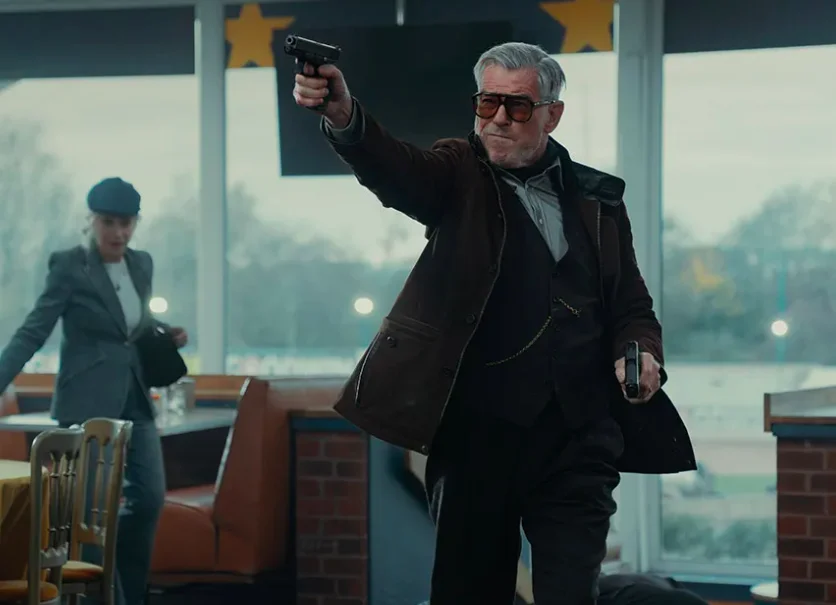
September 18, 2026 — In a major creative shift for one of streaming television’s most anticipated crime dramas, Paramount+ announced today that the legendary composer Clint Mansell has been tapped to score the second season of MobLand. The high-stakes series, which boasts an ensemble cast of cinematic heavyweights, returns to the platform today, marking a distinct evolution in both its narrative and its auditory landscape.
The transition from the collaborative efforts of Matt Bellamy and Ilan Eshkeri—who provided the soundscape for the inaugural season—to the singular, often hauntingly visceral style of Clint Mansell, signals a pivot for the show as it delves deeper into the fractured criminal empire of the Harrigan family.
Main Facts: A Bold New Sonic Identity
Clint Mansell, a composer whose name is synonymous with psychological depth and sonic tension, brings a storied pedigree to MobLand. Known for his iconic, long-standing collaborations with director Darren Aronofsky—most notably on Requiem for a Dream, Black Swan, The Fountain, and The Wrestler—Mansell has built a career on scores that are as much psychological character studies as they are background music.
His involvement in MobLand Season 2 is a significant acquisition for the production team. The series, created by Ronan Bennett (The Day of the Jackal, Gunpowder), operates in the gritty, high-tension world of organized crime, a genre where music often dictates the pace of the violence and the weight of the moral decay. As the Harrigan family struggles to maintain a facade of unity against encroaching rivals, Mansell’s signature use of repetitive, driving motifs and ambient melancholy is expected to provide a stark, sophisticated contrast to the first season’s more traditional melodic approach.
The series features an unparalleled cast, including Tom Hardy, Pierce Brosnan, Helen Mirren, Paddy Considine, Lara Pulver, Joanne Froggatt, Anson Boon, Jasmine Jobson, Mandeep Dhillon, Teddie Allen, Johnny Flynn, Ophelia Lovibond, Emmett J. Scanlan, Janet McTeer, and Toby Jones.
Chronological Development: The Evolution of MobLand
The journey of MobLand from a high-concept pitch to a premier Paramount+ asset has been rapid and expansive.
- The Launch (2025): The series premiered last year to substantial critical acclaim. The first season was scored by the duo of Muse frontman Matt Bellamy and prolific composer Ilan Eshkeri. Their score was characterized by a grand, operatic quality that leaned into the cinematic scope of the production.
- The Transition (Spring 2026): Following the conclusion of the first season, production teams at MTV Entertainment Studios and 101 Studios began pre-production for the second installment. Sources indicate that showrunner Ronan Bennett sought a shift in tone to mirror the increased desperation and fragmentation of the Harrigan family’s criminal empire.
- The Announcement (September 2026): Today’s premiere coincides with the official reveal of Clint Mansell as the new musical voice for the series.
- The Future: Beyond MobLand, Mansell continues to expand his portfolio, most recently having scored Dominga Sotomayor’s feature La Perra, which premiered at the 2026 Cannes Film Festival to widespread intrigue.
Supporting Data: The Production Machine
MobLand is not merely a show; it is an industrial undertaking. The production is spearheaded by an executive team that reads like a “Who’s Who” of prestige television and blockbuster film.
Ronan Bennett and Tom Hardy lead the charge as executive producers, working under the umbrella of MTV Entertainment Studios and 101 Studios. The sheer number of executive producers involved reflects the massive scale of the project: David C. Glasser (Yellowstone, 1883), Guy Ritchie (Snatch, Sherlock Holmes), Jez Butterworth (Ford v Ferrari), Ivan Atkinson, Dean Baker, Ron Burkle, David Hutkin, Bob Yari, and Keith Cox.
The inclusion of Guy Ritchie and the team behind the Yellowstone universe indicates that MobLand is positioned as a cornerstone of Paramount+’s strategy to dominate the "grit-and-crime" genre. By bringing in a composer of Mansell’s stature—a man who has worked on everything from the cerebral science fiction of Moon to the gritty superhero deconstruction of Doom Patrol—the producers are signaling that they intend to elevate the aesthetic quality of the show to meet its immense budget and star power.
Official Responses and Creative Direction
While showrunner Ronan Bennett has remained largely silent on the specific creative process behind the musical change, industry insiders suggest the shift was entirely deliberate.
"The second season of MobLand moves into a space that is significantly darker and more intimate," says a production source close to the project. "The Harrigans are no longer just fighting for power; they are fighting for identity. Matt Bellamy and Ilan Eshkeri gave us a great foundation, but Clint Mansell brings an internal, almost claustrophobic energy that we felt was necessary to capture the internal rot of the family."
Mansell himself has historically preferred to let his music speak for itself. In past interviews, he has noted that he approaches film and television scoring as a way to find the "hidden heartbeat" of a story. For a show like MobLand, where betrayal is the currency, the "heartbeat" is likely to be erratic, sparse, and unsettling.
Implications: The "Mansell Effect" on Modern Television
The hiring of Clint Mansell for a major franchise series like MobLand represents a growing trend in the streaming era: the "prestigeification" of TV scores.
1. Elevating the Medium
For decades, television scores were often considered secondary to their cinematic counterparts—functional, repetitive, and rarely intended for standalone listening. However, the rise of the "Golden Age of Streaming" has changed this. Producers are now hiring composers who have won (or been nominated for) Academy Awards, effectively treating each season of a show as an eight-to-ten-hour feature film.
2. The Composer as Auteur
Mansell is not just a composer; he is a brand. When his name is attached to a project, it creates an immediate expectation of quality. By bringing him on, Paramount+ is effectively marketing the sound of the show as a key selling point, much like they would market a new director or a lead actor.
3. Genre Blurring
The crime drama genre, particularly the mob epic, has a very specific auditory history—think of the brass-heavy themes of The Godfather or the classic rock-infused soundtracks of Goodfellas. Mansell’s influence, rooted in electronic, ambient, and avant-garde arrangements, pushes the genre toward a more psychological and modern vernacular. It shifts the focus from the "glamour" of crime to the psychological cost of it.
4. A Template for Success
If Season 2 of MobLand achieves the critical success the network anticipates, it will likely set a template for other streaming platforms. We are seeing a shift where the "musical identity" of a show is being treated with as much scrutiny as the casting of the main villain. It suggests that in an era of infinite content, the sensory experience—the way a show sounds and feels—is the primary differentiator.
Looking Ahead: A Season of Reckoning
As MobLand premieres its second season today, the audience will be listening for that change. With the Harrigans fractured and rivals closing in, the show demands a score that can handle both the sprawling action of criminal warfare and the quiet, agonizing moments of family betrayal.
Clint Mansell’s resume—from the tragic, string-heavy dissolution in Requiem for a Dream to the cold, isolated spaces of Moon—suggests he is uniquely qualified to score the slow-motion collapse of the Harrigan empire. As viewers tune in, they will find that while the faces remain familiar, the voice of the show has fundamentally shifted.
The premiere of Season 2 is currently available to stream on Paramount+, and for fans of contemporary film music, the new score will be as much of a draw as the star-studded cast. Whether or not this change will solidify MobLand as the definitive crime drama of the decade remains to be seen, but one thing is certain: the soundtrack will not be ignored.
As the credits roll on the final episode of this season, it is likely that critics and fans alike will look back at this moment—the moment the production decided to hand the baton to Mansell—as the point where MobLand found its true, darker soul.