Behind the Seams: Douglas Keeve on Directing His Ex, the 1990s Fashion World, and the 4K Restoration of ‘Unzipped’
For journalists and documentary filmmakers alike, entering into a romantic relationship with a subject is a notoriously perilous ethical tightrope. Yet, when executed with a certain degree of artistic transparency, this blurred boundary can yield a uniquely personal, unguarded, and deeply intimate perspective.
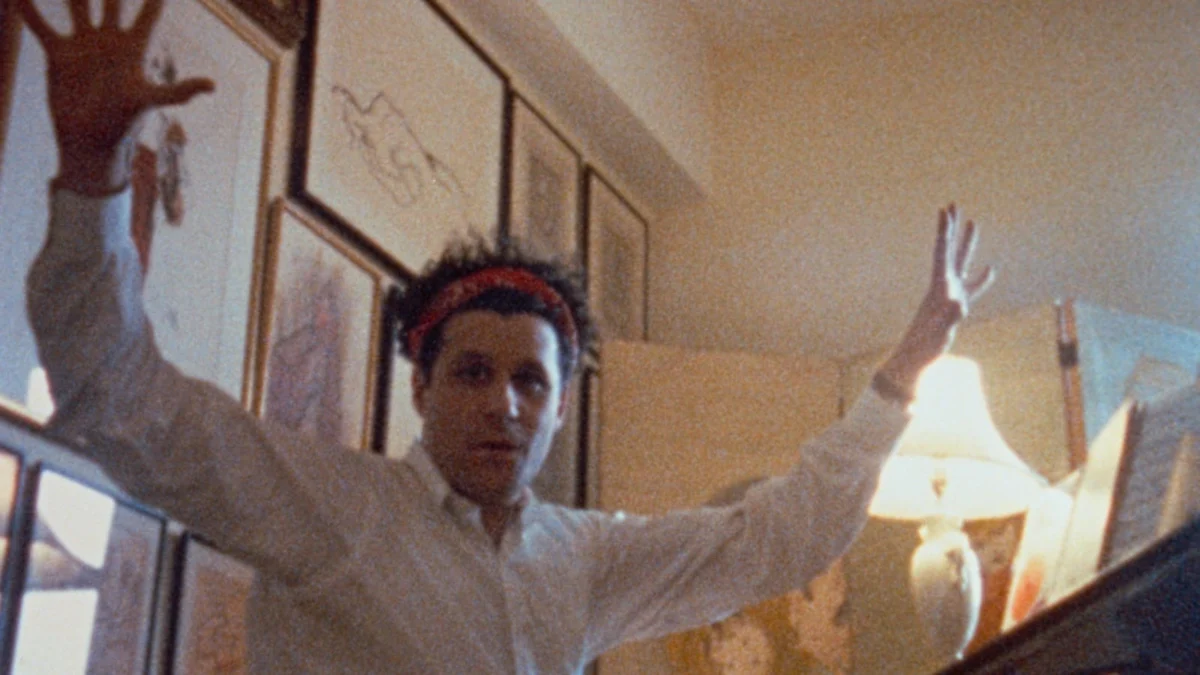
Few films capture this phenomenon quite as vividly as Douglas Keeve’s 1995 documentary landmark, Unzipped. A glittering, cinéma vérité time capsule of the early-1990s New York fashion scene, the film follows rising star designer Isaac Mizrahi as he meticulously mounts his 1994, Nanook of the North-inspired collection during Paris Fashion Week.
Now, three decades after its initial release, Unzipped is returning to the big screen in a pristine 4K restoration courtesy of Janus Films, newly minted by the Sundance Institute and the UCLA Film & Television Archive. Ahead of its theatrical rollout—beginning at New York’s Film Forum before expanding to Los Angeles on October 9—director Douglas Keeve sat down to reflect on the whirlwind era, his creative partnership and former romance with Mizrahi, and the enduring legacy of a film that captured high fashion at its most brilliantly frenetic.
Main Facts: A Landmark of 1990s Cinema Returns
At its core, Unzipped is a transportive chronicle of a bygone era in haute couture. When the documentary was originally filmed in the mid-1990s, the fashion landscape looked fundamentally different than it does today. Chanel owned a majority financial stake in the Isaac Mizrahi fashion house, supporting a brand that crafted sensibly chic, high-end garments. This was a full decade before Mizrahi became a household name recognized for his outré personality, his signature Eraserhead-esque shock of hair, and his mass-market ready-to-wear diffusion lines sold in Target stores.
The newly restored 4K version of the partly in-color, predominantly black-and-white documentary offers younger audiences—particularly those currently experiencing a wave of nostalgic fascination for 1990s New York culture—a front-row seat to fashion history. The film features an extraordinary roster of supermodels in various states of glamorous repose, professional exasperation, and sharp on-camera self-awareness, including Naomi Campbell, Christy Turlington, Linda Evangelista, Cindy Crawford, and Kate Moss.
Yet, beyond the archival garments and the runway pedigree, the film’s most fascinating dynamic remains the personal relationship between behind-the-lens filmmaker Douglas Keeve and his primary subject, Isaac Mizrahi, who were romantically involved throughout the production.
Chronology: From Sundance Triumph to 4K Restoration
The Genesis of a Relationship and a Movie
Douglas Keeve and Isaac Mizrahi’s romance began long before the cameras started rolling on Unzipped. Keeve, working primarily as a filmmaker and photographer, found himself uniquely positioned to document Mizrahi’s creative process as the designer conceptualized his seminal 1994 collection.

Unlike traditional interview-driven documentaries, Keeve’s approach was purely observational. He carried a camera everywhere, capturing Mizrahi in moments of intense creative pressure, quiet vulnerability, and domestic chaos. Notably, Keeve maintained strict editorial boundaries during production. He refused to show Mizrahi rough cuts during the editing process, preferring to construct the narrative away from his subject’s direct oversight. It was only after Keeve was fully satisfied with the finished cut that he finally brought it to the designer.
The 1995 Premiere and Personal Fallout
Unzipped premiered to critical acclaim at the 1995 Sundance Film Festival, where it walked away with a coveted Audience Award. The film was celebrated for its unprecedented, fly-on-the-wall look at an industry typically guarded by strict public relations gates.
However, the immense professional pressures surrounding the film’s release coincided with a period of personal strain for the couple. Shortly after the Sundance premiere, Keeve and Mizrahi’s romantic relationship came to an end. Despite the timing, Keeve is quick to clarify that the documentary itself was not the catalyst for their breakup.
"Did the movie break us up? I’m not sure I know how to answer that because relationships are so complicated," Keeve told IndieWire. "Isaac is complicated, I’m complicated. So you have two complicateds, plus a complicated world."
Keeve points to the stark differences in their daily lives and social obligations as a primary driver of the split. While Mizrahi thrived in the perpetual whirlwind of New York’s nightlife—attending multiple cocktail parties, dinners, and after-hours events every single night—Keeve was managing his own demanding career as a working artist and photographer.
"I just couldn’t do that," Keeve recalled. "I had my own working life, and it was busy. He wanted a partner who could share those things, which I think is correct. There was so much external pressure from different things… The movie came in, and the movie had nothing to do with our breakup at all."
Despite the end of their romance, the two men maintained a unique bond, evolving into what Keeve affectionately describes as "frenemies." Decades later, they have reunited professionally to oversee the meticulous 4K restoration of the film.

Supporting Data & Behind-the-Scenes Insights
Unfiltered Intimacy: Capturing Mizrahi Off-Guard
While Unzipped functions as a love letter to Mizrahi’s undeniable talent and charisma, it is far from an idealized hagiography. The film captures Mizrahi’s moments of benign volatility and artistic panic. In one memorable sequence, the designer becomes deeply distressed upon discovering that a rival fashion house is producing an "Eskimo"-inspired line uncomfortably close to his own conceptual ideas. This anxiety sits alongside his whimsical artistic choices, such as modeling his show’s hair and makeup after Loretta Young’s character in the 1935 film The Call of the Wild—transforming a character scripted to be near-frozen and dying into a glamorous heroine waiting for rescue.
Keeve notes that Mizrahi’s comfort around the camera allowed for extraordinary moments of unfiltered domesticity. "There may be those moments in the movie that may seem like I’m shooting him in the bathtub and exploiting him, but I just always had a camera, and Isaac is somewhat oblivious to the camera in a way," Keeve explained. "He just is one of those people who is in the zone all the time… What’s more shocking is that I could walk into the bathroom and film him, and he’s on the phone with his mother, and he doesn’t really notice me."
The Matriarchal Presence: Sarah Mizrahi
That mother—Sarah Mizrahi—serves as one of the documentary’s most memorable breakout figures. Affably looming and perpetually eager to inject her maternal wisdom into her son’s creative vision, Sarah represents a classic archetype that adds emotional grounding to the film.
"They had that typical Jewish mother relationship, which is incredibly close, probably mama’s-boy close, and yet incredibly fraught," Keeve observed. Quoting writer Fran Leibowitz’s maxim that stereotypes tend to be true, Keeve added with a laugh, "So she said it, not me, but she was a wonderful woman, and I liked her very much."
Linda Evangelista and the Art of the Backstage "Hissy Fit"
The supermodels populating Unzipped also provide rich narrative texture, running the gamut from cooperative professionals to theatrical divas. Among them, Linda Evangelista stands out, frequently captured backstage having what Keeve identifies as performative outbursts.
"There are a lot of people who say that Linda is the greatest fashion model who ever lived, and it’s arguable, but Linda in the show, where she’s having a hissy fit, and then another hissy fit, and then another hissy fit, to me, I can see that she knows exactly what to do," Keeve said. "She’s turning it on for the camera… She’s not so much that person, but she knows we’re making a movie, and she knows that. Linda said, ‘I have to bring it,’ so she did."
Keeve recalls a specific moment when Evangelista turned directly to his lens, fixing the camera with a defiant, unblinking glare. "She just turns to the camera, and she gives this look like she’s just staring at the camera like, ‘I dare you to judge me or whatever,’ and then she turns away. For me, that’s an incredible moment."

Official Responses and Emotional Reflections
As he reflects on the process of supervising the 4K restoration, Keeve admits that his connection to the project transcends technical enhancements like color grading or resolution upgrades.
"When I’m watching the movie, I’m not really looking at the technical part of the film about how the diamond has been polished even more," Keeve reflected. "I’m really seeing those moments and feeling those feelings."
Revisiting the footage has also reinforced his enduring affection for his former partner. "The movie is—I hate to say it because when you make a movie like that, it just becomes utter rubbish—but it is a love letter to him, I think, because he’s just so extraordinary," Keeve said. "We’ve always been frenemies, and I still love Isaac. He’s amazing."
Implications: The Legacy of Unzipped in Modern Cinema
The theatrical re-release of Unzipped arrives at a time when fashion documentaries have become a staple of commercial cinema and streaming platforms. However, few contemporary entries match the organic intimacy of Keeve’s work. Modern fashion docs are often heavily produced, sanitized brand-building exercises controlled meticulously by corporate conglomerates and PR teams.
By contrast, Unzipped offers a rare, pre-digital-age window into an industry where raw artistic ego, genuine chaos, and unguarded human relationships could still be captured on celluloid without corporate interference. The film demonstrates the profound artistic heights that can be reached when a filmmaker has total access—and total emotional investment—in their subject.
For audiences returning to the film in 4K, or discovering it for the first time, Unzipped remains far more than a period piece about 1990s couture. It is a timeless, bittersweet portrait of art, ambition, and the complex reality of loving someone who belongs to the world.