Aamir Khan: Deconstructing the Myth, the Method, and the Legacy of a Bollywood Icon
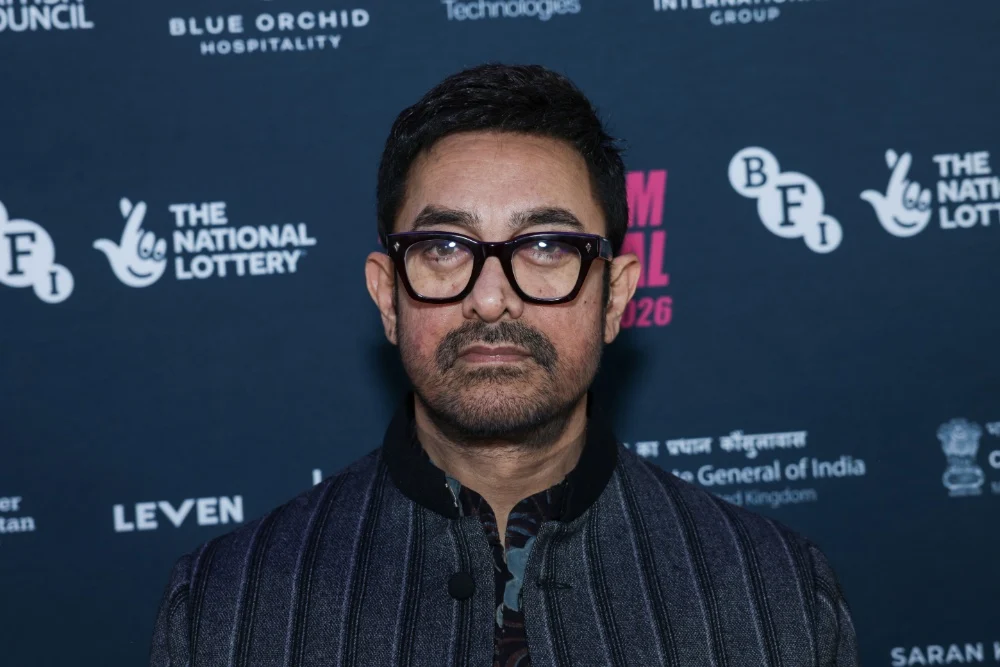
At a recent In Conversation event held at London’s BFI Southbank as part of the prestigious London Indian Film Festival, Bollywood superstar Aamir Khan provided a rare, granular look into his decades-spanning career. While the festival marked the 25th anniversary of his Oscar-nominated masterpiece Lagaan, the discourse quickly pivoted toward contemporary controversies, his uncompromising creative philosophy, and the seismic shifts currently reshaping the global cinematic landscape.
Setting the Record Straight: The "3 Idiots" Misconception
For over a decade, a pervasive narrative has followed Aamir Khan’s performance in the 2009 blockbuster 3 Idiots. Fans and cultural commentators alike have long posited that his character, the brilliant and unconventional Phunsukh Wangdu, was a direct cinematic adaptation of the real-life educator and climate activist Sonam Wangchuk.
The speculation gained renewed intensity recently when Omi Vaidya—who played the antagonist "Chatur" in the film—shared a social media video linking Khan’s character to Wangchuk. The timing was particularly poignant, as the video highlighted Wangchuk’s deteriorating health during a hunger strike protesting for the resignation of India’s education minister.
However, during the BFI session, Khan issued an unequivocal denial. "No, that’s not true, actually. No, no. That is a misconception," Khan stated firmly. He addressed Vaidya’s claims directly, noting, "I know that I saw a video of Chatur just recently. He said that yes. No, he’s wrong."
Khan elaborated on the creative origins of the character, clarifying that neither he, director Rajkumar Hirani, nor writer Abhijat Joshi were aware of Wangchuk’s work at the time of the film’s development. "We didn’t know about Mr. Sonam," he explained. Yet, he was quick to pivot to a note of profound respect, adding, "What Mr. Sonam is doing is good work. In any case, he doesn’t have to be based on the character of 3 Idiots for us to respect him and the work that he does."
Regarding the activist’s ongoing hunger strike, Khan expressed collective concern: "I think all of us are very concerned for his health, and we hope that it ends well. All of us are hoping that he ends his fast."
A Career Defined by "Swimming Against the Tide"
The BFI conversation offered a profound look at the chronology of a man who has consistently defied the traditional trajectory of a Bollywood "star." Khan, born into a family of filmmakers, was initially met with resistance from his parents regarding his career path.
Reflecting on his early days, Khan recalled the chaotic, often intimidating nature of the film set. His first exposure, at the age of seven or eight, was the production of Yaadon Ki Baaraat. He vividly remembered the "horrible" smell of the pancake makeup and the overwhelming noise of a set where "people were shouting and screaming."
Despite this, the pull of the medium was undeniable. He cited Ketan Mehta’s 1984 film Holi as a pivotal moment of artistic awakening. Khan had sought a role in the film specifically to witness the technical mastery of a Steadicam. Although the equipment failed to arrive and the crew was forced to pivot to handheld cinematography, the experience solidified his desire to be a serious participant in the craft of filmmaking.
The Art of the Compromise-Free Career
Khan’s career is marked by a series of deliberate choices, often taken at the risk of commercial failure. He spoke candidly about a period in his life when, despite suffering a string of box-office flops, he turned down a project offered by the legendary Mahesh Bhatt.
"Had I compromised that day, man, I think my entire career would be a series of compromises," Khan reflected. "When I could stick to what I believed in at my worst, it gave me a lot of strength." This ethos birthed a strict personal mandate: before signing any project, he evaluates the strength of the script, his level of trust in the director, and the producer’s ability to properly resource the creative vision.
The Post-2001 Pivot: Lagaan and Beyond
The year 2001 stands as a watershed moment in Khan’s history, defined by the releases of Lagaan and Dil Chahta Hai. When asked if he could have predicted that he would be discussing Lagaan on a London stage 25 years later, his answer was a humble "no."
"We were just frightened. It was just terrified trying to get it right," he said of the production. He described the film, which eventually secured an Academy Award nomination, as "a film about the triumph of the human spirit."
This professional high coincided with intense personal turbulence. Khan spoke openly about the dissolution of his marriage to Reena Dutta during that period. "I was actually going through a personal crisis myself. I was going through my divorce with Reena, and so I wasn’t in a state of mind emotionally to work," he revealed.
His return to the screen was marked by the historical epic Mangal Pandey. He noted the difficulty of the research process, highlighting that London’s India House museum held only a sparse collection of pages concerning the 19th-century revolutionary, forcing him to reconstruct the character with limited historical scaffolding.
Method and Modernity: The Changing Face of Cinema
As a director, starting with his acclaimed Taare Zameen Par, Khan has developed a reputation for working seamlessly with non-actors and children. "Directing the kids was the easiest thing," he noted. "I didn’t have to tell them anything. They were so natural, they just got it."
However, the industry in which Khan operates has undergone a total transformation. He identified the smartphone as the defining line between the past and the present. He contrasted the "captive audience" of the 1980s and 90s with today’s viewer, who is constantly distracted. "I’m competing with 1000 other things," he admitted.
Despite the digital fragmentation of audiences, Khan remains an optimist about the power of narrative. He believes that while the medium changes, the fundamental requirement for a film to succeed remains the same: a compelling, universal story. His own process begins with the "head of the character"—once he inhabits that mental space, the external elements of performance, from physical behavior to linguistic nuance, follow naturally.
Future Horizons: "Silkyara 41"
Looking ahead, Khan is not slowing down. He recently unveiled his next venture, an Indo-Australian collaboration titled Silkyara 41. Produced by Aamir Khan Productions in partnership with Mind Blowing Films and Kabir Khan Films, the project is inspired by the harrowing 2023 rescue mission at the Silkyara tunnel in Uttarakhand.
Written by Australian screenwriter Andrew Anastasios (The Water Diviner) and directed by Kabir Khan (Bajrangi Bhaijaan, ’83), the film will center on the critical role played by international tunneling expert Arnold Dix in saving the trapped workers. With pre-production scheduled for August and principal photography beginning in November, the film promises to be another test of Khan’s ability to turn real-world drama into a cinematic "triumph of the human spirit."
Conclusion: A Legacy of Integrity
Aamir Khan’s appearance at the BFI Southbank was more than a retrospective; it was a testament to the power of artistic integrity. From his early days as a hesitant child actor to his current status as a producer of globally resonant stories, Khan has remained a figure who refuses to be pigeonholed. Whether by debunking myths about his past performances or by carefully selecting projects that reflect his personal values, Aamir Khan continues to serve as a bridge between the "Golden Era" of Indian cinema—which he identifies as the 1950s and 60s—and a future that demands both technical innovation and deep, human-centric storytelling. As he prepares to dive into the complexities of the Silkyara 41 rescue mission, his focus remains where it has always been: on the strength of the script and the truth of the human experience.