The Ultimate 1990s Fashion Time Capsule Returns: Inside the 4K Restoration of Douglas Keeve’s ‘Unzipped’
For journalists and documentarians alike, romantic involvement with a subject has always walked a razor-thin ethical wire. While traditional reporting demands rigorous objectivity, documentary filmmaking frequently thrives on the kind of radical, unvarnished intimacy that only proximity can buy. When filmmaker and photographer Douglas Keeve pointed his lens at his then-boyfriend, rising American fashion star Isaac Mizrahi, in the mid-1990s, he blurred the lines between romance, artifice, and cinema verité.
Thirty years later, that high-wire act is back on the big screen. Newly restored in breathtaking 4K by Janus Films, alongside the Sundance Institute and the UCLA Film & Television Archive, Keeve’s seminal 1995 documentary Unzipped has returned to theaters. It opens at New York’s Film Forum before expanding to Los Angeles on October 9.
The re-release offers a transportive, miniature chronicle of early-1990s New York culture—a vibrant, glamorous, and wonderfully neurotic snapshot of a bygone era. Yet beyond its aesthetic value, the film remains a fascinating testament to a relationship that burned brightly, imploded gracefully, and ultimately evolved into a lifelong bond of mutual respect.
Main Facts: The Anatomy of a Fashion Milestone
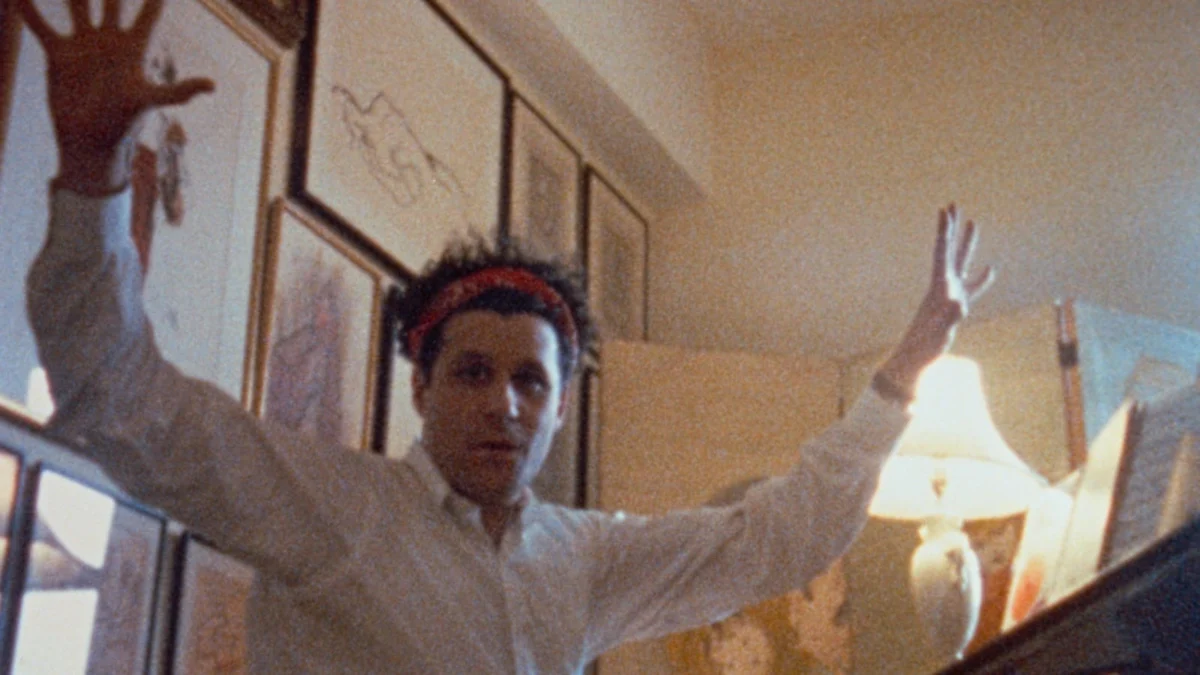
At its core, Unzipped is a black-and-white (with occasional bursts of color) verité portrait of a charmingly frenetic creative mind. The documentary follows Mizrahi as he meticulously mounts his 1994 collection for Paris Fashion Week—a line conceptually inspired by the 1922 ethnographic silent film Nanook of the North.
The cultural landscape of the fashion industry looked radically different in 1994. At the time, luxury powerhouse Chanel owned a majority financial stake in the Isaac Mizrahi fashion house, supporting a brand crafting sensibly chic haute couture. This was a full decade before Mizrahi became a ubiquitous household name, recognizable not only for his outré personality and signature Eraserhead-esque shock of hair, but also for his groundbreaking, accessible ready-to-wear diffusion line launched at Target stores.
The documentary features a veritable Pantheon of legendary supermodels operating at the absolute peak of their powers. Naomi Campbell, Christy Turlington, Linda Evangelista, Cindy Crawford, and Kate Moss all drift through the frame, displaying a colorful range of moods, sharp wit, and innate on-camera savviness.

For younger generations currently experiencing a relentless wave of 1990s New York nostalgia—fueled by cultural touchstones like Love Story: John F. Kennedy & Carolyn Bessette and a sweeping aesthetic of Parliament cigarettes and Calvin Klein denim—Keeve’s documentary serves as a holy grail of vintage coolness.
Chronology: From Production to Premiere and Beyond
To understand Unzipped, one must trace the timeline of both the creative project and the romance that sustained it.
- The Early 1990s (Production): Douglas Keeve, working primarily as a photographer, began capturing the whirlwind life of his partner, Isaac Mizrahi. Armed with a camera, Keeve followed Mizrahi into boardrooms, backstage fittings, late-night dinners, and even the bathtub, documenting the intense pressure of preparing the Nanook-inspired collection.
- January 1995 (Sundance Film Festival): Unzipped premieres at the Sundance Film Festival to critical acclaim, ultimately taking home the coveted Audience Award. The film immediately establishes itself as a rare peek behind the gilded curtain of high fashion.
- Spring 1995 (The Splitting Point): Shortly after the film’s festival triumph, Keeve and Mizrahi’s romantic relationship curdled and came to an end. Despite public speculation tying the breakup to the intense exposure of the documentary, both men maintain that the film itself was not the catalyst.
- Present Day (The 4K Restoration): Collaborating closely with institutions like the Sundance Institute and the UCLA Film & Television Archive, Keeve and Mizrahi—now enduring "frenemies"—supervise the meticulous 4K restoration of the film, bringing the historical document back to contemporary audiences.
Supporting Data: Behind the Scenes of a Cult Classic
While Unzipped captured the high-stress environment of high fashion, it also immortalized several eccentric personalities who shaped the narrative arc of the documentary.
The Muses and the Hissy Fits
Among the most memorable elements of the film are the candid, sometimes theatrical moments featuring the era’s supermodels. Linda Evangelista, in particular, anchors several unforgettable scenes where she cycles through backstage tantrums. Far from exposing a toxic work environment, Keeve notes that Evangelista was hyper-aware of the camera’s presence and weaponized it brilliantly.
"There are a lot of people who say that Linda is the greatest fashion model who ever lived, and it’s arguable, but Linda in the show, where she’s having a hissy fit, and then another hissy fit, and then another hissy fit, to me, I can see that she knows exactly what to do," Keeve reflects. "She’s turning it on for the camera… She just turns to the camera, and she gives this look like she’s just staring at the camera like, ‘I dare you to judge me or whatever,’ and then she turns away. For me, that’s an incredible moment."
The Mother Figure
No discussion of Unzipped is complete without mentioning Sarah Mizrahi, Isaac’s deeply traditional, affably looming mother, who serves as a Greek chorus of critique and affection throughout the film.

"They had that typical Jewish mother relationship, which is incredibly close, probably mama’s-boy close, and yet incredibly fraught," Keeve says, channeling observations from cultural icon Fran Leibowitz. "Stereotypes tend to be true… she was a wonderful woman, and I liked her very much."
Official Responses: Douglas Keeve on Love, Breakups, and Exploitation
In interviews surrounding the theatrical re-release, Douglas Keeve has been remarkably transparent about the ethical dilemmas of filming a romantic partner. When asked directly if Unzipped destroyed his relationship with Mizrahi, Keeve offers a nuanced perspective.
"Did the movie break us up? I’m not sure I know how to answer that because relationships are so complicated," Keeve told IndieWire. "Isaac is complicated, I’m complicated. So you have two complicateds, plus a complicated world. Our lives were so different, and in some ways I couldn’t quite keep up with his."
Keeve paints a picture of mismatched stamina: Mizrahi thriving on an endless cycle of multiple cocktail parties, dinners, and after-hours events every single night, while Keeve balanced his own demanding professional life as a photographer and filmmaker.
"The movie came in, and the movie had nothing to do with our breakup at all," Keeve insists. "There was pressure around finishing the movie because we had a deadline, but I was so in love with Isaac and in love with just who he is. The movie is—I hate to say it because when you make a movie like that, it just becomes utter rubbish—but it is a love letter to him, I think, because he’s just so extraordinary."
Addressing moments that might feel intrusive to viewers—such as filming Mizrahi in the bathtub while talking to his mother—Keeve defends his methods by highlighting Mizrahi’s total immersion in his creative zone.

"I wouldn’t show Isaac the movie when we were editing it at all, and only when I was happy with it, I brought it to him," Keeve recalls. "There may be those moments in the movie that may seem like I’m shooting him in the bathtub and exploiting him, but I just always had a camera, and Isaac is somewhat oblivious to the camera in a way."
Implications: The Legacy of ‘Unzipped’ in Modern Cinema
The theatrical return of Unzipped arrives at a time when fashion documentaries have become a standardized marketing tool for luxury houses, often resulting in sanitized, corporate-approved public relations pieces. By contrast, Keeve’s film stands out for its chaotic honesty, emotional vulnerability, and refusal to paint its subject as an untouchable deity.
The film’s enduring legacy lies in its demonstration of how profound artistic creation can emerge from personal proximity. That Keeve and Mizrahi navigated the end of their romance without destroying their shared artistic legacy speaks to a rare maturity. Today, as "frenemies" who proudly champion the film’s restoration side-by-side, they represent an era of fashion that was unafraid to be messy, loud, and deeply human.
For modern filmmakers tackling personal subjects, Unzipped remains a masterclass in balancing affection with accountability. And for audiences filling seats at Film Forum and beyond, the 4K restoration is not just a nostalgic trip down a 1990s runway—it is a front-row seat to the beautiful, complicated heart of a creative genius.