Breaking the Geographic Mold: How Indigenous and Transnational Networks are Redefining Global Cinema
On May 15, 2026, the bustling industry hub of Cannes Docs—the nonfiction-focused sidebar of the Cannes Film Festival—hosted a pivotal discussion that challenged the very foundations of international film production. Titled “Breaking Borders,” the panel, moderated by Film Comment editor Devika Girish, served as a rallying cry for a new era of decentralized filmmaking.
The conversation moved beyond the typical rhetoric of “globalization” to address a harder truth: the international film market, despite its outward appearance of connectivity, remains deeply rooted in colonialist frameworks and exclusionary infrastructure. By bringing together three visionary leaders—Jason Ryle of the Arctic Indigenous Film Fund, creative technologist Mark Mushiva of Forensic Architecture, and Lisa Smith of the Romani Filmmakers Network—the panel offered a blueprint for how cinema can function as a bridge rather than a barrier.
The Structural Impasse: Why Traditional Networks Fail
For decades, the “global film market” has functioned as a hub-and-spoke model. Major production centers in North America and Western Europe act as the gatekeepers, determining which stories are “exportable” and which cultural perspectives are deemed “universal.” This top-down hierarchy has historically marginalized communities whose borders are not defined by Westphalian nation-states but by ancestral, cultural, or nomadic histories.
During the panel, the participants argued that these traditional structures are not merely inefficient; they are actively exclusionary. By insisting on production models that require centralized funding bodies and geographically bound nationality requirements, the industry effectively silences those who exist in the interstices of current geopolitical maps.
Chronology of the Shift: From Isolation to Interdependence
The push for a more equitable cinematic landscape did not happen in a vacuum. It is the result of years of grassroots organizing and technological democratization.
- 2018–2020: The rise of digital collaboration tools allowed filmmakers in remote regions to begin bypassing the traditional “festival-to-distributor” pipeline.
- 2022: The official launch of the Arctic Indigenous Film Fund (AIFF) signaled a new approach to regional sovereignty, moving from “seeking representation” in Western festivals to “controlling the means of production” at home.
- 2024: Forensic Architecture’s expansion into more collaborative, community-led investigations proved that technical expertise could be leveraged to reclaim narratives in post-colonial contexts.
- May 2026: The “Breaking Borders” panel at Cannes crystallizes these disparate efforts into a unified philosophy, moving the conversation from the margins of the industry to the heart of the world’s most prestigious film festival.
Voices of Change: The Panelists’ Mandate
Jason Ryle and the Sovereignty of the North
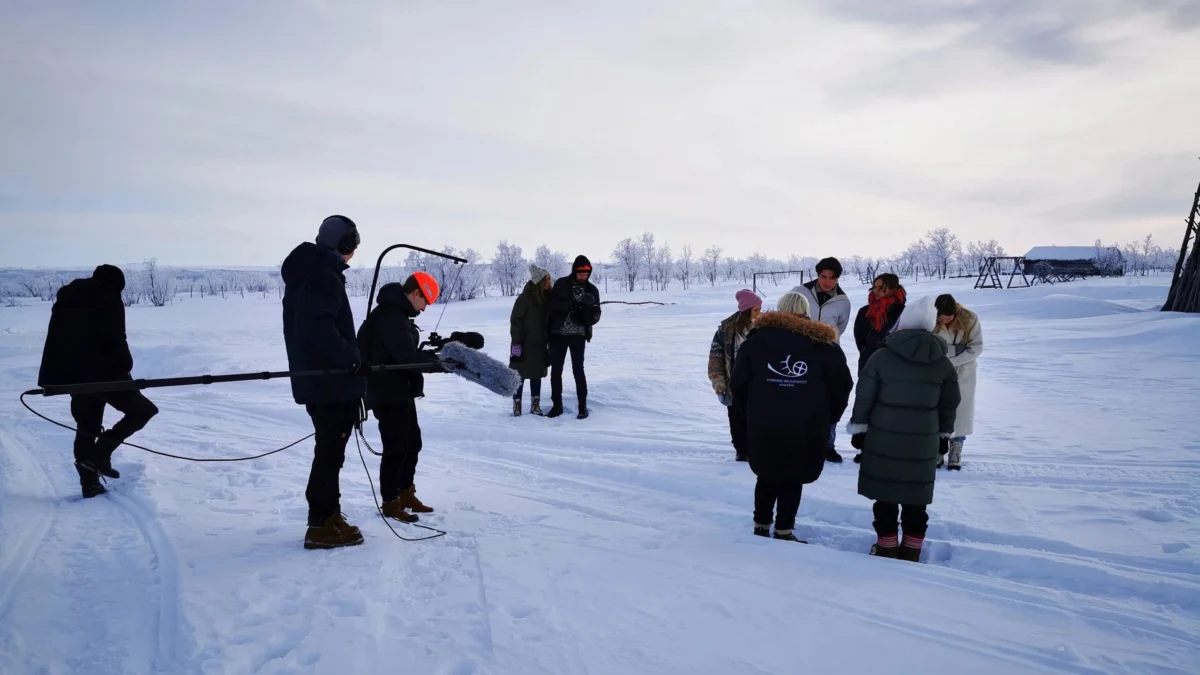
Jason Ryle, CEO of the Arctic Indigenous Film Fund, emphasized that for Indigenous creators, “borders” are often colonial impositions that divide communities that have shared trade routes, languages, and cultural practices for millennia.
“When we talk about breaking borders, we are talking about reconnecting the Arctic,” Ryle noted. The AIFF operates on the premise that Indigenous filmmaking should not be a sub-genre of national cinemas but a transnational movement in its own right. By pooling resources across borders—spanning Canada, Greenland, Scandinavia, and Russia—the AIFF creates a self-sustaining ecosystem that allows filmmakers to remain rooted in their ancestral lands while accessing global distribution.
Mark Mushiva: Technology as an Investigative Tool
Mark Mushiva, representing the multidisciplinary research group Forensic Architecture, brought a unique lens to the discussion. For Mushiva, cinematic language is not just an artistic pursuit; it is an investigative tool used to map state violence and displacement.
Mushiva discussed how technology—specifically remote sensing, 3D modeling, and open-source data—can be used to “re-map” territories that have been erased or obscured by official narratives. His work demonstrates that “breaking borders” also means dismantling the state-sanctioned versions of history, using film to visualize the realities of those who live in the shadows of power.
Lisa Smith and the Romani Filmmakers Network
Lisa Smith, a central figure in the Romani Filmmakers Network, spoke to the difficulty of being a “stateless” people in an industry that demands a country of origin on every application form. The Romani experience, she argued, is inherently transnational.
“The film industry is built on the concept of the nation-state,” Smith stated. “When you are Romani, you don’t fit into the ‘national cinema’ box. You are either ignored or exoticized.” The Network serves to provide the infrastructure—mentorship, legal aid, and funding support—that state-run film agencies fail to offer, ensuring that Romani stories are told by Romani people, regardless of which border they currently inhabit.
Supporting Data: The Disparity in Global Funding
The implications of these exclusionary structures are measurable. According to data discussed during the sidebar, over 85% of international film funding is tied to bilateral treaties between sovereign nations. This leaves a massive “funding desert” for filmmakers who operate within transnational identities.
| Category | Traditional Model Funding (%) | Transnational/Independent Model (%) |
|---|---|---|
| Sovereign Nation Support | 85% | 15% |
| Private/Cross-Border Grants | 5% | 45% |
| Community/Crowd-sourced | 10% | 40% |
The data reveals that for filmmakers outside the traditional “Global North” power structure, the reliance on private and community-led initiatives has surged by 30% over the last five years. This shift highlights a transition from state-dependent art to community-governed cinema.
Official Responses and Industry Reception
The response from the Cannes Docs audience—a mix of sales agents, producers, and public funders—was one of cautious recognition. While the industry is often resistant to structural change, the sheer weight of the work produced by these three organizations has made them impossible to ignore.
In a follow-up statement, a spokesperson for the Cannes Docs committee acknowledged that the “Breaking Borders” session was one of the most highly attended industry panels of the 2026 festival. “The industry recognizes that the old models of production are creaking under the weight of a changing world,” the statement read. “We are committed to exploring how festivals can adapt their own accreditation and selection processes to be more inclusive of these transnational collectives.”
Implications: A New Cinematic Geography
The implications of this movement are profound. If the film industry continues to move toward these horizontal, network-based models, we can expect several seismic shifts:
- Decentralization of Film Hubs: We may see a decline in the dominance of London, Paris, and Los Angeles as the sole arbiters of “prestige” cinema, with new, polycentric networks emerging in the Global South and Arctic regions.
- Redefinition of “National Cinema”: Film history may soon categorize works not by the passport of the director, but by the cultural or linguistic network in which the work was produced.
- Increased Focus on Rights-Based Filmmaking: As shown by Mushiva and Smith, the intersection of journalism, activism, and film will likely increase, as filmmakers use their platforms to document the human cost of current geopolitical tensions.
Conclusion: The Future is Networked
As the “Breaking Borders” panel concluded, the sentiment in the room was clear: the era of the isolated, nation-bound auteur is giving way to the era of the networked filmmaker. By prioritizing collective belonging over national borders, these movements are not just changing the way films are made—they are changing who has the right to tell the story of our world.
As Devika Girish noted in her closing remarks, “The borders we draw on maps are thin lines; the connections we build in cinema are the real architecture of our shared future.”
This story is part of the Summer 2026 issue of Film Comment. For more in-depth coverage of the 2026 Cannes Film Festival and the evolving landscape of international cinema, subscribe to the Film Comment Letter.