"Jumbo" Juggernaut: How an Animated Feature Conquered Hearts and Challenged Perceptions
JAKARTA, Indonesia – July 27, 2025 – In an era saturated with global blockbusters and digital distractions, an unassuming animated film titled "Jumbo" has defied expectations, quietly becoming a cultural phenomenon. Surpassing the ten-million viewer mark, this Visinema Pictures production has not only captivated audiences across Indonesia but has also ignited a profound critical re-evaluation of its narrative depth and social relevance. What began for many as a simple animated tale has unfolded into a poignant exploration of community, heritage, and the subtle power of myth, leaving even its initial skeptics profoundly moved.
The Journey to "Jumbo": A Skeptic’s Chronicle
For some, the journey to experiencing "Jumbo" was marked by a distinct reluctance. This reporter, for instance, initially approached the film with a heavy dose of skepticism, delaying a viewing until May 27, 2025, nearly two months after its theatrical debut at Mall Artha Gading, North Jakarta. The hesitation stemmed from a perception of "Jumbo" as potentially "overrated"—a film seemingly buoyed by an aggressive promotional campaign and the burgeoning celebrity of its director, Ryan Adriandhy.
Adriandhy’s background, firmly rooted in Indonesia’s flourishing stand-up comedy scene, was a primary driver of this initial cynicism. The world of stand-up comedy has, in recent years, ascended to unprecedented heights in the archipelago, dominating YouTube trends, influencing television programming, and making significant inroads into cinema. While this surge in popularity has brought fresh talent and perspectives, it has also, at times, led to a sense of saturation, where widespread public recognition is occasionally perceived as eclipsing genuine artistic merit. This reporter’s early apprehension was therefore colored by a suspicion that "Jumbo"’s success might be more a product of clever marketing and the director’s established network than the inherent quality of the film itself.
The initial synopsis of "Jumbo" did little to assuage these concerns. It promised the tale of Don, a 10-year-old orphan navigating life’s challenges, complete with classic tropes of dreams, hope, friendship, and family—themes that, while universally appealing, have been extensively explored in Indonesian cinema over the past decade. The primary differentiator, it seemed, was its medium: animation. Furthermore, the film’s high-profile voice cast, featuring luminaries such as Bunga Citra Lestari, Ariel Noah, Cinta Laura, and Angga Yunanda, was initially viewed as a conventional marketing ploy—a strategy to leverage celebrity appeal for box office success, rather than a testament to the film’s artistic ambition.
Yet, as the minutes of the 102-minute feature unfolded, a remarkable shift occurred. The preconceived notions, the layers of skepticism, began to dissipate. While the meticulously crafted animation was undeniably visually pleasing, it was the intricate and thoughtful narrative, penned by Ryan Adriandhy and Widya Arifianti, that truly captivated. The film, far from being an "overrated" spectacle, revealed a profound depth that demanded a reconsideration of its merits, transforming a cynical viewing into an unexpected appreciation.
Beyond the Surface: Unpacking "Jumbo"’s Narrative Core
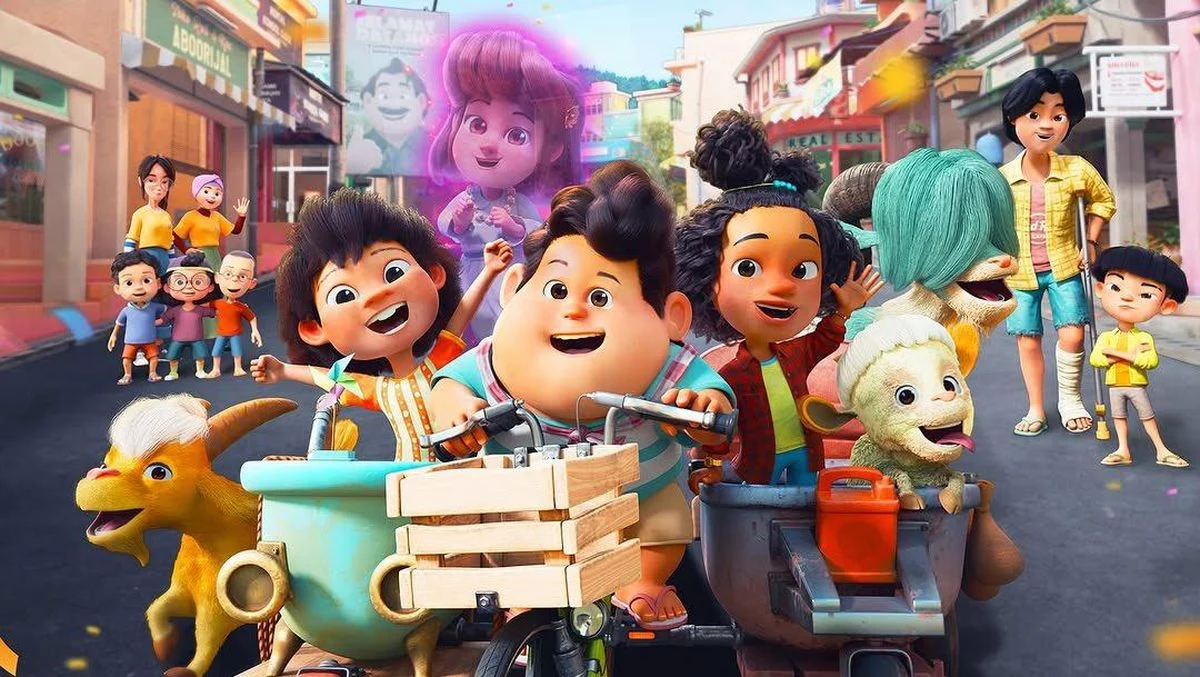
At its heart, "Jumbo" tells the story of Don, a boy ostracized and bullied for his plump physique, earning him the moniker "Jumbo," and for his penchant for storytelling, which often labels him a "party pooper." His world revolves around his loyal friends, Nurman and Maesaroh (Mae), and an unexpected companion: the curious ghost, Maria, affectionately known as Meri. The initial layers of the plot, focusing on Don’s quest to overcome bullying and the unwavering bonds of friendship and family, indeed align with many critical reviews that highlight the film’s moral lessons. However, to stop there would be to miss the film’s most compelling contributions.
The narrative gains momentum when Don unexpectedly secures an opportunity to perform his unique stories at a village festival. This pivotal moment sets in motion a chain of events involving the preparations for his performance, his encounter with Meri, and ultimately, a mission to rescue Meri’s family, whose spirits are held captive by the unscrupulous village head.
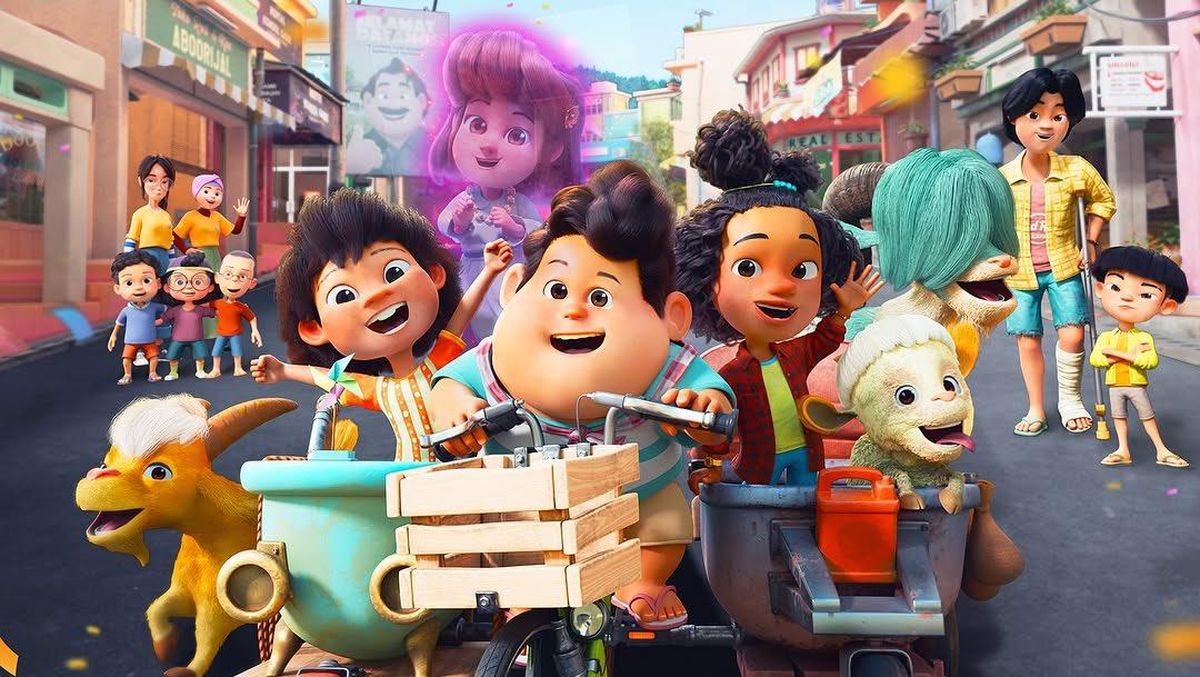
The fantastical elements of the story—such as Meri’s ability to interact with the living, Don’s sudden festival opportunity over a rival, the grandmother’s seemingly boundless income, or the convenient proximity of the chase scenes to the festival grounds—are not meant to withstand rigorous logical scrutiny. As the original critique wisely notes, "Jumbo" is a work of fiction, a deliberate creation that prioritizes thematic resonance over strict realism. The brilliance lies not in its adherence to the plausible, but in its profound grounding in the relatable and the culturally significant.
"Kampung" as a Cultural Tapestry: A Grounded Vision
One of the most commendable aspects of "Jumbo," and a key factor in its ability to disarm initial skepticism, is director Ryan Adriandhy’s decision to root the narrative firmly in the everyday realities of Indonesian village life. Unlike many contemporary productions that might seek to portray an idealized, almost "mooi indie" (beautiful Indies) version of Indonesia with lavish, picturesque settings, "Jumbo" embraces the authentic, lived experience of the "kampung." This approach avoids the trap of portraying Indonesia as merely a land of exotic beauty or technological prowess, or of succumbing to the exhausting myth of "development" that often marginalizes its citizens. Instead, Adriandhy delivers a narrative that feels intimately familiar and deeply resonant.
The Lived Experience of the Indonesian Village
The film masterfully weaves in elements that articulate the genuine fabric of Indonesian communities. It showcases the simple yet profound joys of childhood through traditional games like kasti (a local form of baseball), petak umpet (hide-and-seek), and lompat karet (rubber band jumping). Even the nostalgic presence of a Tamagotchi serves as a subtle nod to a specific era, perhaps providing a gentle prompt for parents to encourage more outdoor play over digital screens for the "Gen Alpha" generation.
Beyond the games, "Jumbo" vividly portrays the essence of community life:
- Gotong Royong (Mutual Cooperation): This foundational Indonesian value of collective effort is subtly integrated, highlighting shared responsibility and community spirit.
- Local Professions: Characters like Acil, the electronics repairman, represent the backbone of local economies in developing nations, showcasing the ingenuity and resourcefulness found in villages.
- Village Governance: The presence of a clear village structure, from the kepala desa (village head) to the hansip (civilian security guard), grounds the story in a recognizable administrative reality.
- Everyday Life: Even seemingly minor details, such as cats roaming freely in neighborhood environments (a stark contrast to more regulated urban settings like Melbourne, as the original critic observed), contribute to the authentic feel of the "kampung."
This deliberate choice to portray the "kampung" is crucial for articulating a sense of Indonesian identity to its primary audience, particularly children. It provides a mirror to their own lives, connecting them to their cultural roots and fostering a sense of belonging that extends beyond the glamor of urban centers. Given the film’s staggering success, drawing over ten million viewers—a demographic likely comprising a significant portion of middle and lower-income Indonesian families—this grounded portrayal ensures a deep, widespread connection with its audience.
The Resonance of Village Festivals
Central to the film’s celebration of community is the village festival. These events, characterized by their "from citizens for citizens" ethos, serve as vibrant expressions of local culture and solidarity. For Don, the festival becomes more than just an event; it is a critical arena, a stage for him to present his stories, assert his individuality, and claim his "agency." This portrayal resonates powerfully with contemporary Indonesian society, where community festivals have experienced a remarkable resurgence in recent years. This phenomenon can be attributed to various factors, including the Ministry of Education and Culture’s "Indonesiana" program, government endowments, special regional funds (particularly in Yogyakarta), and a burgeoning number of organic, grassroots initiatives that empower local communities to celebrate their heritage and foster collective creativity.
"Smart Kampung": A Counter-Narrative to Modernity
The profound significance of the "kampung" narrative in "Jumbo" can be further understood through the lens of Melani Budianta’s seminal 2019 essay, "Smart Kampung: Doing Cultural Studies in the Global South." Budianta positions the "kampung" as an active, vital site, offering a compelling counter-narrative to the prevailing, often homogenizing, ideals of "smart city" development. In her analysis, the "kampung," frequently dismissed or even maligned in the discourse of modernization, transcends its administrative or geographical definitions. It emerges as a dynamic cultural locus, a space where life thrives, traditions endure, and resistance against the excesses of modernization takes root.

Budianta argues that the "kampung" serves as a laboratory for social and cultural values that are often negated or eroded by rapid development. It becomes a bastion of collectivity, cultural performance, ethical traditions, and ecological resilience. Her concept of the "smart kampung" is, in essence, a vision of cultural resistance, portraying the village not as an impediment to progress, but as an alternative source of modernity—a model where development is human-centered and culturally sensitive.
"Jumbo" perfectly aligns with this framework. The film’s depiction of the village—its communal spirit, traditional activities, and the collective action of its residents—is a powerful affirmation of the "smart kampung" ideal. It underscores the importance of starting from the smallest, most familiar environments to articulate a broader sense of national identity and resilience. The film champions the idea that genuine progress can emerge from the heart of these communities, built on shared values and collective well-being, rather than solely from top-down, technology-driven mandates.
Myth and Land: A Socio-Political Subtext for Young Minds
Beyond its celebration of village life, "Jumbo" bravely delves into a socio-political issue that is deeply entrenched in Indonesia’s developmental narrative: land expropriation. The struggle between communities and powerful entities seeking land for "development" is a recurrent theme across the archipelago, often leading to the displacement of residents in the name of progress or profit. "Jumbo" tackles this weighty subject by cleverly embedding it within its fantastical narrative.
The Enduring Struggle for Land Rights
In "Jumbo," the core conflict arises when Don, Mae, Nurman, and Atta embark on a mission to save Meri and her parents’ spirits, who are "captured" by the village head. The head, driven by the lucrative prospects of land development, intends to clear the land—which happens to contain the family’s graves—for a new road project, pressured by impatient contractors. The film’s conclusion sees the corrupt village head arrested for his illicit dealings, and the land, along with Meri’s family, is saved. It is a classic "happy ending," where good triumphs over greed, and community values prevail.
The Power of Myth as Social Control
This storyline, however, sparked considerable debate on social media. Critics voiced concerns that the film promoted "takhayul" (superstition) and "syirik" (polytheism), making children believe in ghosts and potentially conflicting with religious tenets. Furthermore, some found the theme of land expropriation too "heavy" or complex for a young audience.
Yet, this criticism, in many ways, misses the profound cultural and pedagogical nuances embedded in the film. "Jumbo" masterfully brings a complex social issue into the realm of children’s logic through the power of myth. The focus for the children in the story is not the abstract concept of land rights, but the concrete, relatable goal of saving Meri and her family. The land issue becomes the critical backdrop, a "two birds with one stone" scenario where saving the spirits simultaneously preserves their ancestral land.
This approach resonates with a Durkheimian understanding of myth as a powerful tool for social control and moral instruction. Just as children in many traditional societies are told tales of mythical creatures like the kolong wewe or wewe gombel in Java (or hantu kopek in Malay tradition) to deter them from venturing out after dusk, these stories serve to establish boundaries and instill values. While some Western parenting philosophies might advocate for direct, logical explanations, many cultures, particularly in the Global South, often employ parables, metaphors, and fantastical narratives to convey complex truths and societal norms to children. It is a method that understands and respects a child’s unique way of perceiving and processing the world, where allegories often resonate more deeply than dry facts.

Meri’s character, therefore, is not merely a supernatural element; she is an allegorical bridge, translating the abstract concept of land seizure into a playful, actionable mission for children. How else could such a weighty issue be introduced to young minds without overwhelming them? Meri enables children to engage with the reality of exploitation in a way that stimulates their creativity and moral compass, making the struggle for justice tangible and emotionally resonant.
Public and Critical Reception: A Dialogue on "Jumbo"
The public discourse surrounding "Jumbo" on social media highlighted the tension between traditional cultural storytelling methods and contemporary expectations of "educational" content. While some viewers applauded the film for its innovative blend of fantasy and social commentary, others expressed unease. The debate centered on whether introducing elements of myth and supernatural beings to children could be construed as promoting superstition, and if a topic as sensitive as land expropriation was appropriate for a children’s film.
However, the film’s creators, through their narrative choices, implicitly championed a different vision. Ryan Adriandhy and Widya Arifianti’s script suggests a deliberate intent to empower children to grapple with complex realities. By weaving a serious socio-political issue into an engaging fantasy, they provided a framework for young audiences to understand themes of injustice, community solidarity, and environmental preservation in a relatable, age-appropriate manner. The widespread positive reception and record-breaking viewership underscore that a significant portion of the audience embraced this approach, finding value in its unique blend of entertainment and social consciousness.
Implications and Legacy: "Jumbo"’s Enduring Message
"Jumbo" stands as a significant milestone for Indonesian animation, demonstrating that local productions can achieve immense popularity while simultaneously offering rich, multi-layered narratives. Its success challenges the notion that animated films must adhere to globalized storytelling tropes to succeed, proving that deeply rooted cultural narratives can resonate powerfully with a broad audience.
The film’s enduring message lies in its celebration of the "kampung" as a dynamic cultural entity and its innovative use of myth to address contemporary social issues. It prompts important questions: What happens when the traditional myths and allegories, which once served as powerful tools for understanding and social control, lose their relevance in a rapidly modernizing world? How do we then stimulate children’s boundless creativity and enable them to comprehend complex challenges like land rights, community displacement, and environmental degradation without these narrative devices?
"Jumbo" offers a compelling answer: by reimagining and recontextualizing these cultural tools. It suggests that if children can embrace and cherish characters like Meri, and through her story, grasp the gravity of land preservation, then perhaps adults have much to learn from their intuitive understanding. The film serves as a powerful reminder that the "kampung," far from being an anachronism, remains a vital source of identity, resilience, and profound storytelling in Indonesia’s ongoing journey through modernity. Its legacy will undoubtedly spark further discussions on the future of storytelling, the role of cultural identity in cinema, and the powerful, playful ways we can introduce complex realities to the next generation.