
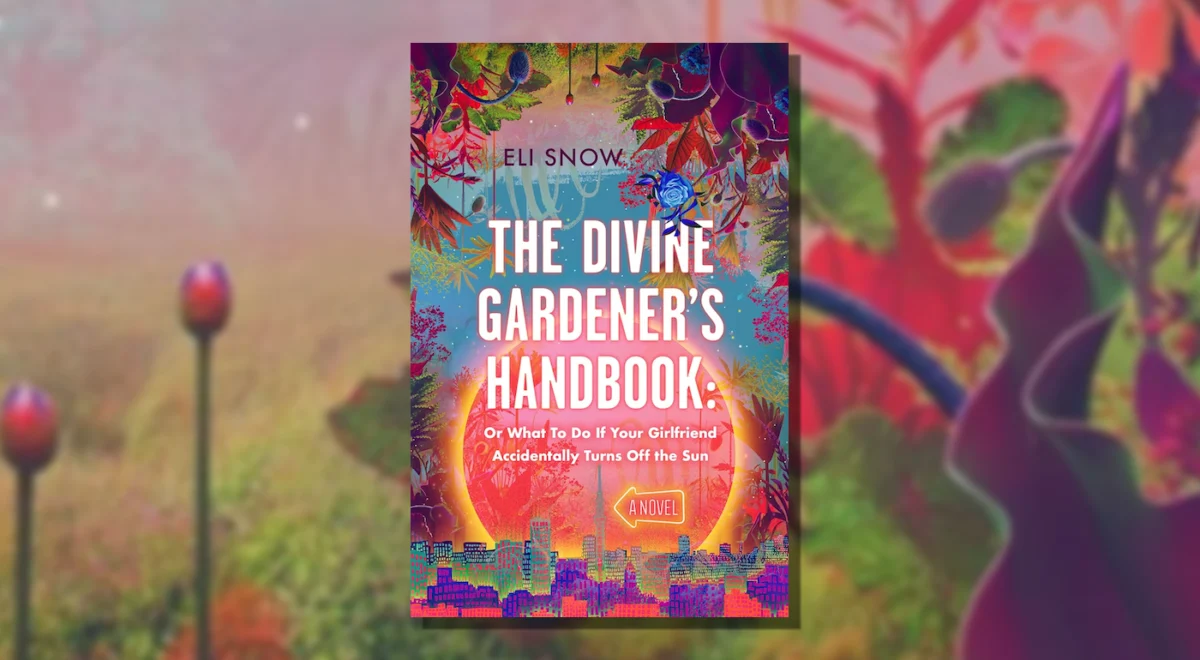
The High-Stakes World of Botanical Intrigue: A Deep Dive into Eli Snow’s The Divine Gardener’s Handbook
In the landscape of contemporary speculative fiction, few subgenres carry the atmospheric weight and tension of the "dystopian romantasy." On August 18th, St. Martin’s Publishing Group is set to release The Divine Gardener’s Handbook by Eli Snow, a novel that promises to blend the harsh realities of urban survival with the opulent, claustrophobic mystery of a celestial botanical paradise. With a premise centering on a cutthroat competition within a vertical megacity, Snow’s work explores the intersections of ambition, class warfare, and the volatile nature of human connection.
The Setting: A Jenga-Stacked Metropolis
The narrative takes place within the Divine Kingdom of Verdure, a vertical megacity that serves as a stark metaphor for social stratification. The populace is trapped in a sprawling, "Jenga-stacked" urban sprawl, where the quality of light is dictated by one’s elevation, and the air is thick with the scent of refuse and the constant hum of bio-engineered flora.
For the protagonist, Cyprin, the world is defined by the repetitive, soul-crushing labor of the city’s lower-level apple orchards. In this environment, the "Divine Gardens"—the pinnacle of horticultural prestige—represent the ultimate escape. The Gardens are not merely a place of work; they are an elite institution housing ten thousand individuals, a rarefied society that remains largely impenetrable to those born in the shadow of the scrapers. To enter the Gardens is to be plucked from the obscurity of the masses by a "carnival claw machine," a metaphor that underscores the arbitrary and dehumanizing nature of the selection process.
Chronology of Conflict: From Rivalry to Rebellion
The central narrative engine of The Divine Gardener’s Handbook is the annual flower pageant, an event that serves as the gateway to professional advancement. For five years, this pageant has been dominated by Purcell Whitlock, a brilliant and notoriously difficult head gardener.
The plot unfolds as follows:
- The Inception of Ambition: Cyprin, having spent her life attempting to ascend the social ladder, finally secures an interview for a position within the Divine Gardens.
- The Catalyst: Upon entering the administrative heart of the institution, Cyprin encounters Purcell. Their initial meeting is marked by mutual animosity, characterized by "heated glaring" and what is described as "hate at first sight."
- The Escalation: Driven by desperation, Cyprin resorts to illicit means—including black-market intervention—to secure a victory in the pageant, effectively unseating her rival.
- The Unraveling: Victory proves to be a double-edged sword. Once inside, Cyprin discovers that the Gardens are not a utopia, but a site of ancient secrets, sentient vegetation, and a deity who is revealed to be far more mundane and "exhausted" than the propaganda suggests.
- The Climax: As the truth of the Gardens begins to surface, a rebellion spreads throughout the city. Cyprin and Purcell find their personal rivalry eclipsed by the systemic collapse of their world, forcing an uneasy alliance that threatens to "burn the whole world down."
Supporting Data: The Sociology of the Divine Kingdom
To understand the stakes of Snow’s novel, one must look at the socio-economic reality of the Divine Kingdom of Verdure. The population, estimated at seven billion, is largely comprised of individuals with advanced horticultural skills. Yet, turnover in the Divine Gardens is virtually non-existent. Positions are held until retirement or death, with the administration finding ways to retain even the most infirm workers.
This environment fosters a "cult-like" culture of elitism. The gardeners are described as "purist snobs" who prioritize aesthetic perfection—bathed in starch and dew—over the gritty reality of the city. Cyprin’s attempt to infiltrate this world requires a total physical transformation: hair waxed to the scalp, precision-lined features, and the adoption of the sterile, all-white coveralls that signify membership in the gardening elite. The discrepancy between the image of the "garden angel" and the reality of the administrative offices—which are cluttered with hazard-prone grow lights and discarded seedlings—provides the novel with a sharp, satirical edge.
Official Responses and Literary Implications
While the book is categorized as a "sapphic dystopian romantasy," early discourse surrounding the text suggests it transcends the typical tropes of the genre. Critics have noted that Snow focuses heavily on the "terrifying possibility of understanding each other completely" within a relationship defined by obsession.
"The dynamic between Cyprin and Purcell is not merely a romance," notes one industry analyst. "It is a study in power. When two people are fueled by the same level of professional obsession and are placed in a high-stakes, life-or-death environment, the ‘enemy-to-lovers’ trope becomes something much more volatile. It’s about two people who are mirrors of each other’s ambition."

The inclusion of the "God" figure as an exhausted, human presence also serves to deconstruct the religious fervor surrounding the Gardens. By stripping away the divinity of the institution, Snow highlights the human cost of maintaining such a façade. The rebellion mentioned in the synopsis suggests that the novel will grapple with the consequences of institutional decay and the fragility of systems built on exclusion.
Thematic Implications: Ambition and Its Discontents
The Divine Gardener’s Handbook operates on several thematic layers:
1. The Cost of Perfection
The aesthetic obsession of the gardeners—the "lustrous leaves," the "laser-cut grass"—serves as a critique of perfectionism. Cyprin’s journey involves learning that the most beautiful things in the Divine Kingdom are often the most artificial and that the quest for perfection requires the suppression of one’s authentic self.
2. The Nature of Rivalry
The antagonism between Cyprin and Purcell is fueled by their similarities rather than their differences. Both women are survivors in a world that offers few paths to success. Their "increasingly personal acts of warfare" serve as a distraction from the larger systemic issues, a classic hallmark of competitive environments designed to keep the workforce divided.
3. The Fragility of Power
The reveal that the "God" of the gardens is simply an overworked man underscores the theme of the "wizard behind the curtain." The Divine Kingdom of Verdure is held together by the collective belief in its own sanctity. Once that belief is punctured, the collapse of the social order is inevitable.
Conclusion: A New Standard for the Dystopian Genre
As the August 18th publication date approaches, anticipation for Eli Snow’s The Divine Gardener’s Handbook continues to build. The novel stands out not just for its vivid, visceral prose—capturing everything from the "hot-sick smell" of the city to the "pink musk" of the gardens—but for its uncompromising look at the intersection of love and ambition.
By grounding the high-concept premise in the tactile, often unpleasant realities of gardening and urban life, Snow invites readers to question the price of status. Whether Cyprin and Purcell succeed in dismantling the system or find themselves consumed by the flames of their own making, the journey promises to be a defining moment in the current wave of sapphic speculative fiction. Readers looking for a narrative that balances intense character development with a sprawling, crumbling world will find much to admire in this latest offering from Saturday Books.
The Divine Gardener’s Handbook is available for pre-order now, promising an unforgettable exploration of what happens when the people holding the shears decide to prune the world itself.