From Fairy Tale to Nightmare: The Twisted Evolution of ‘Pinocchio Unstrung’
The boundaries of public domain storytelling have been irrevocably altered. What was once the sanctuary of childhood innocence—the whimsical, wood-carved fable of a puppet yearning for humanity—has been stripped of its wonder and reconstructed into a vessel for visceral, high-concept terror. On July 24, 2026, Pinocchio Unstrung will descend upon North American theaters, marking the latest, most ambitious expansion of the "Twisted Child Universe." Spearheaded by the provocative minds at Jagged Edge Productions, the film promises a radical departure from the source material, trading moral lessons for a gory, slasher-infused crusade.
The Main Facts: A New Chapter in the Twisted Child Universe
Pinocchio Unstrung represents a strategic escalation for director and writer Rhys Frake-Waterfield, the filmmaker who turned the literary world upside down with Winnie-the-Pooh: Blood and Honey. Acquired by Viva Pictures for a wide North American theatrical release, the film serves as a cornerstone of the burgeoning "Twisted Child" franchise—a shared cinematic universe that deconstructs iconic children’s literature into grim, adult-oriented horror.
The premise is as audacious as it is disturbing. Set within the stifling, high-pressure environment of an elite London prep school, the narrative strips away the magical whimsy of the original Carlo Collodi tale. Instead, we are introduced to a Geppetto (played by the incomparable Richard Brake) whose craftsmanship leans toward the macabre. The central conflict revolves around Pinocchio, who, guided by a sinister iteration of the Cricket (horror icon Robert Englund), embarks on a violent, anatomical quest. His goal is not merely to be a "real boy," but to physically harvest the pieces of his "brother," James, in a grisly attempt to achieve human status through literal, bloody assimilation.
Chronology: From Brussels to the Big Screen
The journey of Pinocchio Unstrung has been one of rapid, viral growth. The project was conceived in the wake of the global success of the Blood and Honey films, which proved that audiences possessed an insatiable hunger for the subversion of childhood icons.
- Development & Concept (2024–2025): Following the commercial success of the Winnie-the-Pooh sequels, Jagged Edge Productions began scouting public domain properties that offered high recognition but enough elasticity for horror adaptation. Pinocchio was selected for its inherent themes of body horror and the "uncanny valley."
- Casting Announcements (Late 2025): The industry took notice when horror royalty Robert Englund and character actor Richard Brake were attached to the project. Their involvement signaled a shift from low-budget indie horror to a more polished, star-driven production.
- World Premiere (Spring 2026): The film held its world premiere at the Brussels International Fantastic Film Festival. The reception was polarized yet electrified, with critics noting the technical leap in practical effects compared to previous Jagged Edge efforts.
- Distribution Deal (June 2026): Viva Pictures finalized the acquisition, scheduling the North American theatrical rollout for July 24, 2026.
- Theatrical Release (July 24, 2026): The film’s nationwide debut represents the culmination of this viral marketing cycle, placing the puppet-slasher in direct competition with traditional summer blockbusters.
Supporting Data: The Talent Behind the Terror
The production of Pinocchio Unstrung relies heavily on the synergy between the vision of Rhys Frake-Waterfield and the technical wizardry of industry veteran Todd Masters. Masters, known for his work in practical creature effects, has been instrumental in ensuring that the film’s titular character feels tangible, tactile, and terrifyingly real.
The Cast
The film boasts a roster that bridges classic horror legacy with modern television talent:
- Robert Englund (The Cricket): By casting the man behind Freddy Krueger, the film leans into the "mentor-as-villain" trope. His performance provides the psychological grounding for the puppet’s descent into madness.
- Richard Brake (Geppetto): Known for his menacing presence in The Strangers and Mayor of Kingstown, Brake brings a frantic, obsessive energy to the role of the creator.
- Jessica Balmer & Cameron Bell: Representing the youth perspective, their characters are the primary targets of the puppet’s anatomical hunt, providing the high-stakes tension required for a traditional slasher structure.
Technical Craft
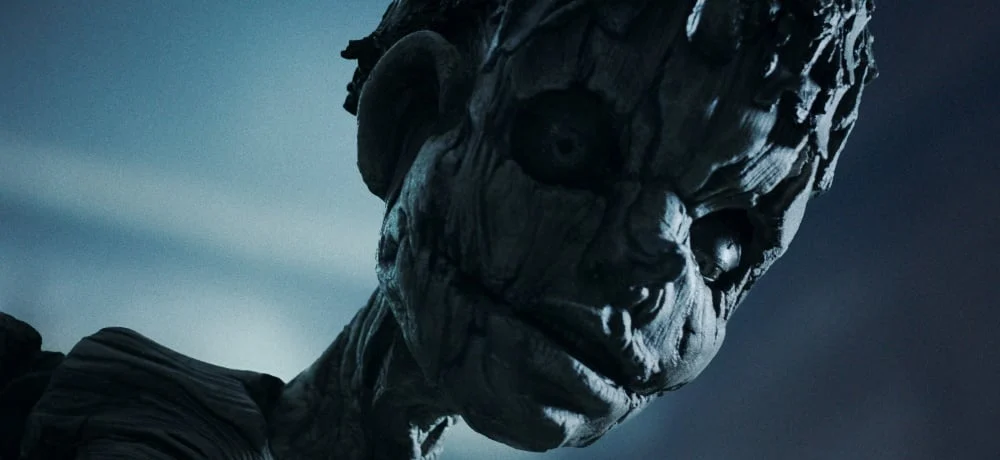
In interviews regarding the production, Todd Masters emphasized the importance of "weight" in horror. Unlike digital creations that can feel weightless, the Pinocchio puppet utilized in the film features complex animatronics that allow for subtle, unsettling facial expressions. "We wanted him to feel like wood that has been corrupted," Masters noted. The production team utilized specialized lighting and practical makeup effects to emphasize the grain of the wood against the gore of the film’s set pieces.
Official Responses: Insights from the Creators
In exclusive interviews, both Rhys Frake-Waterfield and Todd Masters provided deep insights into the creative philosophy driving Pinocchio Unstrung.
Frake-Waterfield addressed the challenge of adapting a character as famous as Pinocchio: "The goal wasn’t to ruin a childhood memory; it was to explore the darkness that was always hiding in the subtext of the original story. The idea of a wooden boy wanting to be human is a body horror concept at its core. We just took that to its logical, gruesome conclusion."
Todd Masters, discussing the practical effects, highlighted the evolution of the puppet. "Pinocchio isn’t just a prop; he’s an antagonist with a shifting physicality. As he steals parts from his ‘brother,’ his appearance changes. We had to build different versions of the puppet to represent his journey from a stiff, static toy to a fluid, terrifying amalgamation of wood and flesh."
Implications: The "Twisted Child" Phenomenon
The existence of Pinocchio Unstrung raises profound questions about the nature of intellectual property and the cultural psyche. By aggressively moving into the public domain, Jagged Edge Productions has carved out a profitable niche that challenges the sanctity of copyright-protected childhood icons.
Cultural Impact
There is a segment of the audience that views these films as "sacrilege," arguing that these adaptations diminish the value of classic literature. However, the commercial success suggests a different trend: a post-modern desire to see the "happily ever after" subverted. In an era of content saturation, the "Twisted Child Universe" functions as a form of cultural shorthand—audiences already know the characters, so the filmmakers can skip the exposition and focus entirely on the transformation.
Future of the Franchise
With Pinocchio Unstrung positioned as the anchor for late 2026, the implications for the future are clear. The "Twisted Child" model has proven to be a blueprint for sustainable, high-margin horror. By keeping production costs controlled while leveraging the massive, built-in brand recognition of public domain characters, Jagged Edge Productions has effectively created a "pop-up" franchise system.
Industry analysts are now watching closely to see if other studios will follow suit. If Pinocchio achieves the projected box office numbers, it is likely that the "Twisted Child Universe" will expand to include even more obscure or beloved figures from folklore and children’s literature, effectively turning the public domain into a "slasher-verse" playground.
Conclusion
As July 24 approaches, Pinocchio Unstrung stands as a testament to the changing tides of horror cinema. It is a film that refuses to be ignored, blending the nostalgic comfort of a classic bedtime story with the visceral, unapologetic dread of the modern slasher. Whether one views it as a cynical cash-grab or a bold act of creative subversion, the film has undeniably succeeded in one regard: it has made the world look at the little wooden boy, and the man who made him, with entirely new—and terrified—eyes.
The stage is set, the strings are cut, and for the residents of that elite London prep school, the lesson is no longer about telling the truth. It is about surviving the lie.