Beyond the Hype: Decoding the Sociocultural Resonance of Jumbo
When the curtains were finally beginning to close on the theatrical run of the Indonesian animated feature Jumbo, and the official box office count had already surpassed ten million admissions, I finally decided to step into a cinema to see what all the noise was about. To be perfectly honest, I had been reluctant—even resistant. My initial stance was that the film was a product of "over-hype," fueled by an aggressive promotional machine and a surplus of industry backing.
My skepticism was rooted in a simple, perhaps cynical, observation of the current Indonesian creative landscape. The director, Ryan Adriandhy, hails from the world of stand-up comedy—a field currently enjoying a massive cultural monopoly in Indonesia, infiltrating YouTube, dominating television, and increasingly asserting its influence over cinema and even socio-political discourse. I questioned the depth of the project, wondering if it was merely another instance of a personality-driven production rather than a work of genuine cinematic merit.
Driven by this prejudice, I didn’t catch Jumbo until May 27, 2025, at the Mall Artha Gading in North Jakarta—nearly two months after its premiere. By then, the showtimes were thinning, and my expectations were set to rock bottom. I was prepared to confirm my bias, not to be moved.
The Premise: A Tale of Dreams and Social Dynamics
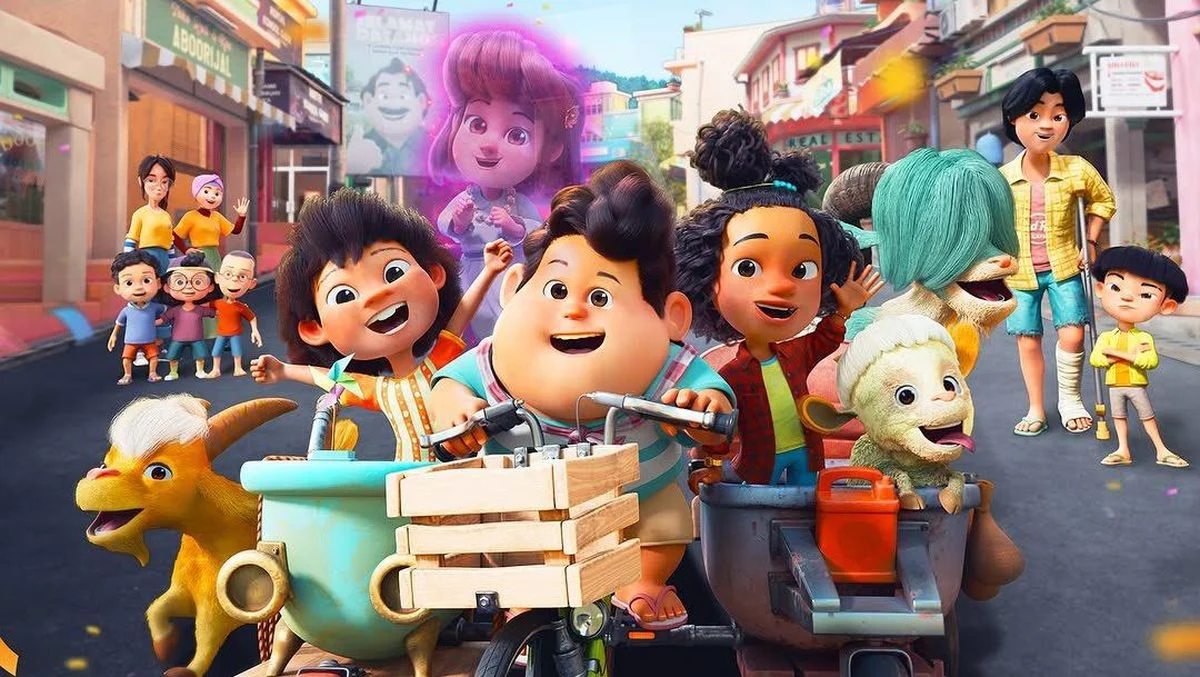
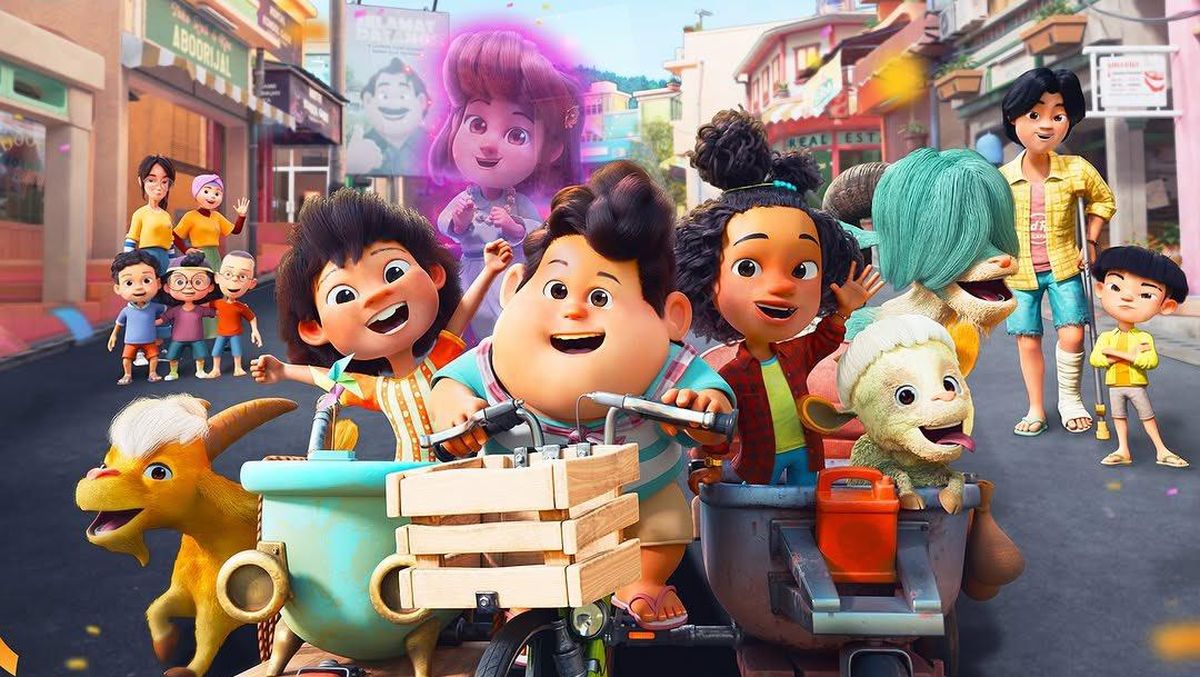
Jumbo follows the story of Don, a ten-year-old orphan navigating the complexities of his childhood. On the surface, the plot follows the classic "underdog" tropes frequently seen in local soap operas: a lonely boy, a dream to fulfill, and a search for belonging. Directed by Ryan Adriandhy and written alongside Widya Arifianti, the 102-minute film weaves a narrative of friendship, family, and resilience.
Initially, I found nothing revolutionary in the story. Indonesia has produced a plethora of films over the last decade centered on these exact themes. The only distinct selling point seemed to be the medium: it was an animation. Furthermore, the decision to pack the voice cast with high-profile celebrities—Bunga Citra Lestari, Ariel Noah, Cinta Laura, and Angga Yunanda—felt like a classic marketing maneuver designed to guarantee box office returns rather than a pursuit of artistic synergy.
However, as the film progressed, my cynicism began to dissolve. I found myself looking past the technical polish of the animation and into the narrative choices. I began to realize why this film resonated so profoundly with a massive audience. It wasn’t just another cartoon; it was a mirror reflecting the realities of the Indonesian experience.
The Setting: Kampung as a Cultural Fortress
The true strength of Jumbo lies in its groundedness. Unlike many animated films that lean into the polished, sanitized aesthetics of Western studios, Jumbo refuses to engage in Mooi Indie—the romanticized, idealized depictions of the Indonesian landscape. Instead, it locates its heart in the kampung (the village/urban neighborhood).
1. Reclaiming the Kampung
The film acts as a rebuttal to the sterile "smart city" ideal that often dictates modern urban planning. Drawing from the framework of Melani Budianta’s Smart Kampung (2019), the film positions the kampung not merely as a geographic entity or an administrative unit, but as a site of active cultural resistance. In the world of Jumbo, the neighborhood is a repository of collective memory, ethics, and tradition. By centering the story in a space that feels lived-in—complete with neighborhood watch (hansip), communal chores, and the chaotic freedom of street cats—the film taps into a shared national identity that transcends class.
2. The Return to Play
The film serves as a poignant reminder of a pre-digital era. Through scenes of children playing traditional games like kasti (a local variant of baseball), hide-and-seek, and jump rope, Jumbo functions as a subtle critique of the sedentary, screen-obsessed lifestyle of the "Gen Alpha" cohort. It provides a visual argument for the necessity of outdoor play, grounding the audience in a reality where community interaction is tangible rather than virtual.
The Conflict: Land, Myths, and Social Control
The narrative core of Jumbo revolves around Don, his friends (Nurman and Mae), and a ghost named "Meri." The central conflict arises when the village head, motivated by greed and impending land development, attempts to displace the community and destroy the resting place of Meri’s family.

The Role of Myth as a Pedagogical Tool
Many critics have argued that introducing a ghost and a land-grabbing narrative into a children’s film is either inappropriate or overly complex. However, I posit that the film uses these elements to bridge the gap between abstract societal issues and a child’s logic.
In many cultures of the Global South, myths and spirits act as tools of social control—the Durkheimian view of mythology. Just as the threat of a Wewe Gombel or Hantu Kopek once kept children indoors during the dangerous hours of dusk, the character of Meri serves as a catalyst for Don to understand his environment. It allows him to engage with the reality of land exploitation—a very real, albeit heavy, issue in Indonesia—without being overwhelmed by dry, adult rhetoric.
By masking the structural violence of "land grabbing" within a ghost story, the film grants children the agency to "fight back" against injustice. The happy ending, where the corrupt village head is exposed and the land is saved, provides a sense of closure that reinforces the idea that collective action is the antidote to corruption.
Implications for Indonesian Cinema
The success of Jumbo (ten million admissions) carries significant implications for the future of Indonesian animation and film production.
- Authenticity Over Gloss: The film proves that local audiences are hungry for stories that look, sound, and feel like their own neighborhoods. By prioritizing the "Kampung" identity, the film created an emotional resonance that a generic, Western-style animated film could never achieve.
- The Power of Narrative Translation: The film demonstrates that "complex" political or social topics can be successfully translated for younger audiences. Using folklore and fantasy as a vehicle for social commentary is a sophisticated, yet effective, narrative strategy.
- The Shift in Industry Perception: The success of a director coming from the stand-up comedy circuit proves that diverse voices can bring fresh, observant, and critical perspectives to cinema. It challenges the gatekeeping often found in the industry, suggesting that the ability to connect with an audience is a more valuable currency than formal pedigree.
Final Reflections
While one could spend hours debating the plot holes—such as how Don’s grandmother supports them financially or the logistical impossibilities of the festival—to do so is to miss the forest for the trees. Jumbo is not a documentary; it is a fable.

If we remove the supernatural elements, we are left with a story about a boy who finds his voice in a world that ignores him, protecting his home from those who seek to commodify it. By keeping the mythic elements, the film invites the audience to see the world through a lens of wonder, where the act of saving a "haunted" forest is the same as saving a community from displacement.
The film has successfully moved the needle in Indonesian animation. It has proven that we don’t need to chase the aesthetic of Pixar to produce a hit; we only need to look at our own backyards. For those of us who entered the theater as cynics, the film serves as a humbling reminder: sometimes, the "overrated" noise is just the sound of a story that finally speaks the language of its people.
In a world where modernization often feels like an encroaching tide, Jumbo stands as a reminder that the kampung—and the stories we tell within it—are worth fighting for. Whether through the eyes of a child or the weary perspective of an adult, the film invites us to reclaim our spaces, our myths, and our collective future.