Fan Bingbing Redefines Her Global Stardom in Wayne Wang’s Transnational Adaptation of ‘Diary of a Mad Old Man’
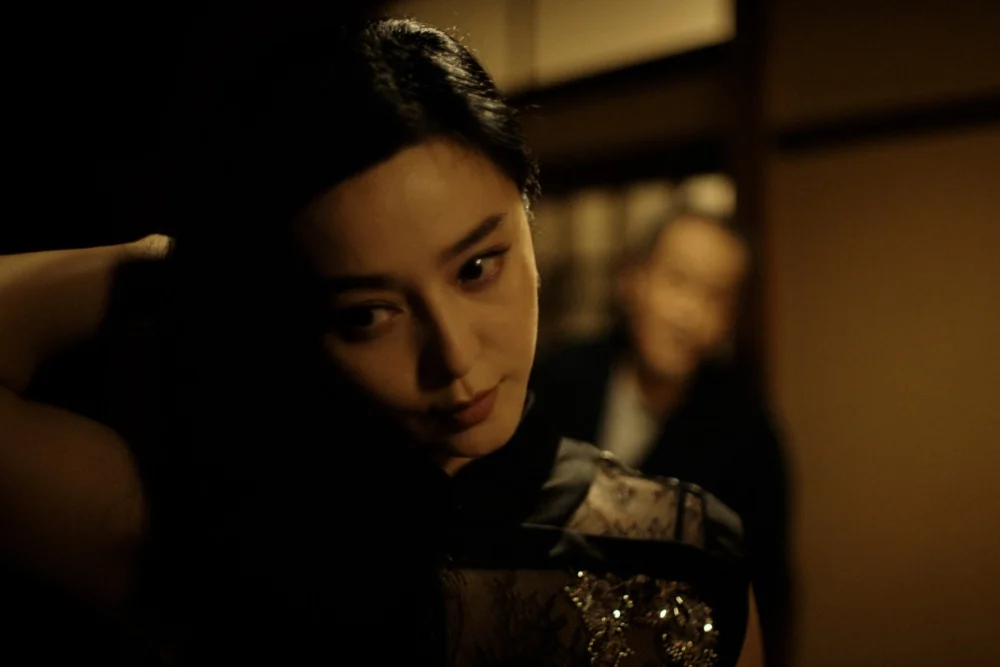
Chinese superstar Fan Bingbing takes center stage in an unconventional and psychologically complex cinematic dynamic in her latest feature, portraying a Chinese caregiver pulled inexorably into the eccentric fixation of an aging, stroke-paralyzed Japanese widower.
"Diary of a Mad Old Man," directed by acclaimed filmmaker Wayne Wang, serves as a contemporary adaptation of Tanizaki Jun’ichirō’s provocative 1961 novel of the same name. The film celebrated its high-profile world premiere within the prestigious gala presentations section at the Toronto International Film Festival, quickly following up with a major selection at the Busan International Film Festival.
Co-starring alongside Lily Franky, Saito Takumi, and Kudoh Youki, Fan’s involvement in the project underscores a deliberate, career-defining pivot toward cross-cultural storytelling, complex character studies, and boundary-pushing international collaborations.
Chronology of a Transnational Production and Festival Circuit
The journey of "Diary of a Mad Old Man" from literary classic to the international silver screen represents a meticulous creative process helmed by one of Asian-American cinema’s most enduring auteurs.
Wayne Wang, whose illustrious four-decade career boasts landmarks such as the 1982 indie pioneer "Chan Is Missing," the cultural phenomenon "The Joy Luck Club" (1993), and "Smoke"—which captured the prestigious Silver Bear Grand Jury Prize at the 1995 Berlinale—brings his seasoned lens to Tanizaki’s notoriously difficult text.
- Literary Roots: Jun’ichirō Tanizaki’s original 1961 novel explores themes of physical decay, voyeurism, and fetishistic obsession through the diary entries of an aging Japanese patriarch.
- Adaptation Phase: Director Wayne Wang reimagined the narrative core by introducing a modern, cross-border dynamic, recasting the pivotal caregiver role as a Chinese woman navigating a foreign household.
- Production & Casting: Fan Bingbing stepped into the role of Susu, starring opposite veteran Japanese actor Lily Franky, who portrays the stroke-paralyzed patriarch, Utsugi.
- Festival Premieres: The finished feature secured its coveted world premiere slot in the gala presentations lineup at the Toronto International Film Festival, establishing immediate global buzz before heading to South Korea for the Busan International Film Festival.
Deconstructing Susu: Agency, Vulnerability, and the Politics of Survival
At the heart of "Diary of a Mad Old Man" is the intricate relationship between Utsugi, immobilized by a debilitating stroke, and Susu, his daughter-in-law and sole caregiver. Rather than retreating into tired tropes of exploitation or victimhood, Fan Bingbing deliberately constructed Susu as a multi-dimensional figure operating on the razor’s edge of survival and leverage.
"I don’t think Susu is someone who is simply trying to control Utsugi," Fan explains. "She understands the influence she has over him, but in many ways, she is also vulnerable and dependent on the family."
For the actor, the power struggle at play is not an exercise in outright domination, but rather an authentic depiction of a woman maximizing whatever small leverage her precarious circumstances afford her. Refusing to settle the moral question of whether Susu or Utsugi is exploiting the other, Fan focused instead on the raw emotional exchange between two individuals who harbor deep, mutual dependencies.
To establish this delicate equilibrium on set, Fan worked closely with Lily Franky and director Wayne Wang to calibrate the tone of their interactions. Rather than relying on conventional physical intimacy, the actors anchored the bond in imagination and unspoken desire. The physical and emotional distance between Susu and Utsugi shifts dynamically from scene to scene, ensuring that audiences can never lock the relationship into a single, rigid interpretation.
"There is tenderness, desire, dependency, and also discomfort," Fan notes. "All of these things can exist together."
The Outsider’s Gaze: Cultural Displacement as a Creative Catalyst
One of the most radical departures from Tanizaki’s original text is Susu’s identity as a Chinese woman embedded within a traditional Japanese family. This explicit choice of casting and characterization deeply informed Fan’s performance, allowing her to draw direct parallels between Susu’s outsider status and her own lived experiences navigating foreign cultures and international borders.
"When you enter another culture, you are always observing: how people communicate, what they don’t say, the relationships, etc.," Fan reflects. "Sometimes being an outsider makes you more sensitive to these things."

Rather than forcing Fan to adopt a superficial assimilation, Wayne Wang—who has spent a career exploring the spaces between cultures—encouraged the actor to lean heavily into her natural instincts. Having spent years observing societies from both the inside and the outside, Wang understood the unique psychological landscape of cultural displacement, urging Fan to channel that perspective directly into Susu.
This dynamic also allowed for a modern re-evaluation of female autonomy. While Tanizaki’s original characters belonged to a strictly defined mid-20th-century Japanese social hierarchy, Fan’s Susu possesses the self-awareness of a contemporary woman.
"So I didn’t want to approach her sexuality as something that automatically makes her immoral or provocative," Fan states. "She understands her body, her attractiveness, and the effect she has on Utsugi, and I think she has the right to have that awareness."
Simultaneously, Fan was careful not to paint Susu as entirely liberated from systemic pressures. "Financial dependence, family expectations, loneliness, and unequal relationships still exist today," she points out. This tension between personal agency and systemic limitation forms the emotional bedrock of her performance.
Official Responses and Artistic Evolution
Fan Bingbing’s transition into daring, arthouse international cinema marks a sharp pivot from the mega-budget blockbusters and star-driven commercial vehicles that historically dominated her public profile. At this mature stage in her career, she is driven entirely by narrative resonance and psychological depth.
"For me, it is not about choosing international cinema over Chinese cinema," Fan emphasizes, addressing her recent career trajectory. "I simply want to work with good filmmakers and good stories, wherever they come from."
This philosophy has guided an impressive streak of international collaborations since 2023. Her recent credits include:
- "Green Night" (2023): Directed by Han Shuai, premiered in the Panorama section of the Berlin Film Festival.
- "Mother Bhumi" (2025): Directed by Chong Keat Aun, a Malaysian period drama where Fan starred as a shamanistic healer. The film premiered in the main competition of the Tokyo International Film Festival, garnered eight nominations at the Golden Horse Awards, and earned Fan the Best Leading Actress trophy.
- "Diary of a Mad Old Man" (Current): Cementing her reputation as a fearless global talent willing to subvert audience expectations.
Fan expresses little interest in maintaining a pristine, curated public image, preferring roles that force viewers to forget they are watching Fan Bingbing at all. "I still want to discover parts of herself I haven’t shown before," she says, adding that she thrives on roles that dissolve the barrier between star and spectator.
Industry Implications and Future Horizons
The selection of "Diary of a Mad Old Man" at major international showcases like TIFF and Busan signals a broader industry shift toward borderless, culturally fluid filmmaking. By pairing a legendary Asian-American director like Wayne Wang with a global icon like Fan Bingbing and a quintessentially Japanese literary text, the production highlights the increasing globalization of prestige cinema.
For Fan, the project is a testament to the power of art to transcend geopolitical and cultural divides. Looking ahead, she maintains an open-door policy regarding future projects, emphasizing that production scale takes a backseat to visionary direction and compelling storytelling.
"For me, cinema should be able to cross borders," Fan concludes. "If there is a filmmaker with a unique vision and a story that truly moves me, wherever they come from, I would love to work with them."
As "Diary of a Mad Old Man" continues its festival run, it stands not only as a bold reinterpretation of a literary classic, but as a definitive milestone in Fan Bingbing’s ongoing evolution as one of contemporary cinema’s most daring and versatile performers.