Tensions Boil Over in the South China Sea: Violent Confrontation at Second Thomas Shoal Sparks Diplomatic Crisis
MANILA — The volatile waters of the South China Sea have once again become a flashpoint for international conflict after a violent maritime skirmish at the Second Thomas Shoal left a Philippine Navy serviceman with serious head injuries. The Monday incident, characterized by the use of wooden batons, high-speed ramming, and aggressive maneuvering, has shattered a fragile period of relative calm, casting a long shadow over upcoming diplomatic summits involving regional powers and the United States.
The Incident: A Violent Escalation at Sea
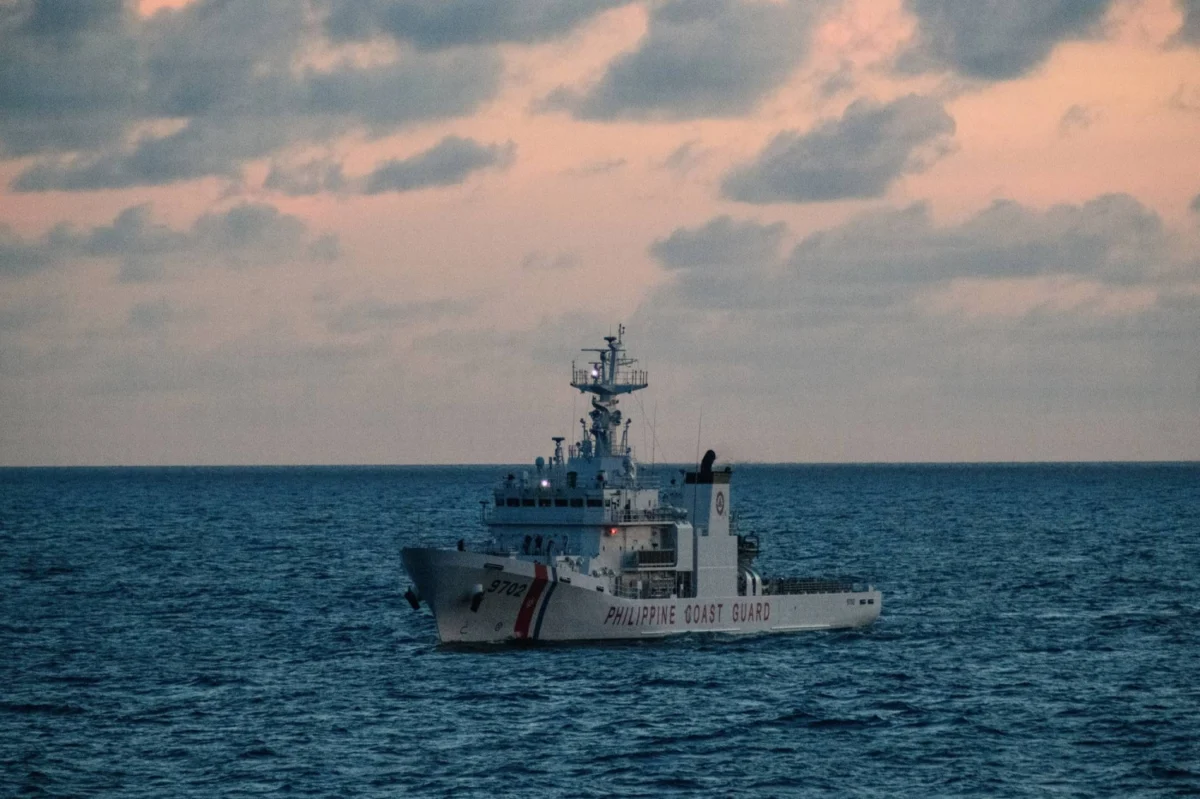
The confrontation occurred in the vicinity of the Second Thomas Shoal, a submerged reef where the Philippines maintains a permanent military presence aboard the BRP Sierra Madre, a grounded World War II-era ship that serves as a makeshift outpost. According to the Armed Forces of the Philippines (AFP), the situation deteriorated when a China Coast Guard (CCG) rigid-hull inflatable boat (RHIB) carrying eight personnel breached the perimeter of the outpost.
The Philippine military reports that the CCG vessel approached at a dangerously close range, ostensibly to conduct unauthorized surveillance, including the capture of photos and video footage. In response to what Manila termed an unlawful incursion, two Philippine Navy rubber boats were deployed to intercept and deter the Chinese vessel.
What followed was a sharp departure from standard maritime protocols. The Philippine military alleges that the Chinese personnel "reacted violently and aggressively," initiating a physical assault on the Filipino crew. In the ensuing struggle, a Filipino sailor was struck with a wooden baton, resulting in a severe head wound that required immediate medical attention. Beyond the personal injury, the encounter inflicted significant damage to the Philippine Navy’s rubber boats, rendering them partially inoperable.
The AFP released harrowing footage corroborating their claims. The video shows a larger white CCG vessel intentionally ramming a smaller, black-hulled Philippine rubber boat. Amidst the chaos of the collision, personnel from the Chinese vessel are seen wielding white poles and striking the Filipino crew, who appear to defend themselves using their oars before executing a tactical withdrawal.
Chronology of a Deteriorating Situation
The incident at Second Thomas Shoal is not an isolated event but rather the latest escalation in a multi-year trend of increasingly dangerous encounters. To understand the gravity of the current situation, one must look at the timeline of the recent maritime friction:
- 2023–Early 2024: The South China Sea saw a marked increase in "gray zone" tactics, with the CCG employing water cannons, military-grade lasers, and long-range acoustic devices against Philippine resupply missions.
- Mid-2024: A high-profile skirmish resulted in a Filipino sailor losing his thumb after a brutal confrontation involving ax-wielding Chinese personnel, drawing international condemnation.
- Late 2024: Following intense international pressure, Manila and Beijing forged a "provisional agreement" aimed at de-escalating tensions and establishing a framework for routine resupply missions to the Sierra Madre.
- Monday, [Current Date]: The provisional agreement was effectively rendered void after the violent clash, marking a return to active hostility.
- This Week: The ASEAN summit in Manila is set to convene, with the incident serving as the primary agenda item for discussions between the top diplomats of the Philippines and China.
Official Responses: A War of Narratives
The diplomatic fallout was instantaneous, with both Manila and Beijing engaging in a high-stakes battle for the international narrative.
The Philippine Stance
The Philippine government’s task force on disputed waters was unequivocal in its condemnation. "This latest act of aggression against personnel performing their lawful duties is unacceptable," the task force stated. "It serves only to heighten tensions and increase the risk of dangerous miscalculation at sea." Manila has called upon the international community to recognize the violation of its sovereign rights and has demanded that the CCG cease all "dangerous and unlawful actions" that threaten the lives of military personnel.
The Chinese Defense
Conversely, the China Coast Guard issued a statement categorically denying the accusations, labeling them a "distortion of facts." Beijing’s narrative maintains that the Philippine vessels were the provocateurs. According to the CCG, the Philippine boats ignored "repeated warnings" to exit the area, subsequently approaching and colliding with a Chinese patrol vessel.
"The Philippine personnel used paddles and poles to attack Chinese officers," the CCG statement claimed. "China responded with necessary countermeasures to stabilize the situation." Beijing’s rhetoric has consistently framed its presence in the area as a defense of its territorial integrity, urging Manila to cease what it describes as "infringements, provocations, and misinformation."
Strategic Implications and the ASEAN Summit
The timing of this clash could not be more sensitive. As diplomats gather in the Philippine capital for the Association of Southeast Asian Nations (ASEAN) meeting, the incident has turned what was intended to be a forum for regional economic and political cooperation into an emergency crisis-management summit.
The presence of U.S. Secretary of State Marco Rubio at the summit adds a significant layer of geopolitical weight. Secretary Rubio, a vocal critic of Beijing’s "destabilizing" actions in the South China Sea, is expected to reiterate the United States’ commitment to its mutual defense treaty with the Philippines. The U.S. position remains that an armed attack on Philippine public vessels, aircraft, or armed forces—including its Coast Guard—anywhere in the South China Sea, would trigger U.S. obligations under the 1951 Mutual Defense Treaty.
The Risk of Miscalculation
Military analysts warn that the shift from water cannons to physical, hand-to-hand combat using improvised weapons marks a dangerous evolution in maritime strategy. "When personnel are physically striking one another with batons and oars, the margin for error disappears," says Dr. Elena Santos, a regional security fellow. "A stray blow or an accidental collision could lead to a fatality, which would force the Philippines and the United States into a corner from which de-escalation becomes nearly impossible."
A Future Defined by Uncertainty
The South China Sea is one of the world’s most critical maritime corridors, through which trillions of dollars in trade pass annually. The instability at Second Thomas Shoal threatens not just the sovereignty of the Philippines, but the freedom of navigation that the global economy depends upon.
As Manila prepares to host the regional diplomatic community, the question remains: Can the provisional agreements of the past be restored, or has the cycle of violence become the new status quo? For now, the Philippine military remains on high alert, and the international community watches with bated breath to see if the ASEAN summit can produce a pathway back from the brink of open conflict.
The incident serves as a grim reminder that in the absence of a binding Code of Conduct for the South China Sea, the peace of the region rests on the tenuous restraint of individual crews on the water—a restraint that, as of Monday, appears to have completely evaporated.