The Global Stage: President Trump to Preside Over World Cup Final Amidst Diplomatic and Sporting Tensions
By International Correspondent Desk
BEDMINSTER, New Jersey – As the global sporting world turns its collective gaze toward the MetLife Stadium in New Jersey this Sunday, the atmosphere surrounding the FIFA World Cup final between Spain and Argentina is charged with more than just the anticipation of athletic excellence. U.S. President Donald Trump, now 80, is slated to take center stage, performing the ceremonial duty of presenting the FIFA World Cup trophy—a move that underscores both the geopolitical weight of the tournament and the polarizing nature of his presidency.
The appearance, which will see the President standing alongside FIFA President Gianni Infantino, marks a rare entry into the tournament for Mr. Trump. While he has been a vocal supporter of the event’s logistics behind the scenes, his physical presence at a match is an unprecedented departure from his usual engagement style, occurring just as his administration faces scrutiny over the tournament’s broader impact on American soil.
The Main Facts: A Final to Remember
The World Cup final, which serves as the culmination of the 2026 tournament, represents a logistical triumph for the host nations. However, the shadow of the political establishment looms large. President Trump’s confirmation to attend the final and participate in the trophy presentation ceremony was formalized following a high-profile reception held at Trump Tower in New York this past Friday.
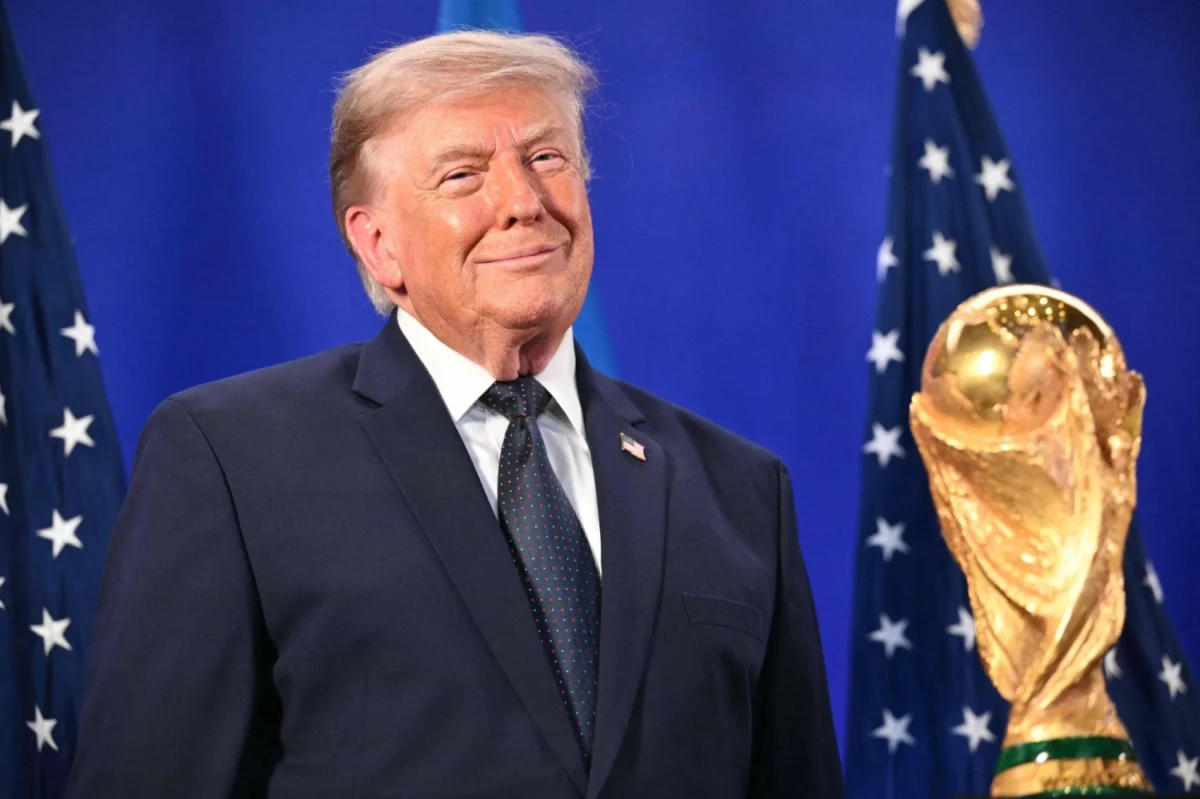
During that reception, the President was photographed alongside the iconic gold trophy, flanked by FIFA officials. The optics were clear: the intersection of the world’s most popular sport and the world’s most powerful political office. For the President, the event is an opportunity to project strength and national unity; for critics, it is an unwelcome intrusion of partisan politics into a neutral, international arena.
Chronology of a Controversial Tournament
The journey to this Sunday’s final has been anything but conventional. The 2026 World Cup, hosted across the United States, Canada, and Mexico, has faced a unique set of challenges.
- June 2026: The tournament kicked off with immense fanfare, though early reports indicated friction between FIFA’s administrative requirements and the Trump administration’s security protocols.
- Early July 2026: Throughout the knockout stages, President Trump remained noticeably absent from the stadiums. Insiders suggest that his team preferred to wait for the "peak moment" of the final, rather than risking political capital on earlier, potentially volatile matches.
- July 17, 2026: The President hosted a private reception for FIFA delegates at Trump Tower. It was during this event that his involvement in the trophy presentation was finalized.
- July 19, 2026: Photos released by AFP-JIJI captured the President listening intently to FIFA President Gianni Infantino, solidifying a narrative of a close, working relationship between the two leaders despite public criticism regarding the commercialization of the sport.
- July 20, 2026: The final showdown between Spain and Argentina is set to take place. The match is projected to draw a global audience of over 1.5 billion people, making it the most-watched broadcast of the decade.
Supporting Data: The Magnitude of the 2026 World Cup
To understand why the President’s presence is so significant, one must look at the scale of the event. The 2026 tournament saw an expansion in the number of participating teams, leading to a record-breaking 104 matches.
- Economic Impact: Early estimates suggest the tournament has generated over $6 billion in economic activity for North American host cities.
- Viewership Trends: Digital engagement and streaming figures have shattered previous records, with a 22% increase in viewership among the 18-34 demographic compared to the 2022 tournament.
- Diplomatic Reach: The tournament involved 48 nations, requiring complex diplomatic coordination. President Trump’s administration has frequently touted the success of the hosting effort as a testament to American organizational capabilities, though critics argue the burden on local taxpayers has been disproportionate.
Official Responses and Political Friction
The decision to have President Trump present the trophy has not gone unchallenged. The White House press office has maintained that the President’s role is purely ceremonial and a reflection of the United States’ pride in hosting the tournament.
"The President is honored to participate in the crowning of a world champion," a spokesperson stated. "This tournament has showcased the best of international cooperation, and the President is pleased to support the spirit of competition that defines FIFA."

Conversely, opposition leaders have decried the move as an attempt to hijack the event for campaign optics. "The World Cup belongs to the fans, the players, and the nations, not to a single political figure," said a spokesperson for the opposition party. "By inserting himself into the final ceremony, the President is attempting to claim the reflected glory of the victors for his own political narrative."
FIFA, for its part, has navigated these waters carefully. Gianni Infantino has maintained that FIFA remains a politically neutral organization, yet his personal rapport with Mr. Trump is well-documented. During their meeting at Trump Tower, Infantino emphasized the importance of government support in ensuring the safety and success of such massive sporting events, effectively shielding the association from charges of political favoritism.
Implications: The Intersection of Sports and Policy
The implications of the President’s presence at the final extend far beyond the pitch.
The Soft Power Doctrine
For the Trump administration, the World Cup is a prime example of "soft power." By aligning himself with the spectacle, the President seeks to project an image of a leader who can command the world stage and bring global events to American soil. This is part of a broader strategy to solidify his legacy as an effective manager of international relations.
Security and Protocol
The security logistics for the final are unprecedented. With the President in attendance, the MetLife Stadium will effectively function as a high-security zone. This has caused frustration among some international delegates who argue that the heightened security measures disrupt the traditional, festive atmosphere of the World Cup. There are concerns that such measures could set a precedent for future tournaments, potentially deterring host nations from adopting more relaxed, fan-friendly protocols.
The Legacy of 2026
Looking forward, historians and political scientists will likely view the 2026 World Cup as a pivotal moment in the relationship between global sports and domestic politics. The tournament has tested the limits of how much a government can exert influence over an international sporting body. Whether this leads to a more collaborative approach or a reactionary movement to separate sports from politics remains to be seen.
Looking Ahead: The Final Whistle
As Spain and Argentina prepare for the final, the focus of the players remains, ostensibly, on the game. However, the presence of the 80-year-old leader in the executive box adds a layer of complexity to the post-match celebrations. Will the crowd boo? Will they cheer? Or will the sheer scale of the event render the political theater secondary to the game itself?
The world will be watching—not just to see who lifts the trophy, but to observe how the symbols of global sport and national power interact in a moment of intense scrutiny. The 2026 World Cup has proven that in the modern era, the lines between the stadium and the state are increasingly blurred. As the final whistle blows, the conversation will likely shift from tactical formations and player performance to the lasting mark this tournament has left on the American political landscape.
Ultimately, Sunday’s match will be remembered for the winner, but the ceremony that follows will define the tone of the tournament’s conclusion. For President Trump, it is a final act in a series of events that have defined his approach to public life: bold, controversial, and always center stage. As the sun sets over New Jersey, the world waits to see whether the beautiful game can transcend the politics of the man who stands beside its greatest prize.