
The Resurrection of Rage: How ‘Maul — Shadow Lord’ Redefines a Star Wars Icon
In the vast, sprawling tapestry of the Star Wars galaxy, few characters have undergone a transformation as radical, tragic, or enduring as Darth Maul. Initially introduced in 1999’s The Phantom Menace as a silent, lethal instrument of the Dark Side—a “cool devil-looking guy” destined to be cut in half—Maul has defied death, narrative obsolescence, and the very boundaries of his own villainy. Now, he stands at the precipice of his most significant chapter yet: Star Wars: Maul — Shadow Lord, the first live-action or animated series dedicated entirely to a Star Wars antagonist since the limited series The Book of Boba Fett.
This new animated project is not merely a spinoff; it is a tectonic shift in how Lucasfilm approaches character-driven storytelling, blending a gritty, serialized format with an avant-garde aesthetic that promises to reshape the legacy of the former Sith Lord.
A Legacy Written in Blood and Cybernetics
To understand the significance of Maul — Shadow Lord, one must appreciate the character’s improbable journey. Following his bisection at the hands of Obi-Wan Kenobi, Maul’s survival—first revealed in The Clone Wars—transformed him from a one-dimensional enforcer into a complex, Shakespearean figure of loss and obsession.
Across his appearances in The Clone Wars, his brief but chilling cameo in Solo: A Star Wars Story, and his final, poetic confrontation with his old rival in Star Wars Rebels, Maul evolved into a crime lord, a brother, and ultimately a broken man. He is the only villain in the franchise’s history to maintain a continuous, evolving arc across nearly every era of the Skywalker Saga. As Sam Witwer, who has been the definitive voice of Maul since 2010, aptly notes, “The fun of it is reinventing him every time that we bring him out and learning new things about him.”

The Chronology: Bridging the Gap of the Empire
Maul — Shadow Lord occupies a unique space in the Star Wars timeline, acting as a crucial bridge between the collapse of Maul’s criminal empire at the end of The Clone Wars and his eventual, reclusive state in Solo and Rebels.
Set during the nascent, terrifying days of the Galactic Empire, the narrative finds Maul at his lowest ebb. Having lost the Siege of Mandalore, his seat of power, and the loyalty of his syndicates, he is a man—or a monster—without a home. The series follows his desperate, multifaceted quest for vengeance against two distinct fronts: Emperor Palpatine, who discarded him for the younger, more potent Anakin Skywalker; and the criminal underworld that turned its back on him once his influence waned.
Central to this arc is a bold narrative choice: the introduction of Devon, a young Jedi Padawan whom Maul eyes as a potential apprentice. This dynamic forces the audience to view Maul not as a force of pure malice, but as a tragic mirror to characters like Ahsoka Tano—a being stolen from his home and indoctrinated into a cult, only to be left behind by the very systems he once served.
A New Visual Language: The "Painterly" Approach
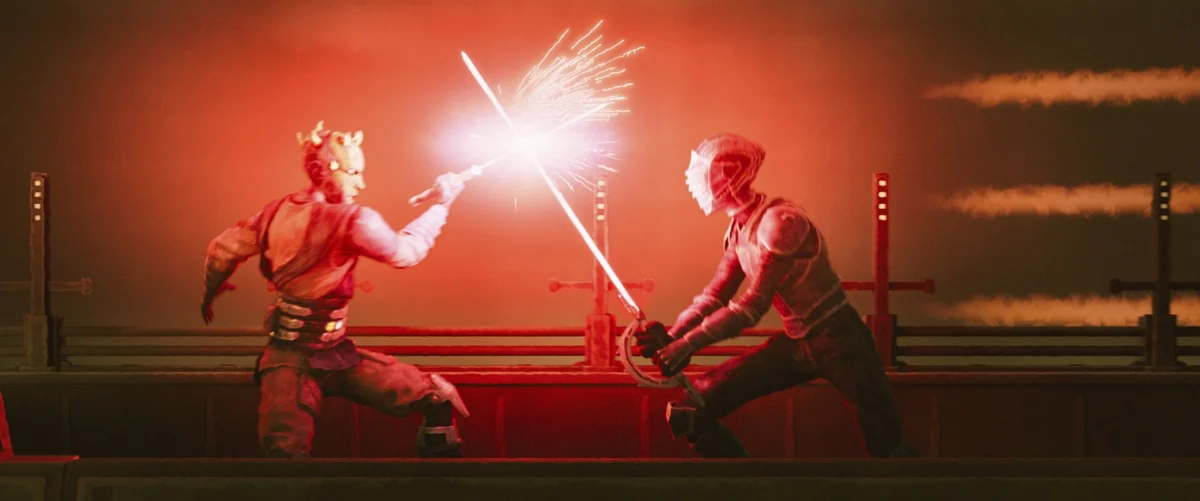
Perhaps the most striking aspect of Maul — Shadow Lord is its visual departure from the polished, 3D-rendered style of previous animated series. Executive producer Athena Yvette Portillo and director of photography Joel Aron have spearheaded a production philosophy that prioritizes texture and visceral, human imperfection.

“We didn’t want a situation where someone would say episode four looked better than the first,” Portillo explains regarding the serialized nature of the project. To achieve this, the team implemented a rigorous, iterative post-production process. Episodes were treated like culinary dishes—constantly "taste-tested" and adjusted with new visual data as the series progressed, ensuring a consistent tonal and visual palette throughout the season.
Aron’s influence is profound. By utilizing oil-on-canvas matte paintings, traditional paintbrush strokes on glass, and practical, physical model work for starships, the show achieves a gritty, tangible quality that feels more like a moving painting than a digital render. This is most evident in the lightsaber duels. The blades are not merely glowing neon tubes; they are depicted with visible, aggressive brushstrokes, making them appear less like elegant weapons and more like raw, burning wounds tearing through the atmosphere.
The sound design, led by David W. Collins, further elevates this visceral experience. By weaving Sam Witwer’s authentic, guttural screams into the audio of the lightsaber swishes, the production team has successfully translated Maul’s internal hatred into the very weapons he wields.
The Imperial Loom: A Different Kind of Villain
Unlike the immediate, claustrophobic threat of the Empire seen in Andor, Maul — Shadow Lord treats the Empire as an encroaching, existential shadow. Showrunner Matt Michnovetz explains that the goal was to keep the Empire at arm’s length, turning it into a “menacing, strong, external force” that serves as a ticking clock for the protagonists.

This allows the show to explore a moral gray area rarely seen in Star Wars. We are introduced to characters like a by-the-book detective tethered to a droid partner, who represents the dangerous, bureaucratic complacency that allows fascism to take root. This creates a fascinating tension: the audience finds themselves rooting for a murderous, power-hungry Maul simply because he is the only force capable of challenging the burgeoning, monolithic evil of the Empire.
Implications: The Enduring Appeal of the Anti-Hero
The implications of Maul — Shadow Lord for the future of the Star Wars franchise are substantial. By fully committing to a serialized format and a darker, more mature tone, Lucasfilm is testing the waters for a new type of animated storytelling—one that doesn’t rely on episodic "adventures of the week" but instead functions as a long-form character study.
For Sam Witwer, this project is the culmination of a decade of work. "I’ve always had a lot of questions about Maul, and now I feel like I finally have the full vision of his arc," he shares. The series does not shy away from the tragedy of the character; it leans into it. It asks the audience to empathize with a man who has lost everything and is now, in his final, desperate years, attempting to reconcile his thirst for revenge with the crushing void of his own isolation.
Maul’s endurance is a testament to the character’s core appeal: he is a survivor who refuses to die, a villain who never stops trying to exert agency over a galaxy that constantly tries to categorize him. Whether he is a pawn of the Sith, a king of the underworld, or a wandering shadow, Maul remains the ultimate "devil on the shoulder" of the Star Wars universe.

As we look toward the premiere, it is clear that Maul — Shadow Lord is more than just a trip down memory lane. It is a sophisticated, haunting expansion of the lore that proves, even after twenty-five years, there are still new, painful, and beautiful things to discover about the man who was sliced in half but never truly broken. As long as the Star Wars galaxy continues to turn, it seems, Maul will be there—shadowing the light, seeking his vengeance, and reminding us all that the most interesting monsters are the ones who were once human.