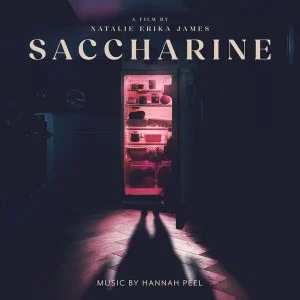
The Sonic Anatomy of Horror: Hannah Peel’s Haunting Score for Saccharine Released
The landscape of contemporary body horror has found a disturbing new entry in Saccharine, the Australian feature directed by Natalie Erika James. As the film makes its highly anticipated transition from the festival circuit to the comfort—and terror—of home viewing via Shudder, the auditory companion to this visceral experience has finally been unleashed. Real World X has officially released the original motion picture soundtrack, composed by the acclaimed multi-instrumentalist and composer Hannah Peel.
The score, much like the film itself, traverses the delicate line between the clinical and the macabre, providing a sonic backdrop that underscores the protagonist’s psychological and physical unraveling.
The Narrative Premise: A Macabre Obsession
To understand the weight of Hannah Peel’s composition, one must first engage with the premise of Saccharine. Written and directed by Natalie Erika James—who previously garnered critical acclaim for her atmospheric handling of genre tropes—the film stars Midori Francis as a medical student whose pursuit of perfection takes a dark, irreversible turn.
The plot centers on an obscure, dangerous weight-loss craze that involves the ingestion of human ashes. As the protagonist succumbs to this bizarre ritual, she finds herself stalked by the spectral presence of the very person she is consuming. The film serves as a biting commentary on modern beauty standards, the commodification of the body, and the trauma of memory. With a cast featuring Danielle Macdonald, Madeleine Madden, and Robert Taylor, Saccharine balances intimate character drama with the grotesque elements of body horror, creating a viewing experience that is as emotionally draining as it is physically repulsive.
Hannah Peel: A Composer of Complexity
Hannah Peel is no stranger to crafting soundscapes that exist on the periphery of the conventional. Her extensive filmography includes work on Rogue Agent, The Midwich Cuckoos, The Deceived, and the Emmy-nominated Game of Thrones: The Last Watch. Peel’s signature style—often characterized by her use of synthesisers, mechanical rhythms, and organic instrumentation—makes her the ideal candidate for a film that deals with the degradation of the human form.
For Saccharine, Peel has opted for a sound palette that feels both clinical and ghostly. Her score eschews traditional jump-scare motifs in favor of a creeping, oppressive dread that mirrors the protagonist’s deteriorating mental state. By blending the organic sounds of human breath and movement with synthesized dissonance, Peel successfully creates an atmosphere that feels like an infection of the auditory senses.
Chronology of the Release
The journey of Saccharine from a concept to a streaming reality has been marked by a deliberate, measured rollout:
- Sundance Premiere: The film first captured the attention of genre enthusiasts and critics at the Sundance Film Festival earlier this year, where it was lauded for its striking visual language and thematic audacity.
- Theatrical Expansion: Following its festival run, the Independent Film Company secured a U.S. theatrical release, which took place in May. The film subsequently saw a release in Australian cinemas earlier this month, solidifying its international footprint.
- Digital Availability: As of today, Saccharine has made its streaming debut on Shudder, the premier platform for horror, thriller, and supernatural fiction.
- Soundtrack Arrival: In tandem with the film’s move to Shudder, Real World X released the complete soundtrack on all major digital platforms, including Amazon, Apple Music, and Spotify.
Supporting Data: The Track List
The soundtrack consists of 29 distinct tracks, ranging from short, ambient vignettes to more expansive, unsettling movements. The track list itself offers a glimpse into the narrative arc of the film, tracking the progression from the initial, innocuous pursuit of beauty to the final, grotesque confrontation.
- Looking (1:33)
- Saccharine (0:50)
- Freedom (0:35)
- Cake (0:19)
- Shrines (1:02)
- Ash (1:40)
- Go for It (2:02)
- I’m Impressed (0:36)
- Above (1:07)
- Push Push (2:25)
- Lower (0:33)
- Break a Bar (3:18)
- Dad (2:28)
- First Kiss (0:39)
- Grey (2:26)
- Diagnosis (2:29)
- Body Cake (0:55)
- Sex (1:27)
- Glass and Gorge (2:03)
- Gummies (1:26)
- Cleaning (1:52)
- Thrown (0:49)
- Drink Me (1:03)
- Move (1:32)
- Love Me (1:58)
- Rest (0:59)
- Ecstasy (0:47)
- The Feast of Venus (2:02)
- What’s Eating You? (3:38)
The inclusion of titles like "Body Cake," "Gummies," and "The Feast of Venus" hints at the satirical undercurrents of the film, juxtaposing the sweet, synthetic world of dieting with the raw, visceral reality of the occult.
Official Responses and Creative Direction
While Natalie Erika James has kept much of the film’s symbolism close to the vest, she has noted in previous interviews that the sound design was a primary focus during the editing process. "We wanted the audience to feel the hunger," James stated during a post-screening panel at Sundance. "Not just a hunger for food, but a hunger for identity. Hannah [Peel] understood that this wasn’t just a ghost story; it was a film about the things we internalize."
Hannah Peel, reflecting on her process, has emphasized the "mechanical" nature of the score. By using modified clockwork mechanisms and granular synthesis, she sought to represent the body as a machine that has begun to malfunction. "The score needed to feel like a ticking clock that’s running out of time," Peel remarked. "Every beat is a reminder of the protagonist’s obsession with her own mortality."
Implications for the Genre
The release of Saccharine and its accompanying score signals a significant moment for the "elevated horror" movement. By combining high-concept social commentary with the visceral impact of body horror, James and Peel have created a work that is likely to invite intense discourse regarding the cultural obsession with physical perfection.
Furthermore, the integration of an avant-garde score into a mainstream horror release demonstrates a growing confidence among producers to challenge audiences. The success of the film on VOD and its placement on Shudder suggests that there is a robust, hungry audience for films that are willing to take risks with both narrative structure and sonic experimentation.
Analysis of the Soundtrack’s Impact
Listeners who engage with the Saccharine soundtrack outside of the film will find an album that stands on its own as a work of dark, ambient music. Peel’s ability to weave melodic threads through thick layers of static and rhythmic dissonance creates a listening experience that is both captivating and profoundly uneasy.
Tracks such as "Break a Bar" and "What’s Eating You?" showcase Peel’s mastery of building tension, using minimalist structures that gradually expand into wall-of-sound climaxes. It is a score that demands attention, functioning as a character in its own right—a whispering voice in the back of the listener’s mind that reflects the film’s core themes of consumption, regret, and the inescapable nature of our past.
Conclusion: A Must-Listen Experience
Whether you are a fan of the horror genre, an admirer of Natalie Erika James’s directorial vision, or a follower of Hannah Peel’s avant-garde musical compositions, the Saccharine soundtrack is an essential addition to any library. It serves as a reminder of the power of collaboration in filmmaking, where a score does more than simply "accompany" the visuals; it elevates them, transforms them, and ultimately, haunts them.
As the film continues to find its audience on Shudder and VOD, the legacy of its sound will undoubtedly grow. Saccharine is not merely a film to watch; it is an experience to endure, a sonic puzzle to solve, and a chilling reflection of the lengths to which we go to change who we are. Listen to the title track, immerse yourself in the score, and prepare to be consumed.