The Ultimate Emmy Nail-Biter: Breaking Down the 2026 Race for Outstanding Comedy Writing
As television enthusiasts and industry pundits ready themselves for the upcoming awards season, all eyes are locked on one of the most volatile and fiercely contested categories at the Primetime Emmys: Outstanding Writing for a Comedy Series. While categories like directing often offer a clear-cut favorite, the comedy writing branch of the Television Academy has historically delighted in subverting expectations. This year is no exception, setting the stage for a dramatic showdown that could ultimately dictate the winner of the night’s ultimate prize: Best Comedy Series.

According to the latest prognostications from Gold Derby’s expert odds, the race has narrowed into a breathless, coin-flip duel. At the forefront is Max’s critical darling Hacks, narrowly edging out the newcomer horror-comedy phenomenon Widow’s Bay. With the Primetime Emmy Awards broadcasting live on NBC on September 14, industry insiders are dissecting every narrative choice, structural risk, and historical precedent in hopes of predicting where the Academy’s writers will ultimately cast their ballots.

Main Facts: The Anatomy of the 2026 Comedy Writing Field
The race for the 2026 comedy writing crown features a fascinating cross-section of television. The lineup represents a delicate ecosystem of reigning heavyweights, risk-taking debuts, and traditional industry curveballs:

- The Frontrunners: The battle lines are drawn between Katie Dippold’s eerie series premiere for Widow’s Bay ("Welcome to Widow’s Bay!") and the tour-de-force series finale of Hacks ("Hacks"), penned by Lucia Aniello, Paul W. Downs, and Jen Statsky.
- The Overlap: In a unique quirk of this year’s nominations, half of the writing lineup is also simultaneously recognized in the corresponding directing race for the exact same episodes. Meanwhile, another contender cross-pollinates with a different installment entirely.
- The Academy Tradition: True to form, the Television Academy’s writers’ branch has carved out space for underrepresented series—nominating two shows that are largely ignored across the broader Academy’s other major categories.
- The Stakes: Currently, Hacks holds a razor-thin advantage with a 52% statistical edge among Gold Derby experts, closely trailed by Widow’s Bay at 48%. Because writing victories frequently preview comedy series dominance, this category serves as the ultimate bellwether for the entire genre.
Chronology: How the Contenders Claimed Their Spots
To understand how this eclectic group of nominees assembled, one must look at the timeline of the television season and the specific episodes that earned the Academy’s highest praise. Listed in descending order of Gold Derby’s expert odds, here is the breakdown of the nominated episodes and the creators behind them.

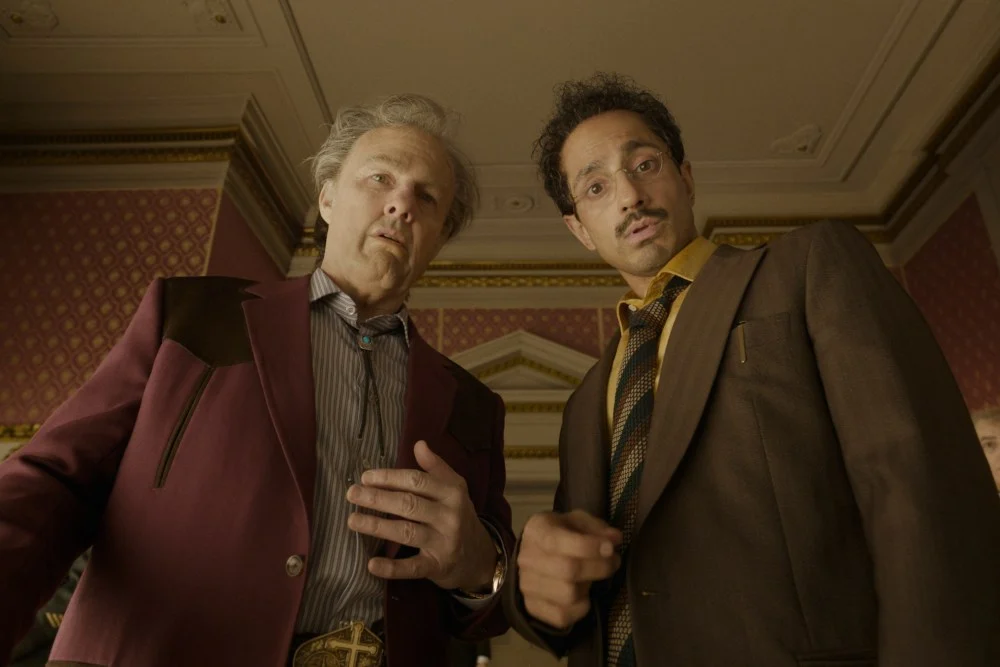
1. Katie Dippold for Widow’s Bay ("Welcome to Widow’s Bay!")
- The Synopsis: Newly appointed Mayor Tom Loftis (played by Matthew Rhys) desperately tries to decipher the meaning behind a wave of bizarre, unsettling events plaguing his seemingly peaceful coastal New England town.
- The Creative Execution: The episode’s narrative architecture operates as a high-wire act, seamlessly shifting between genuine horror and sharp comedy. This tonal balancing act is driven entirely by dialogue that captures the quirks of an unsettled citizenry. As Loftis reacts to escalating scares, his interactions with an eccentric gallery of townsfolk breed humor out of deeply uncomfortable beats, amplifying his palpable paranoia.
- Emmy History: Dippold arrives at the ceremony with two major nominations this year, having also scored a nod for producing the freshman series.
2. Lucia Aniello, Paul W. Downs, and Jen Statsky for Hacks ("Hacks")
- The Synopsis: In a supersized series finale, legendary comedian Deborah Vance (Jean Smart) drops a devastating truth bomb on Ava (Hannah Einbinder)—revealing her cancer diagnosis and her plans for physician-assisted suicide. Simultaneously, Jimmy (Paul W. Downs) executes a ruthless blackmail scheme with Kayla’s (Megan Stalter) help to retake control of his management agency.
- The Creative Execution: The writing achieves remarkable tenderness, anchoring heavy, existential subject matter to the well-established comedic rhythms of its central duo. The resulting emotional confrontation is raw and unfiltered, ultimately finding grace and laughter in the terrifying uncertainty of what comes next.
- Emmy History: This marks Aniello’s 15th career Emmy nomination, while Downs and Statsky secure their 12th. All three are nominated for producing Hacks, Aniello contends for directing, and Downs is nominated for Best Comedy Supporting Actor. Downs and Statsky boast three past Emmy wins each, and Aniello holds four.
3. Lisa Kudrow and Michael Patrick King for The Comeback ("Valerie Does It All")
- The Synopsis: Pure chaos erupts as Valerie Cherish (Lisa Kudrow) embarks on production for her brand-new sitcom, How’s That?!, while simultaneously trying to help her husband, Mark (Damian Young), secure a gig on a reality series.
- The Creative Execution: Kudrow and King engineer a manic, sharply relevant script that throws Valerie into a gauntlet of modern production nightmares—ranging from structural script issues to invasive artificial intelligence. Valerie’s frantic efforts to protect her artistic integrity while navigating corporate interference make for a masterclass in cringeworthy comedy.
- Emmy History: Kudrow claims her 17th Emmy nomination (alongside a lead actress bid this year), while King notches his 14th. Both creators possess deep Emmy legacies dating back to Friends and Sex and the City.
4. Quinta Brunson for Abbott Elementary ("Team Building")
- The Synopsis: The beloved teachers of Abbott Elementary plan Development Day, but their plans are upended when a gas leak exposes infrastructural failures, forcing all team-building exercises outdoors.
- The Creative Execution: Brunson’s Season 5 premiere thrives on escalating comic payoffs. As the staff helps one another tackle absurd challenges—from learning to ride a bicycle to preparing for sixth-grade instruction—the writing highlights the warmth and resilience of the school’s faculty under pressure.
- Emmy History: This is Brunson’s 15th career Emmy nomination and her fourth for writing. She previously won this specific category in 2022. She is also competing this year in the acting and producing fields.
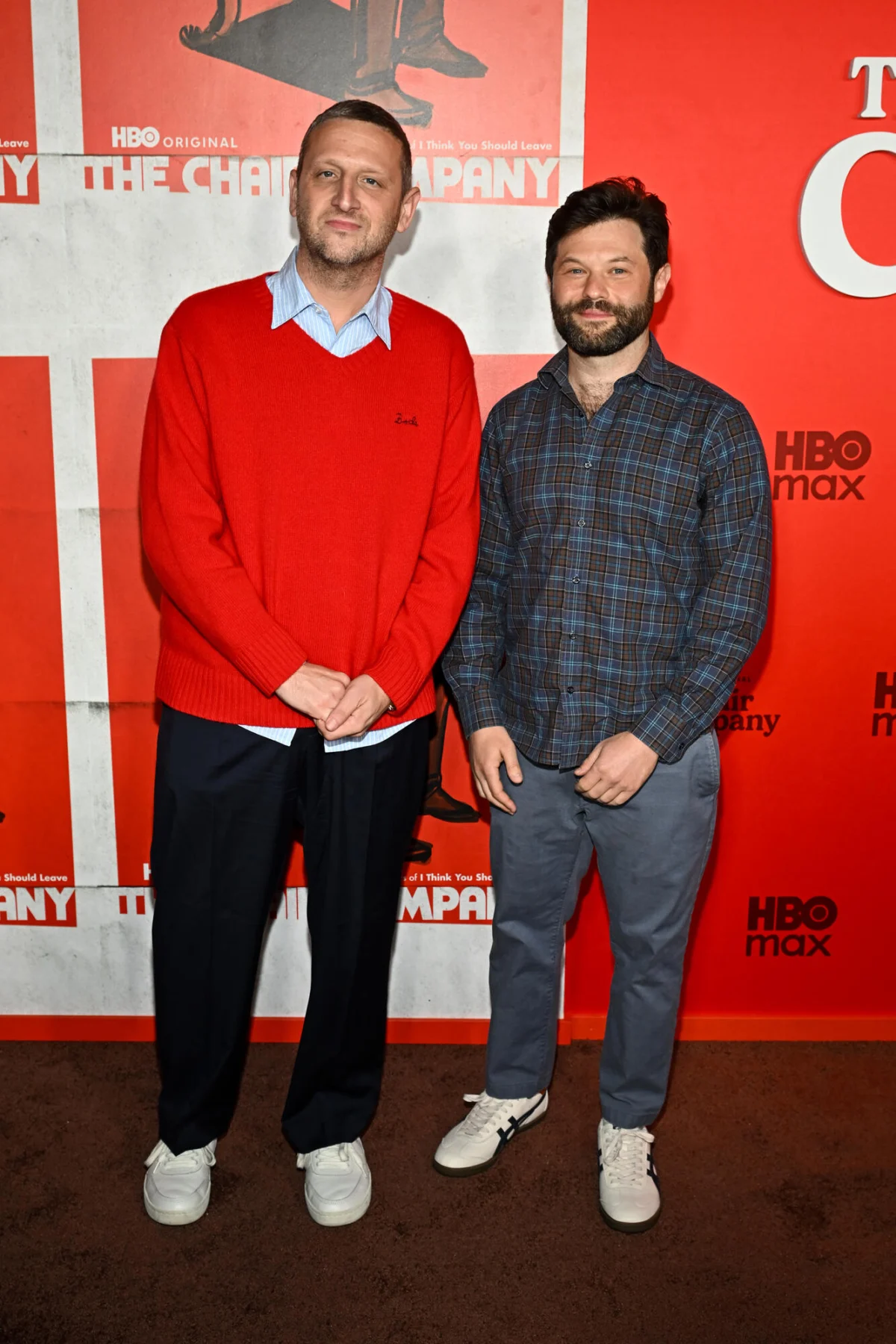
5. Tim Robinson and Zach Kanin for The Chair Company ("Life goes by too f–king fast, it really does.")
- The Synopsis: Ron Trosper suffers a catastrophic and humiliating public mishap when his chair collapses during a high-stakes corporate presentation, sending him down a rabbit hole of dark conspiracy theories.
- The Creative Execution: From its opening frame, the pilot establishes an unnerving, unpredictable tone. Robinson and Kanin extract pitch-black humor out of deeply frightening scenarios, pairing Ron’s chaotic investigation with painfully awkward human interactions.
- Emmy History: Robinson captures his sixth Emmy nod, and Kanin his seventh. Both are decorated veterans of Saturday Night Live and I Think You Should Leave.
6. Anthony King for Jury Duty Presents: Company Retreat ("Mergers and Acquisitions")
- The Synopsis: In the penultimate episode of this elaborate reality-hoax series, an unsuspecting "temporary employee" navigates a gauntlet of nonsensical corporate hurdles ahead of a major business merger.
- The Creative Execution: Shifting the hidden-camera formula to a fictional hot sauce company’s annual retreat, King crafts a script that forces his mark through a minefield of absurdities—from lost car keys and severe shellfish allergies to an overheard corporate takeover that threatens the entire staff.
- Emmy History: This marks King’s third career nomination, following previous nods for Silicon Valley and Night of Too Many Stars.
Supporting Data: Statistical Insights and Trends
To fully contextualize why this race is so tight, one must look at voting patterns within the Television Academy. The writers’ branch has distinct institutional preferences that set them apart from the directors or the actors:

- The Prestige vs. Absurdist Divide: While traditional critical darlings like Hacks and Abbott Elementary command massive mainstream visibility, the writing branch frequently rewards boundary-pushing, idiosyncratic structures. Shows like The Chair Company and Widow’s Bay lean heavily into genre-bending elements (horror and psychological thriller, respectively) that appeal directly to writers obsessed with structural audacity.
- The Overlap Indicator: Historical data shows that episodes nominated in both writing and directing categories carry an added psychological weight for voters. Widow’s Bay and Hacks both feature creators who have double-dipped into directing nominations, cementing their episodes as complete creative visions.
Official Responses and Industry Reactions
As the September 14 broadcast approaches, creators and studio executives are playing their cards close to the chest, though the excitement surrounding the slate is palpable.

"When you are dealing with a finale like the one we crafted for Hacks, the challenge isn’t just about landing the punchlines; it’s about honoring the emotional reality these characters have inhabited for years," co-creator and star Paul W. Downs shared in a recent press roundtable. "The fact that the writers’ branch has responded to the vulnerability in this season means the world to us."

Meanwhile, representatives for Max and Prime Video have ramped up their FYC (For Your Consideration) campaigns, emphasizing the sheer degree of difficulty required to pull off hybrid tones. Katie Dippold’s success with Widow’s Bay has been hailed by network insiders as a triumph for genre comedy, proving that the Academy is increasingly willing to reward comedies that masquerade as prestige thrillers.

Implications: What a Win Means for the Industry
The outcome of the Outstanding Writing for a Comedy Series category on September 14 carries massive implications that ripple far beyond a single statuette:

- The Best Comedy Series Oracle: In recent Emmy history, the winner of Comedy Writing frequently correlates with the winner of Comedy Series. If Hacks takes the writing prize, it reaffirms Max’s dominance and honors a legendary series ending its run on its own terms. Conversely, an upset by Widow’s Bay would signal a seismic shift in voter tastes, favoring fresh, high-concept genre fare over traditional workplace or stand-up narratives.
- Validation for Genre-Bending Comedies: A victory for Widow’s Bay or The Chair Company would explicitly validate darker, more cynical, and structurally chaotic storytelling. It sends a message to Hollywood studios that comedy does not need to adhere strictly to multi-cam setups or conventional half-hour structures to win over the Academy’s most discerning literary minds.
- A Defining Moment for Showrunners: For veterans like Lucia Aniello, Jen Statsky, and Katie Dippold, a win solidifies their standing as the premier architects of modern television comedy.
As the industry counts down the days to the 78th Primetime Emmy Awards on NBC, the comedy writing category remains a thrilling, unpredictable battleground. Whether the Academy opts for the bittersweet emotional catharsis of Hacks or the razor-sharp genre subversion of Widow’s Bay, television history is guaranteed to be made.