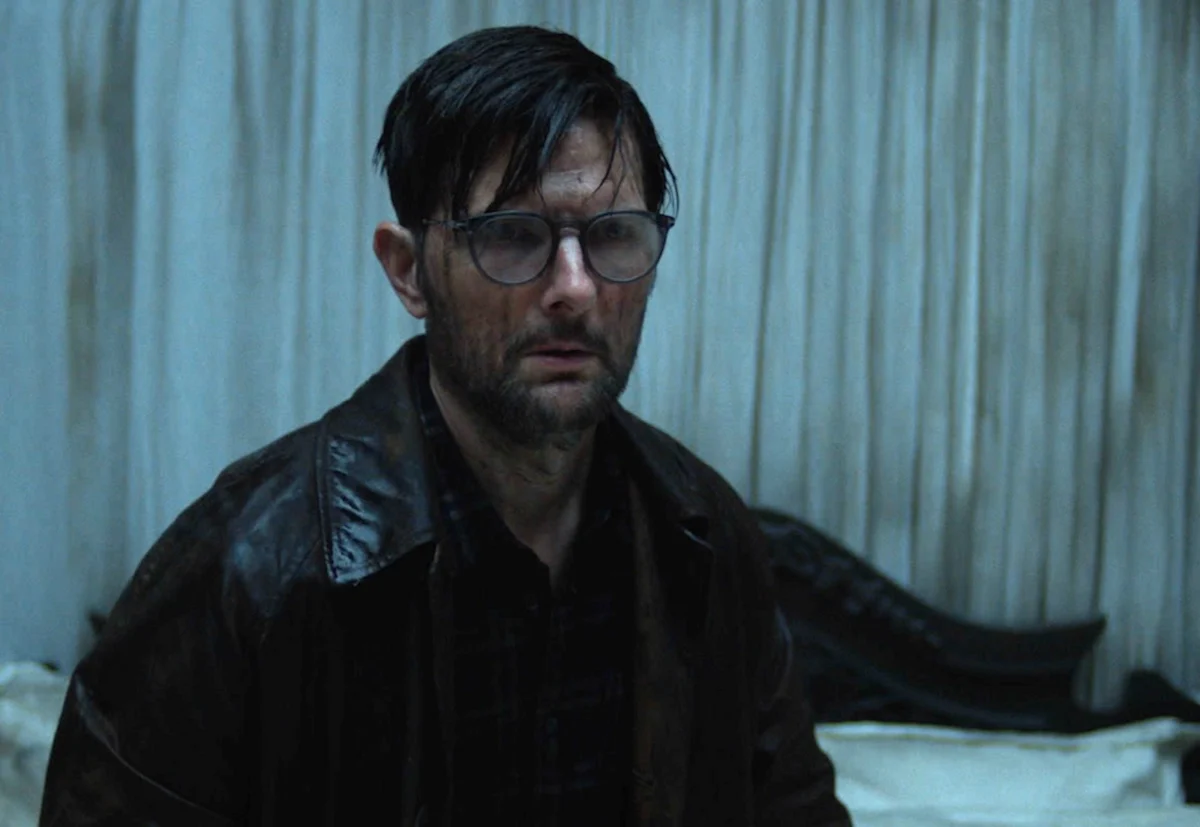
Zach Cregger’s Resident Evil: A Masterclass in Splatstick Horror and Video Game Adaptation
Main Facts
Director Zach Cregger has officially returned to the cinematic landscape following his critically acclaimed breakout hit Barbarian and last summer’s pervasive discourse-generator Weapons. This time, he has set his sights on one of gaming’s most storied and adapted franchises: Capcom’s Resident Evil. Co-written by Cregger and Shay Hatten, the film eschews the hyper-stylized, high-octane action and grimdark seriousness of past cinematic iterations in favor of something vastly different—and much more aligned with the spirit of a chaotic Friday night gaming session.
Starring Austin Abrams as Bryan, an inept, deeply stressed medical courier trapped in a catastrophic night in Raccoon City, the film blends heavy, visceral practical effects with a sharp comedic undercurrent. Rather than offering deep sociopolitical metaphors or meticulously choreographed martial arts, Cregger and Hatten lean heavily into the frantic, breathless energy of survival horror. The result is a gross, hilarious, and relentlessly paced cinematic ride that positions itself as a spiritual successor to Sam Raimi’s Evil Dead 2.
The film’s ensemble features notable appearances from Kali Reis, Paul Walter Hauser, Johnno Wilson, Griffin Newman, and Zach Cherry. However, these characters are frequently overwhelmed by the sheer, unstoppable momentum of the infected horde, emphasizing a core theme of the narrative: humanity is fundamentally outclassed. Distributed by Sony Pictures Entertainment, the film has sparked intense conversations among both horror aficionados and gaming purists regarding how to faithfully translate a video game interactive experience onto the big screen.
Chronology: From Courier Run to Living Nightmare
The narrative trajectory of Cregger’s Resident Evil moves at a breakneck pace, plunging audiences directly into the mundane chaos of everyday life before escalating rapidly into literal hell.
The film opens in media res, finding our protagonist Bryan—a medical courier previously noted for his portrayal of an unlucky character in Cregger’s Weapons—embroiled in a tense, exhausting phone argument with his girlfriend. Distracted, annoyed, and largely ignored by administrative staff during a hospital pickup, Bryan accepts an extra late-night courier gig. The assignment promises extra pay and, crucially, provides him with a convenient excuse to delay facing domestic friction for a few more hours.
Despite his car entirely lacking the requisite snow chains—a fact he blithely glosses over—Bryan loads a medical cooler into his trunk and heads toward a hospital in the infamous, snow-draped enclave of Raccoon City.

As expected in the genre, the missing snow chains quickly become an afterthought as the narrative accelerates. The situation deteriorates not in increments, but in catastrophic leaps. Bryan’s journey transforms into an escalating gauntlet reminiscent of a video game level progression. Each time the character manages to catch a fleeting breath, a new, increasingly horrifying environment presents itself: isolated farmhouses, treacherous sewers, and, eventually, a massive hospital teeming with mutated horrors.
Throughout this descent, Bryan attempts to navigate the chaos using a blend of self-preservation and hesitant altruism—often leading to what the creative team frames as "when saving the cat goes wrong." His attempts to rescue stranded citizens routinely backfire in spectacular, deeply gory fashion, reinforcing the reality that he is entirely unequipped for a Resident Evil scenario.
Supporting Data and Production Context
To understand the tonal shift of this new adaptation, it is helpful to examine the pedigree of its creators and the mechanics of its production:
- Director: Zach Cregger (known for Barbarian, which was thematically inspired by Gavin de Becker’s non-fiction survival guide The Gift of Fear).
- Writer: Shay Hatten.
- Lead Actor: Austin Abrams as Bryan, a medical courier.
- Supporting Cast: Kali Reis, Paul Walter Hauser, Johnno Wilson, Griffin Newman, and Zach Cherry.
- Studio: Sony Pictures Entertainment.
- Thematic Shift: Moving away from the heavy allegorical frameworks of Barbarian (misogyny, exploitation, motherhood) and the social discourse of Weapons (mob mentality, definitions of femininity) toward pure, unadulterated genre thrills and "splatstick" absurdity.
- Practical Effects Profile: Features heavy, tactile gore, sticky blood, relentless infected creatures, acid-puking mutants, and nightmarish maternity wards filled with bulging egg sacs.
Official Responses and Critical Reception
Early reactions to the film highlight a sharp divide between traditional cinematic expectations and the populist appeal of Cregger’s direction. While past Resident Evil films attempted to carve out a distinct cinematic mythology—often leaning toward blockbuster action tropes—critics and audiences have noted that Cregger’s approach feels remarkably intimate, echoing the experience of watching a friend fumble through a high-stakes video game while fueled by fast food and caffeine.
Industry analysts and genre publications have pointed out the deliberate structural parallels to gameplay loops. Moments within the film deliberately mimic in-game cutscenes, not as cynical easter eggs, but as structural pillars that dictate the rhythm of tension and release.
Sony Pictures Entertainment has positioned the marketing campaign around the film’s visceral nature and its comedic timing, a gamble that appears to be paying off with audiences looking for subversive horror experiences. However, the film has also inadvertently highlighted modern theatrical etiquette trends. Observers have noted an increase in participatory audience behavior—such as viewers physically pointing at screens, reacting vocally to character mistakes, and treating the cinematic space like a shared living room. While some find this communal interaction charmingly reminiscent of a couch co-op gaming night, it has sparked wider discourse regarding post-pandemic theatergoing habits.

Implications for the Horror Genre and Franchise
The release and reception of Zach Cregger’s Resident Evil carry significant implications for both the future of the multi-billion-dollar gaming franchise and the broader landscape of modern horror cinema.
For years, video game adaptations struggled under the weight of self-seriousness, attempting to translate the interactive logic of controllers and inventory management into linear cinematic grammar without losing the core appeal. Cregger and Hatten bypass this hurdle by leaning directly into the feeling of playing the game. By casting an inept, highly relatable everyman who makes suboptimal decisions, runs away from confrontations, and verbally processes the insanity around him, the film bridges the gap between passive viewing and active participation.
Furthermore, the film cements a growing sub-genre movement: the evolution of "splatstick" horror into the 2020s. While franchises like Evil Dead pivoted toward darker, more unrelenting tones over the decades, Cregger’s dual output of Weapons and Resident Evil demonstrates that horror and comedy are not mutually exclusive opposites, but mutually reinforcing tools. When terror reaches a pitch of absolute absurdity—such as an H.R. Giger-esque mass of infected revenants or a maternity ward overflowing with biological nightmares—laughter becomes the natural pressure valve.
Ultimately, by handing the intellectual property controller over to a comedic mind who understands the delicate mechanics of tension, pacing, and release, Sony Pictures has charted a fresh path forward. If Resident Evil proves anything, it is that horror works best when it refuses to take itself too seriously, leaving audiences equally terrified, amused, and glued to their seats.