The Architect of Authenticity: Anurag Kashyap’s Quest for a New Cinematic Language at MIFFest
By Editorial Desk
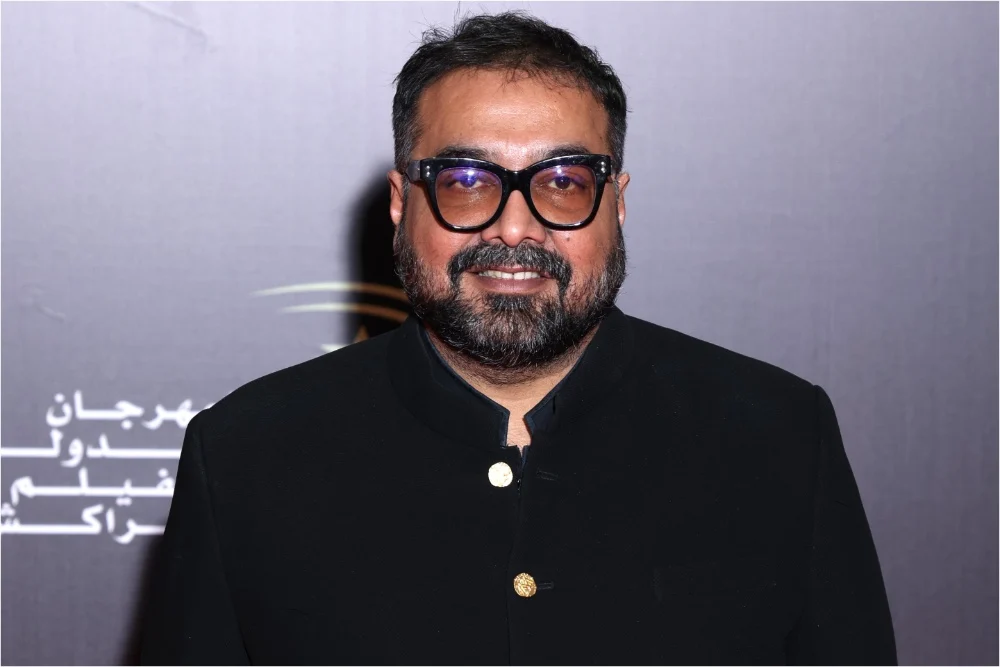
The Malaysian International Film Festival (MIFFest) has long served as a bridge between the burgeoning creative energies of Southeast Asia and the established giants of global cinema. This year, the festival’s prestige is further bolstered by the presence of Indian auteur Anurag Kashyap, who serves as the jury president for the festival’s competitive section.
Beyond the formal duties of adjudicating the year’s most compelling films, Kashyap is engaging with the festival’s community through a masterclass titled “Unfiltered Realism.” Yet, for a director whose career has been defined by his role as a voice of dissent and a pioneer of gritty, grounded Indian cinema, his posture in Kuala Lumpur is surprisingly humble. He is not here to lecture; he is here to investigate.
The Search for a New Cinematic Syntax
In an exclusive interview with Variety, Kashyap articulated his primary mission as a juror. "As jury president, what I’m really looking for is a new cinematic language," he stated. For a filmmaker whose own work—including seminal titles like Gangs of Wasseypur and Black Friday—redefined the aesthetic of contemporary Indian realism, this search for novelty is significant.
Kashyap is interested in the generational divide. He acknowledges that the tools at the disposal of young filmmakers today are lightyears ahead of what he had access to when he began his career in the late 1990s. "I’m interested in seeing how younger filmmakers tell stories in ways my generation couldn’t," he added. He is looking for a departure from the tropes that defined the "indie" wave of the early 2000s, seeking a form of expression that feels untethered from the constraints of legacy media and traditional distribution models.
A Landscape Transformed: AI, Social Media, and the Attention Economy
The creative landscape, as Kashyap observes, has shifted seismically. The integration of Generative AI, the omnipresence of social media as a storytelling medium in itself, and the sheer saturation of content have irrevocably altered the director-audience contract.
In the current era, the "gatekeepers" of cinema—major studios and traditional distributors—have lost their monopoly on attention. Filmmakers now compete not just with other films, but with the algorithmic pull of TikTok, the endless scroll of Instagram, and the infinite libraries of global streaming giants. This shift has created what Kashyap identifies as an "overwhelming abundance of information," which has changed how films are conceived, produced, and, most importantly, consumed.
The Philosophy of "Staying Real"
Kashyap pushed back against the notion that his signature style—often characterized by visceral, unflinching portrayals of societal underbellies—is a deliberate aesthetic choice meant to brand his filmography. Instead, he views it as a fundamental requirement for human connection.
"Staying real isn’t a choice," he emphasized. "Whether I’m directing, producing, or acting, you have to stay real. Only then can you fully play out reality and truly engage your audience."
Historically, critics have argued that Kashyap’s reliance on gritty, handheld cinematography and raw dialogue was a byproduct of the limited budgets and guerrilla-style production methods he faced early in his career. While he admits that technology and finance dictated the look of his early work, he argues that authenticity is not a visual texture. It is, rather, an intellectual and emotional commitment to the subject matter. Authenticity, in his view, is the antidote to the artificiality that permeates digital-first content.
Global Resonance through Local Roots
One of the most profound insights Kashyap offers is the paradox of globalization in cinema. In an age where films are often designed to be "international" by stripping away local nuances to appeal to a mass market, Kashyap maintains that the inverse is true.
"Local stories resonate globally precisely because they remain deeply rooted in their own cultures," he argues. He believes that audiences are becoming increasingly sophisticated; they are less interested in homogenized, "Pan-Asian" or "Pan-Global" narratives and more interested in the specific, the eccentric, and the hyper-local. By digging deep into the soil of one’s own culture—the specific slang of an Indian neighborhood, the unique bureaucratic hurdles of a Japanese office, or the societal pressures of a Chinese household—filmmakers create a "universal key" that unlocks empathy across borders.
The Shared Crisis of Asian Cinema
Despite the cultural diversity of the region, Kashyap identifies a common malaise affecting the film industries of South Korea, Japan, China, and India. He notes that while these nations possess mature, robust film infrastructures, they are all currently grappling with the same existential threat: the erosion of audience patience.
"We’re all facing the same problem—audiences have shorter attention spans, and streaming platforms have created endless choices," he says. This is not merely an observation; it is a critique of the "buffet" model of consumption. When a viewer can switch to a new movie every 15 minutes, the traditional three-act structure—which relies on patience and emotional investment—faces a crisis.
This observation mirrors the concerns Kashyap raised earlier this year at various industry forums, where he warned that independent cinema is being squeezed out of the theatrical experience. In a fragmented environment, the films that survive are usually high-budget, intellectual property-driven spectacles or algorithmically optimized genre pieces. The middle-ground—the medium-budget, auteur-driven drama—is struggling to find a home.
Chronology of a Visionary’s Evolution
To understand Kashyap’s current perspective, one must look at his trajectory:
- 1998–2003: The Formative Years: Starting as a writer for films like Satya, Kashyap’s initial influence was on the narrative structure of Indian crime cinema.
- 2004–2009: The Independent Struggle: Films like Black Friday were delayed by censorship and production issues, cementing his role as a champion of artistic freedom.
- 2010–2015: The Golden Era of Realism: The release of Gangs of Wasseypur signaled a shift. It was a massive, multi-part epic that proved that hyper-local, realistic Indian stories could command global attention.
- 2016–2022: Diversification: Moving into streaming (the Sacred Games series) and acting, Kashyap explored how the episodic format could sustain the depth of character that films were losing to shorter runtimes.
- 2023–2024: The Return to Cinema: With his latest feature Bandar, Kashyap marks a return to the director’s chair, bringing the lessons of the streaming era back to the theatrical canvas.
Implications for the Future of Film
Kashyap’s masterclass at MIFFest is, in essence, a call for a new paradigm. He is not suggesting that filmmakers return to the past, nor is he blindly embracing the digital future. Instead, he is advocating for a synthesis.
The implications for the industry are clear:
- The Death of the Passive Viewer: Filmmakers must find ways to "hook" the audience without resorting to cheap gimmicks. The pacing must evolve to respect the modern attention span without sacrificing narrative depth.
- The Return to Locality: As AI-generated content begins to flood the market with "average" storytelling, human-made, culturally specific films will gain value as luxury, authentic goods.
- The Collaborative Future: Kashyap’s insistence that he is at the festival to learn, rather than to lecture, highlights a necessary shift in the role of the "master." In a fast-moving, tech-driven industry, the hierarchical model of mentorship is being replaced by the horizontal model of conversation.
Conclusion: A Master in Search of Clues
As MIFFest continues, Anurag Kashyap remains an enigmatic presence. He is a veteran, yet he possesses the restlessness of a debutant. He carries the weight of two decades of industry experience, yet he is eager to discard the old rulebooks.
"I have many questions myself as well," he concluded in his interview. "I’m hoping to find some answers, have meaningful conversations during the festival and maybe discover another clue about the future of cinema."
For the delegates at MIFFest, the opportunity is unique. They are not just sitting in a lecture hall; they are participating in a live inquiry into the soul of modern filmmaking. Whether or not they find the answers, the fact that a filmmaker of Kashyap’s stature is still asking the questions is a hopeful sign for the future of the medium. Cinema, it seems, is not dead—it is simply waiting to be redefined by a generation that knows how to use the old tools in a brand-new way.