
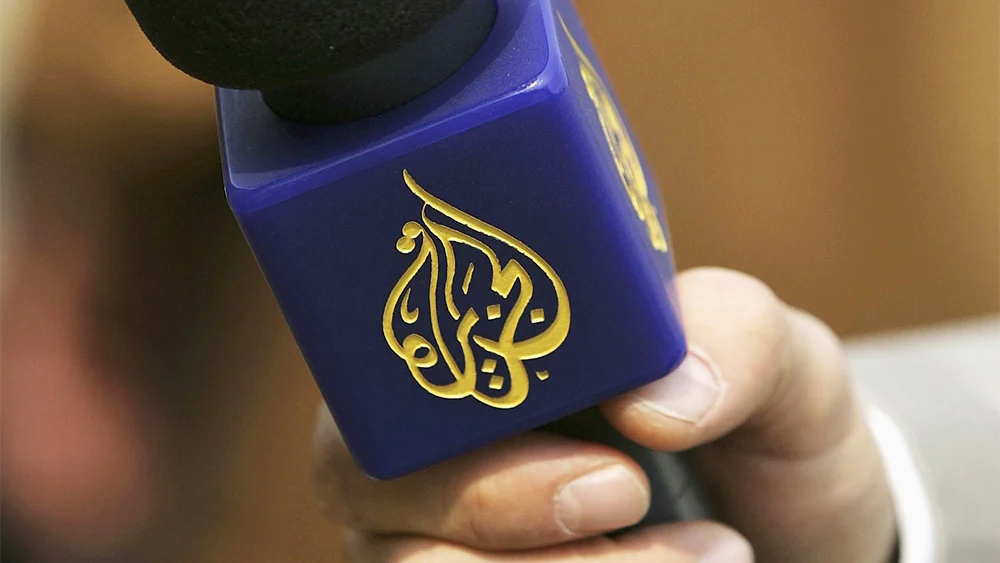
Al-Jazeera Launches International Legal Offensive Against Egyptian Authorities Amid Press Freedom Crisis
LONDON — The Qatar-based media conglomerate Al-Jazeera has officially initiated a sweeping legal campaign against the Egyptian state, signaling a dramatic escalation in the ongoing conflict between the network and the military-backed government in Cairo. Represented by the high-profile London-based law firm Carter-Ruck, which specializes in international human rights and media law, the network announced Thursday that it is seeking redress in international courts and before the United Nations to challenge what it describes as a systematic campaign of intimidation, arbitrary detention, and technical censorship.
The move marks a turning point in the volatile relationship between the pan-Arab broadcaster and the Egyptian authorities, a relationship that has deteriorated sharply since the ouster of President Mohammed Morsi in July.
The Core Allegations: A Pattern of Suppression
In a formal statement released via its legal counsel, Al-Jazeera alleged that Egyptian security forces—including both military and police units—have engaged in a coordinated effort to silence its newsroom. The network reports that a "large number" of its journalists have been arrested since the July transition of power. While the exact count remains fluid, the network maintains that these arrests are either conducted without formal charges or are built upon what the broadcaster characterizes as "politically motivated" fabrications.
Beyond detentions, the network detailed a litany of operational obstructions, including:
- The closure of bureau offices: Physical facilities in Cairo have been targeted, with staff evicted or prevented from accessing critical equipment.
- Signal Jamming: The network has faced persistent, sophisticated interference with its satellite transmissions, specifically following its extensive coverage of the state’s crackdown on pro-Morsi demonstrators.
- Physical Harassment: Field reporters have reported being physically assaulted and threatened by security personnel while attempting to cover ongoing civil unrest.
“Al-Jazeera cannot permit this situation to continue,” a network spokesperson stated. “The right of journalists to report freely in situations of this kind is protected by international law and is reaffirmed by UN Security Council Resolution 1738.”
Chronology: From Euphoria to Confrontation
To understand the current legal friction, one must examine the rapid descent of the relationship between the network and the Egyptian establishment.
Pre-July 2013: A Symbiotic Relationship
During the presidency of Mohammed Morsi, Al-Jazeera’s Arabic channel was frequently perceived as a platform sympathetic to the Muslim Brotherhood, of which Morsi was a leading member. As the Gulf nation of Qatar—which funds Al-Jazeera—was a staunch backer of Morsi’s administration, the network’s editorial line often placed it in direct opposition to Egypt’s secularists and military establishment.
July 2013: The Tipping Point
Following the military’s removal of Morsi on July 3, the political landscape shifted instantaneously. The interim government moved to dismantle the influence of the Muslim Brotherhood, and Al-Jazeera found itself at the epicenter of this purge. As the network broadcast images of the military-led crackdown, the Egyptian public and security apparatus viewed the coverage not as journalism, but as an act of political subversion.
Late Summer 2013: The Resignations
The internal strain of this editorial stance became public in July, when more than twenty Cairo-based Al-Jazeera staff members resigned in a single day. The mass departure was framed as a protest against the network’s perceived bias. Anchor Karem Mahmoud, one of the high-profile defectors, openly accused the network of serving as a tool for the Qatari state to promote an Islamist agenda, claiming that the newsroom had lost its neutrality.
Fall 2013: Legal Escalation
Following months of what the network calls "unbearable pressure," the decision to hire Carter-Ruck was finalized. The network’s legal strategy is designed to bypass the Egyptian judiciary—which they view as compromised—and bring the case before the United Nations and relevant international human rights bodies, arguing that Egypt is in violation of the International Covenant on Civil and Political Rights.
The Clash of Narratives: State Media vs. Al-Jazeera
The battle is not merely legal; it is a battle for the narrative of the Egyptian revolution.
Egyptian authorities, supported by a significant segment of the local media, maintain that Al-Jazeera is an instrument of foreign interference. They argue that the network’s coverage helped radicalize protesters and provided a distorted view of the military’s actions. To the Egyptian government, the "crackdown" described by Al-Jazeera is framed as a necessary stabilization effort against terrorism and domestic instability.
Conversely, Al-Jazeera insists that the government is attempting to create an informational vacuum. The network argues that by harassing independent journalists and forcing the closure of bureaus, the state aims to ensure that "only the voices of its state-controlled media" reach the public. The network’s legal team asserts that the jamming of signals is a clear violation of international telecommunications regulations and an attempt to prevent the international community from witnessing the realities on the ground.
Implications for International Press Freedom
The case of Al-Jazeera versus the Egyptian government carries significant weight for international media organizations.
The UN Security Council Resolution 1738 Context
By invoking UN Security Council Resolution 1738, Al-Jazeera is highlighting a critical global issue: the protection of journalists in conflict zones. The resolution explicitly condemns intentional attacks against journalists and media professionals. If Al-Jazeera can prove that the arrests and harassment were systematic and directed by the state, it could prompt a broader international inquiry into the treatment of the press in Egypt.
The Role of Qatar
The involvement of the Qatari ruling family in funding Al-Jazeera complicates the legal and diplomatic landscape. Critics argue that the network’s legal action is a strategic proxy move by Doha to maintain regional influence. However, legal experts suggest that regardless of the funding source, the fundamental question remains whether a state has the right to suppress a news organization simply because its editorial output conflicts with the government’s narrative.
Future Outlook: The Path Ahead
The legal team at Carter-Ruck has been instructed to "take all steps necessary worldwide" to ensure that the network’s journalists can operate in Egypt without fear of reprisal. This is a daunting task, as the Egyptian government has shown little inclination to bow to international pressure regarding its internal security policies.
As the case moves toward potential international hearings, three scenarios emerge:
- Diplomatic Mediation: International pressure, potentially from the U.S. or European Union, could lead to a "cooling off" period where the Egyptian government eases restrictions to avoid further international isolation.
- Increased Polarization: The legal action may embolden the Egyptian government to permanently ban the network, potentially leading to the expulsion of all remaining Al-Jazeera staff.
- The "Precedent" Effect: If international courts rule in favor of Al-Jazeera, it would establish a landmark precedent that states cannot use "national security" as a blank check to dismantle independent news agencies.
For now, the situation in Cairo remains dire for the journalists on the ground. As the legal battle unfolds in London and at the UN, the reporters in the field remain the most vulnerable participants in this high-stakes struggle. The resolution of this conflict will likely determine the future of investigative journalism in the region and serve as a litmus test for the enforcement of international press freedom in the post-Arab Spring era.