Venice Film Festival 2026: Dispatches on Oasis, Woman Unknown, and the Highs of the Lido
Main Facts
The 2026 Venice Film Festival has once again transformed the picturesque, sun-drenched shores of the Lido into the global epicenter of cinematic art. Amidst an illustrious lineup featuring major new works by world-renowned auteurs—including Werner Herzog, Lee Chang-dong, and Tsai Ming-liang—critics and audiences alike have found themselves captivated by a diverse slate of high-profile premieres, incisive documentaries, and fiercely contested competition titles.
In the latest dispatch from the ground, Film Comment Co-Editor Devika Girish convened with prominent film critics Jonathan Romney and Tim Grierson for a comprehensive podcast breakdown of three of the most talked-about projects to screen at the festival: Sophie Fiennes and Slavoj Žižek’s philosophical documentary The Pervert’s Guide to Utopias; Will Lovelace and Dylan Southern’s electrifying reunion concert film, Oasis: Don’t Look Back in Anger; and May el-Toukhy’s gripping dramatic feature, Woman Unknown, which has quickly emerged as a major frontrunner in the festival’s prestigious main Competition section.
This year’s festival continues a rich tradition of balancing monumental auteur-driven cinema with cultural touchstones and rigorous intellectual discourse. As the 2026 edition unfolds, these three projects represent the broad stylistic and thematic spectrum defining contemporary cinema on the global stage.
Chronology of the Festival and Discussions
The Build-Up to the Lido Premieres
As the Venice Film Festival opened its doors for its 2026 iteration, anticipation was exceptionally high. The initial days of the festival established a brisk, exhilarating pace, marked by red-carpet events, midnight screenings, and robust industry buzz. While veteran masters of cinema commanded early headlines with news of their latest masterworks, the festival schedule quickly pivoted toward ambitious non-fiction storytelling and high-stakes narrative competition entries.
The Pervert’s Guide to Utopias (Discussion at 2:38)
The critical conversations on the Film Comment podcast opened with a deep dive into The Pervert’s Guide to Utopias. Marking the latest creative convergence between director Sophie Fiennes and provocative Slovenian philosopher Slavoj Žižek, the film invites audiences into a cinematic essay that dissects the underlying ideologies of utopian thought. Romney and Grierson explored how Fiennes’s directorial framing allows Žižek’s trademark blend of psychoanalytic theory, pop-culture deconstruction, and political critique to take tactile, visual form. The film immediately sparked intellectual debates across the Lido regarding the state of modern socio-political imagination.
Oasis: Don’t Look Back in Anger (Discussion at 14:36)
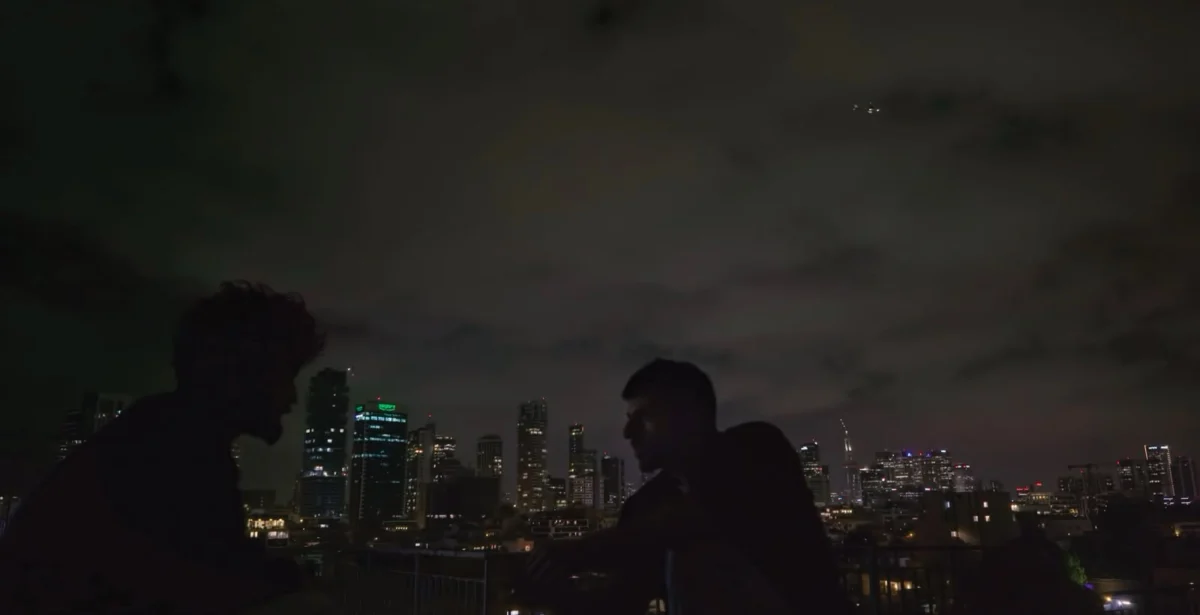
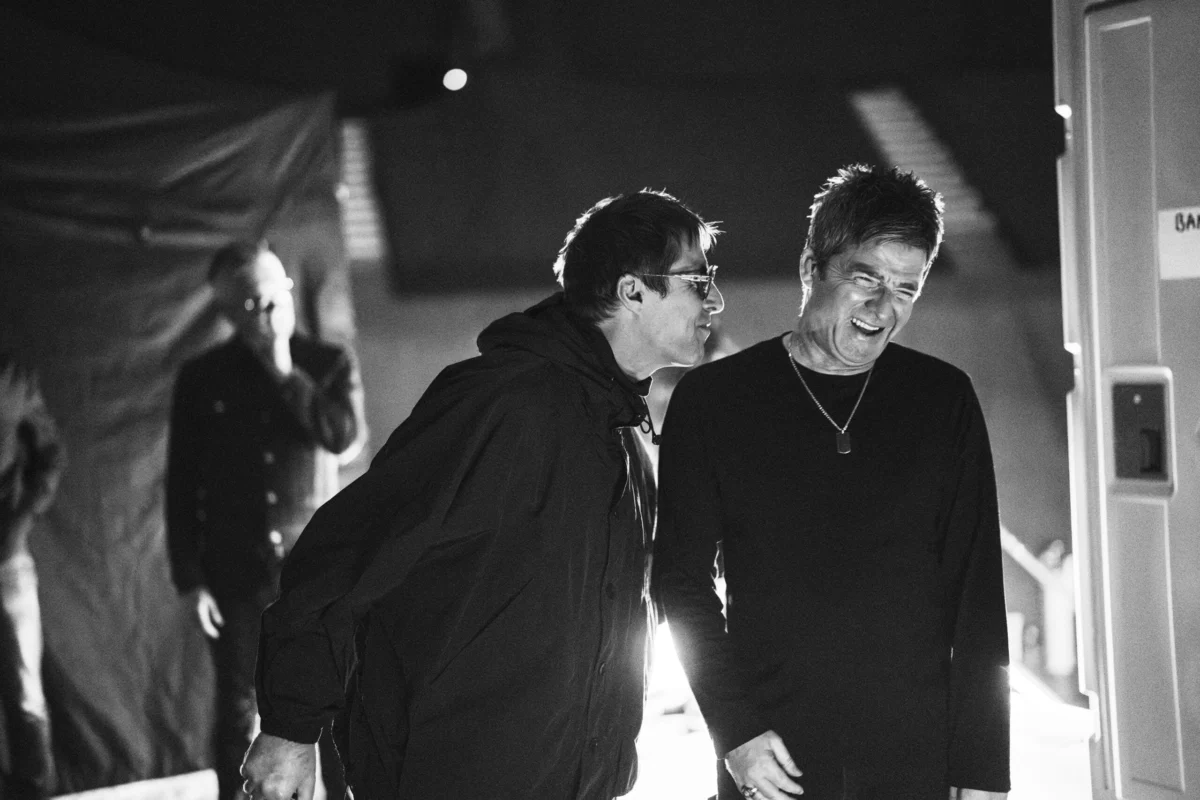
Shifting gears from high theory to high-decibel rock-and-roll, the discussion turned to Will Lovelace and Dylan Southern’s Oasis: Don’t Look Back in Anger. Chronicling the historic, highly anticipated recent reunion tour of the legendary Britpop band, the documentary arrived in Venice amid a whirlwind of media frenzy. Romney and Grierson analyzed how Lovelace and Southern managed to transcend standard rock-doc tropes, capturing not just the thunderous arena spectacles and nostalgic fervor of the crowds, but also the volatile, enduring chemistry of the Gallagher brothers. The film offered festivalgoers a visceral reminder of the enduring power of 1990s counterculture translated into the modern era.
Woman Unknown in Competition (Discussion at 26:25)
The centerpiece of the critics’ roundtable focused on May el-Toukhy’s Woman Unknown, a narrative feature competing in the main Venice Competition. Having generated intense buzz since its first press screening, el-Toukhy’s film quickly positioned itself as a major awards contender. Romney, Grierson, and Girish dissected the film’s complex character dynamics, razor-sharp pacing, and thematic resonance, heralding it as a standout achievement that highlights el-Toukhy’s maturation as a visionary international filmmaker.
Supporting Data and Festival Context
- Location: The Lido, Venice, Italy — long celebrated for its historic ties to cinematic history and its atmospheric backdrop.
- Featured Auteurs in the 2026 Lineup: Werner Herzog, Lee Chang-dong, Tsai Ming-liang, Sophie Fiennes, May el-Toukhy, Will Lovelace, and Dylan Southern.
- Podcast Panelists: Devika Girish (Co-Editor, Film Comment), Jonathan Romney (Critic), and Tim Grierson (Critic).
- Key Films Analyzed:
- The Pervert’s Guide to Utopias (Dir. Sophie Fiennes, featuring Slavoj Žižek)
- Oasis: Don’t Look Back in Anger (Dirs. Will Lovelace and Dylan Southern, 2026)
- Woman Unknown (Dir. May el-Toukhy, Main Competition)
- Publication Context: This coverage forms an integral part of the Film Comment Summer 2026 issue, serving subscribers and cinephiles with real-time critical analysis from major international film festivals.
Official Responses and Critical Reception
The critical reception coming out of the Lido has underscored the eclectic nature of the 2026 selections.
Speaking on Sophie Fiennes and Slavoj Žižek’s latest cinematic essay, critics noted that The Pervert’s Guide to Utopias succeeds by refusing to offer easy answers. Instead, it challenges viewers to confront the contradictions inherent in collective human desires for ideal societies. While some early reviews debated the accessibility of Žižek’s dense theoretical frameworks, consensus points to Fiennes’s directorial ingenuity as a masterclass in translating abstract philosophy into tangible cinematic grammar.
For Oasis: Don’t Look Back in Anger, the response has been overwhelmingly enthusiastic, particularly regarding its sensory impact. Will Lovelace and Dylan Southern have drawn praise for avoiding hagiography, presenting a clear-eyed yet celebratory portrait of a band whose cultural footprint remains massive. Industry insiders have noted that the film’s commercial prospects are exceptionally strong, given the global nostalgia wave surrounding the Gallagher brothers’ reconciliation.
Meanwhile, May el-Toukhy’s Woman Unknown has arguably generated the most fervent critical debate within the Competition bracket. Reviewers have lauded the film’s narrative discipline and psychological depth, signaling that el-Toukhy is a formidable creative force fully deserving of the international spotlight provided by the Venice Competition. Festival-goers have frequently cited it as a high-water mark for contemporary narrative drama at this year’s event.
Implications for the Global Film Industry
The conversations emerging from the Venice Film Festival 2026—as highlighted by Film Comment—point to several shifting paradigms within the global entertainment and art-house sectors:
- The Evolution of Non-Fiction Cinema: The enthusiastic reception of both The Pervert’s Guide to Utopias and Oasis: Don’t Look Back in Anger demonstrates that documentary filmmaking continues to break stylistic boundaries. Whether tackling high philosophy or music-driven cultural history, modern non-fiction directors are increasingly expected to deliver formal rigor alongside compelling subject matter.
- The Festival as a Launchpad for Prestige Drama: Titles like May el-Toukhy’s Woman Unknown reaffirm the indispensable role that A-list European festivals play in anointing the next generation of global cinematic masterpieces. Success on the Lido often dictates the international distribution and awards season trajectories for months to come.
- The Intersect of Nostalgia and Contemporary Relevance: The massive public and critical interest in the Oasis documentary highlights a broader industry trend: the monetization and artistic re-examination of 1990s cultural touchstones through a sophisticated contemporary lens.
As the Venice Film Festival rolls forward, outlets like Film Comment remain vital conduits for dissecting these trends, ensuring that cinephiles around the world stay connected to the evolving dialogue on the Lido. Readers are encouraged to subscribe to Film Comment and sign up for The Film Comment Letter to access comprehensive, up-to-the-minute coverage of the Summer 2026 issue and beyond.