Through the Lens of Vulnerability: Deconstructing Gina S. Noer’s ‘Like & Share’ and the Digital Age of Consent
In her seminal 2003 essay, Regarding the Pain of Others, cultural critic Susan Sontag posited that we exist in an era where reality is fundamentally constructed by spectacle. The camera, she argued, serves as an apparatus that grants spectators access to experiences that would otherwise remain beyond their reach. Yet, this accessibility invites a harrowing ethical dilemma: What is the morality of consuming the suffering of others?
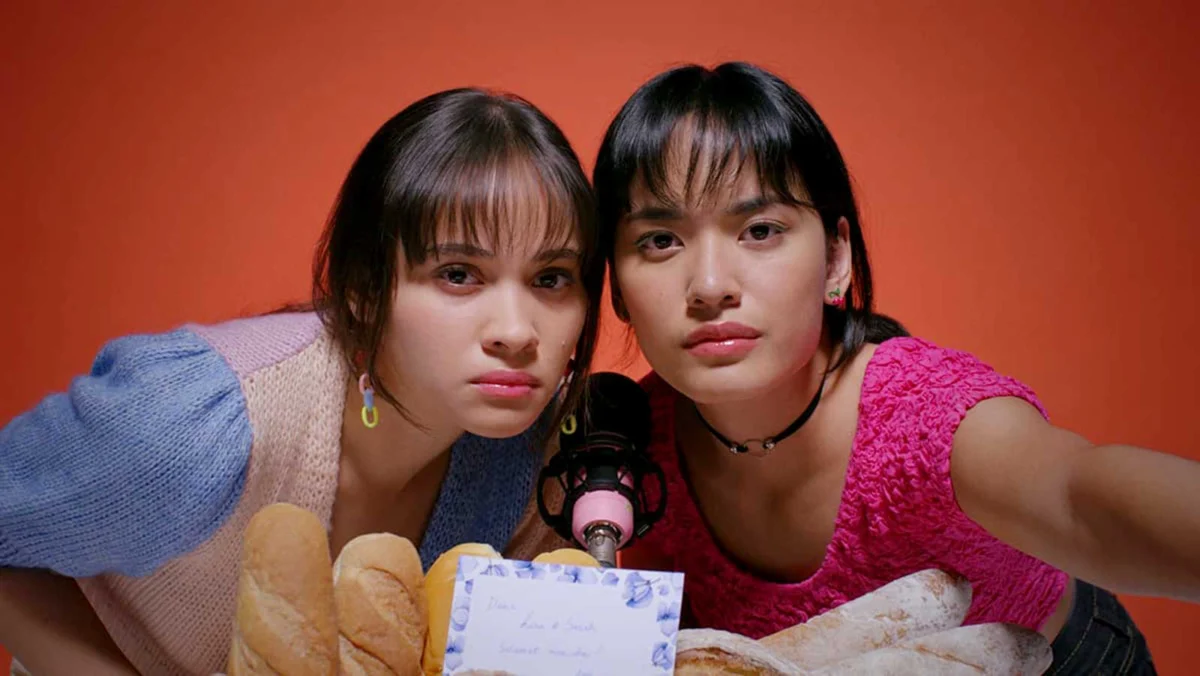
Gina S. Noer’s 2022 film, Like & Share, acts as a cinematic mirror to Sontag’s inquiries, transporting these theoretical questions into the hyper-connected, volatile reality of contemporary Indonesian youth. Through the lives of Lisa (Aurora Ribero) and Sarah (Arawinda Kirana), the film explores the intersection of digital intimacy, non-consensual image distribution, and the deeply entrenched patriarchal structures that facilitate gender-based violence.
The Anatomy of the Spectacle: Framing and Being Framed
The narrative follows two high school friends, Lisa and Sarah, who are deeply embedded in the social media ecosystem. They are both creators and consumers, curating their lives for digital validation through ASMR videos and lifestyle content. However, the film quickly shifts from the autonomy of "creating" to the violation of "being framed."
The visual language of Like & Share is deliberate. While films like Searching (2018) rely on screen-life aesthetics to simulate digital interaction, Noer opts for a more grounded, intrusive approach. The use of "over-the-shoulder" shots places the audience in the same physical room as the characters, stripping away the safety of the screen. The cinematography frequently utilizes mirrors, windows, and doorways—frames within frames—to underscore the sensation that these young women are constantly being watched, whether by their own devices or by the predatory gaze of others.
Chronology of Crisis: From Autonomy to Violation
The film’s power lies in its refusal to depict its protagonists as "perfect victims." Lisa and Sarah are portrayed as sexually curious, active agents who willingly engage with their own sexuality. This is not a cautionary tale about the "dangers of the internet," but a nuanced exploration of agency.
- The Digital Sandbox: The story begins with the girls exploring their burgeoning sexual identities and digital footprints, capturing content that they deem consensual.
- The Breach of Consent: The tension escalates when the characters encounter the dark reality of Non-Consensual Distribution of Intimate Images (NCDII). Lisa witnesses a video of a woman being raped, forcing a moral reckoning with her own consumption habits.
- The Systemic Collapse: The tragedy deepens when Sarah, Lisa’s closest confidante, becomes a victim of NCDII. The film juxtaposes the digital violence with the physical reality of their daily lives—at home, at school, and in public spaces.
- The Confrontation: The climax involves a direct, visceral confrontation with the perpetrator, Devan (Jerome Kurnia), whose actions reveal the hypocrisy of a society that understands the mechanics of consent but ignores the spirit of it.
Supporting Data: The Reality of Gender-Based Online Violence (KBGO)
Like & Share arrives at a pivotal moment in Indonesia. The rise of Gender-Based Online Violence (KBGO) has outpaced the social understanding of digital boundaries. According to data from the National Commission on Violence Against Women (Komnas Perempuan), cases of cyber-harassment and the distribution of non-consensual intimate images have surged alongside internet penetration in the country.
The film highlights that what happens online is rarely an isolated incident; it is an extension of a "rape culture" nurtured in physical spaces. By depicting Lisa’s domestic life—where her mother is trapped in a hierarchical marriage for financial security—and her school environment, where a coach exposes her private videos without remorse, the film illustrates that the digital realm merely accelerates pre-existing power imbalances.
Official Responses and the Legal Landscape
The significance of this film cannot be decoupled from the passage of the Law on Sexual Violence (UU TPKS) in Indonesia. This landmark legislation, enacted in 2022, shifted the burden of proof, emphasizing the necessity of believing victims and providing concrete pathways for recovery and justice.

Before this legislation, Indonesian cinema often relied on metaphors or "ghost stories" (such as the 1981 classic Sundelbolong) to address sexual violence, as direct confrontation was too dangerous or taboo. Recent films like 27 Steps of May (2018) and Penyalin Cahaya (2022) made strides in depicting trauma but often retreated into abstraction or theatrical gimmicks to avoid the raw reality of the perpetrator’s motivation.
Gina S. Noer’s Like & Share discards these crutches. It chooses not to hide behind metaphors, opting instead for a brutal, unadorned honesty that aligns with the modern legal shift toward victim-centric justice.
The Implications: Moving Beyond the "Perfect Victim"
The central challenge posed by the film is to dismantle the myth of the "perfect victim"—the idea that a woman must be chaste to be worthy of protection. By showing Lisa and Sarah as flawed, sexually active, and autonomous beings, the film forces the audience to confront their own biases.
Consent as a Living Practice
The film meticulously explores the definition of consent. Through the character of Devan, who appears to respect boundaries in minor social interactions (asking before filming, respecting a "no" at the gym), the film demonstrates how perpetrators often use a facade of "gentlemanly" behavior to mask their eventual violation. When Devan ignores Sarah’s explicit refusal during a sexual encounter, it serves as a stark reminder that consent is not a static state of being—it is a continuous, verbal, and enthusiastic agreement that can be withdrawn at any time.
The Responsibility of the Spectator
By placing the viewer in the position of someone who has consumed or shared such content, Like & Share asks the uncomfortable question: "What is your role in this machine?" The film doesn’t just critique the perpetrator; it critiques the audience that watches, shares, and turns the pain of others into a spectacle.
Conclusion: A Bold Step for Indonesian Cinema
Like & Share is a transformative piece of work because it refuses to take the safe route. It does not provide easy answers or a sanitized ending. Instead, it leaves the audience with the heavy, necessary task of questioning their own digital ethics.
In an era where "representation" is often reduced to superficial inclusion, Like & Share provides substantive, systemic critique. It captures the anxiety of a generation raised in the glare of a smartphone screen, forever caught between the desire to be seen and the fear of being exposed. By choosing to be blunt, direct, and unflinching, Gina S. Noer has created more than just a film—she has created a catalyst for a long-overdue national conversation about what it means to be human in a world where everything, including our pain, is fodder for the feed.
As we move forward, the legacy of this film will likely be measured by its contribution to a culture that values agency over aesthetics and empathy over the empty gratification of a "like." It is a vital watch, not because it is comfortable, but precisely because it demands that we finally look away from the screen and toward the human beings suffering in the shadows we have cast.